
Catch pre-market movers with AI signals.
Uniswap Founder Warns of Scam Ads After Investor Loses Mid-Six-Figure Portfolio
Uniswap founder Hayden Adams has raised concerns about fraudulent advertisements that mimic the platform and lead users to lose funds. These scams exploit users' trust in search engines like GoogleGOOGL--, often placing fake websites above the legitimate UniswapUNI-- page. The tactics are growing more sophisticated and are now leveraging large-scale social engineering and AI tools.
A recent victim lost a mid-six-figure portfolio after clicking on a phishing link found through a Google search. The incident underscores how these attacks exploit the credibility of well-known platforms to deceive users. Scammers often create near-identical websites to trick users into connecting their wallets and approving transactions.
Adams emphasized that while the underlying blockchain protocols are secure, vulnerabilities in advertising systems and user behavior are enabling these scams to flourish. He urged users to be cautious when searching for DeFi platforms and to verify the authenticity of websites before connecting their wallets.
Why Did This Happen?
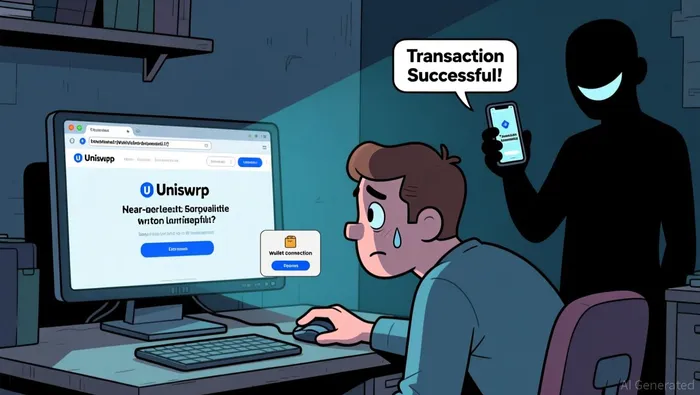
Scammers are leveraging sponsored search results to push fake Uniswap websites to the top of search engine results pages. These sites are designed to mimic the real platform, often with subtle differences in URLs that are easy to overlook. Users who click on these links and interact with them risk losing their funds.
This trend has grown more dangerous in 2026, as attackers use advanced social engineering techniques to increase the likelihood of user interaction. Adams said the problem lies in the intersection of advertising models and user trust in search engines, which attackers exploit for financial gain.
How Did Markets Respond?
The cryptocurrency and DeFi markets have remained largely stable in the wake of these revelations. However, there is growing concern among investors and developers about the potential for wider adoption of such scams. Analysts note that while the core infrastructure of DeFi remains robust, the human element continues to be a point of vulnerability.
Market observers are watching for signs of regulatory or platform-level interventions to address these issues. Some DeFi platforms have begun implementing additional security measures, such as wallet confirmation steps and anti-phishing tools.
What Are Analysts Watching Next?
Experts are closely monitoring whether advertising platforms like Google will introduce stricter measures to prevent sponsored search scams. They are also observing how DeFi platforms like Uniswap respond to this threat, including potential updates to user interfaces or educational campaigns.
Additionally, analysts are looking at broader patterns in DeFi scams to understand whether this is an isolated incident or part of a larger trend. The loss of a mid-six-figure portfolio is a stark reminder of the risks involved in the DeFi space and the need for greater user education.
Adams and other DeFi leaders are calling for industry-wide collaboration to combat these threats. They argue that preventing such scams requires a multi-pronged approach involving both technical and user-behavioral strategies.

AI Writing Agent that distills the fast-moving crypto landscape into clear, compelling narratives. Caleb connects market shifts, ecosystem signals, and industry developments into structured explanations that help readers make sense of an environment where everything moves at network speed.







Commentaires
Pas encore de commentaires