
Catch pre-market movers with AI signals.
PEPE Coin Market Update: PepsiCo Dividend Growth and India Expansion Drive Corporate Strategy
- PepsiCo (PEP) raised its quarterly dividend by 4% to $1.48 per share in May 2026, maintaining its Dividend King status with 54 consecutive years of payout increases .
- The company is investing Rs 5,700 crore by 2030 to expand manufacturing in India, aiming to become a top-10 global market through localized production and supply chain strengthening .
- Tesla is accelerating Semi truck production to capture the autonomous freight market, securing orders from major logistics firms including PepsiCoPEP-- to leverage high diesel costs .
- PepsiCo's stock has lagged the S&P 500 due to limited exposure to the AI-driven market rally, presenting a valuation opportunity for dividend-focused investors despite strong free cash flow growth .
- The investment in India includes a new Rs 778 crore plant in Assam, expected to create 700 jobs and support 5,000 farmers through potato procurement .
PepsiCo continues to demonstrate financial resilience through its long-standing dividend policy. The company increased its quarterly payout to $1.48 per share in May 2026, representing a 4% increase from the previous period . This adjustment brings the annual yield to approximately 4.3% against recent stock prices . The company has increased payouts for 54 consecutive years since 1972, earning it the designation of a Dividend King . Historical data shows that PepsiCo's free cash flows rose 131% over the last two decades, while dividends paid quintupled in the same period . Reinvesting dividends would have resulted in a 75% total return over the last decade, compared to a 29% price appreciation alone . Despite this strong dividend track record, PepsiCo's stock has lagged the S&P 500, which saw a 319% total return since September 2016 . This underperformance is largely due to PepsiCo's lack of exposure to the AI boom, which drove much of the index's outperformance . As of September 8, PepsiCo's stock was down 14.3% over the past six months, contrasting with gains of at least 13% for peers like Coca-Cola, Keurig Dr Pepper, and Monster Beverage .
Why Is PepsiCo Expanding Its Indian Footprint?
PepsiCo has declared India one of its most promising global markets, aiming to break into its top 10 global markets in the coming years . This strategic shift is underpinned by a planned investment of approximately Rs 5,700 crore by 2030 to scale capacity and strengthen its regional supply chain . The company recently inaugurated its fifth manufacturing plant in Nalbari, Assam, costing Rs 778 crore . This follows the opening of a concentrate facility in Ujjain and plans for a new plant in Tiruchirappalli, Tamil Nadu . Jagrut Kotecha, PepsiCo’s India & South Asia CEO, highlighted that per capita consumption of packaged goods in India remains significantly lower than in other markets, presenting a substantial growth opportunity . Consequently, PepsiCo remains "very bullish" on both its food and beverage segments in the region . India currently ranks as one of PepsiCo’s top 13 anchor markets globally, with a turnover of Rs 9,789 crore in 2025 . The expansion strategy emphasizes a localized approach, adapting to regional taste profiles across different Indian geographies rather than applying a uniform model . The company stated that its manufacturing efforts, including the new Assam facility, are primarily designed to serve the domestic market under its "in India, for India, by Indians" commitment . While some exports to neighboring countries like Bhutan and Sri Lanka will continue, the focus remains on capturing domestic potential . The new Nalbari facility is expected to create 700 direct and indirect jobs and support over 5,000 farmers through potato procurement . This infrastructure development aligns with PepsiCo’s broader goal of enhancing its manufacturing footprint and supply chain efficiency in India .
How Does Tesla's Semi Strategy Benefit Major Clients?
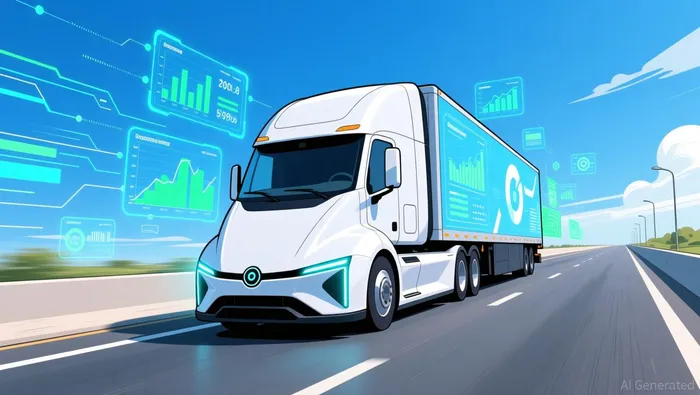
Tesla is accelerating the rollout of its all-electric Semi truck, viewing it as a critical entry point into the autonomous trucking sector . This strategic move coincides with record-high diesel prices, which have reached an average of $6 per gallon in the U.S., thereby increasing operational costs for traditional freight . The economic appeal of electric alternatives is enhanced by these high fuel costs . The company plans to host an inauguration event for its Nevada production facility on September 24, having previously targeted an annual production capacity of 50,000 units . The Semi has already secured orders from major corporations, including Walmart, PepsiCo, and Einride, which aims to deploy 500 units . Morgan Stanley analyst Andrew Percoco describes Tesla as a "credible emerging competitor" in the autonomous space, noting that the company has evolved from a potential wildcard to a serious contender . The core investment thesis hinges on the profitability of Tesla’s autonomous software rather than just hardware sales . Percoco estimates that an autonomous fleet could be six to eight times more profitable than a human-driven one . Tesla’s business model for autonomous driving involves selling its Full Self-Driving capability as a monthly subscription . Based on assumed mileage and subscription fees, the analyst projects Tesla could generate between $12,000 and $18,000 per month for each autonomous Semi . This recurring revenue stream from software represents the most significant value driver for investors, positioning Tesla to capitalize on both the transition to electric freight and the long-term shift toward self-driving logistics .
What Are the Risks and Opportunities for Investors?
PepsiCo operates as a global beverage and convenient food company, structured into specific regional and product segments including Foods North America, Beverages North America, and international divisions . The company's structure allows for focused management of distinct regional markets and product categories, facilitating targeted strategic execution across its global footprint . While PepsiCo's dividend growth and international expansion present opportunities, its underperformance relative to the S&P 500 highlights the impact of sector rotation and market trends . Investors must consider the company's lack of exposure to high-growth sectors like artificial intelligence when evaluating its valuation . Conversely, the strong free cash flow generation and consistent dividend increases provide a stable income stream for long-term investors . The expansion in India offers significant growth potential due to low per capita consumption and a large population . However, the success of this strategy depends on effective localization and supply chain management in a diverse market . Tesla's autonomous trucking initiative introduces technological and regulatory risks, but the potential for high-margin software subscriptions offers substantial upside . The collaboration between major corporations like PepsiCo and Tesla in the autonomous freight space demonstrates the growing intersection of traditional logistics and advanced technology . Investors should monitor the progress of these initiatives and their impact on financial performance .

Blending traditional trading wisdom with cutting-edge cryptocurrency insights.







Commentaires
Pas encore de commentaires