
Catch pre-market movers with AI signals.
Pampa Energía S.A.’s 2026 Call: Leverage Peaks and Urea Revenue Claims Don’t Match
Date of Call: Aug 5, 2026
Guidance:
- EBITDA for 2026 is expected to be around $600 million.
- Q3 2026 EBITDA is expected to be higher than Q2, with Q4 typically weaker due to seasonality.
- 2027 EBITDA could increase by around $100 million, though it will be affected by PPA rollouts and winter demand.
- 2028 EBITDA is expected to be about $40 million lower due to PPA rollouts.
- CapEx for 2026 is around $1 billion, mainly for Rincón de Aranda.
- CapEx for 2027 is lower, around $700 million, and maintenance CapEx thereafter is around $600 million.
- Net leverage is expected to peak around 2x and vary between 1.5x and 2x over the next 2-3 years.
- Long-term gas production is expected to average around 20 million cubic meters per day, with a peak of 20-22 million.
- Rincón de Aranda production is expected to reach 28,000 barrels per day by year-end 2026 and a plateau of 45,000 barrels per day by 2027.
- Urea project financing is expected to be finalized by late 2026, with a 60/40 debt-equity structure and major contributions in 2028.
Business Commentary:
Fertilizer Business Expansion:
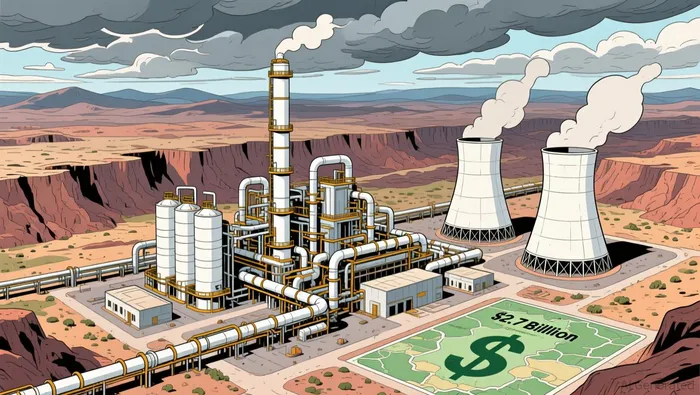
- Pampa Energía announced a $2.7 billion investment to construct Latin America’s largest urea plant, with an annual production capacity of
2.1 million tons. - The project aims to leverage the company’s shale gas reserves in Vaca Muerta, enhancing vertical integration and long-term profitability.
- The initiative is expected to contribute approximately
$1 billionannually through import substitution and increased exports.
Production and Revenue Growth:
- The adjusted
EBITDAfor Q2 2026 was$415 million, with a quarterly record production of107.5 kboeper day. - This growth was driven by the ramp-up at Rincón de Aranda and favorable gas pricing, supported by a new regulatory framework in power generation.
Power Generation Performance:
- The power generation segment reported an adjusted
EBITDAof$155 million, a39%increase year-on-year. - This improvement was due to stronger spot margins and B2B margins under the new regulatory framework, despite some operational outages.
Capital Expenditure and Financial Strategy:
- Capital expenditures for Q2 2026 were
$279 million, with significant investments in Rincón de Aranda. - The company is focused on maintaining a net leverage ratio between 1.5x and 2x, anticipating increased cash flow generation post-maturity of key projects.
Gas and Oil Segment Dynamics:
- Gas production increased by
10%year-on-year, reaching over14 million cubic metersper day. - The rise in production was driven by self-supply to power plants and higher spot margins, while oil production saw a threefold increase year-on-year due to Rincón de Aranda's performance.
Sentiment Analysis:
Overall Tone: Positive
- "Adjusted EBITDA amounted to $415 million, highlighted by a quarterly all-time high production of 107.5 kboe per day... EBITDA grew 28% quarter-on-quarter... The RIGI approval represents a significant milestone... We present the parent company figures... Free cash flow was negative $128 million in Q2, but improved year-on-year and quarter-on-quarter..." Management expressed confidence in growth projects and securing approvals.
Q&A:
- Question from Alejandro Demichelis (Jefferies): With the new expansion projects, how do you see CapEx in the next 2 to 3 years? At what level do you expect debt to leverage to peak?
Response: CapEx is around $1B in 2026, lower in 2027, then ~$600M maintenance CapEx thereafter. Net leverage should peak around 2x and vary between 1.5x and 2x over the next 2-3 years.
- Question from Guido Visosero and Santiago Herrera (Allaria): After the 23% jump in EBITDA for the first half of 2026, how do you expect evolution for second half and 2027 power generation?
Response: Q3 2026 EBITDA should jump with winter demand, Q4 weaker seasonally. 2027 EBITDA may increase by ~$100M, but will be affected by PPA rollouts. 2028 EBITDA is expected to be ~$40M lower.
- Question from Allaria: How do you expect to increase the stake of gas used for power generation, from 3% to 31% YOY?
Response: 2026 gas self-supply to power is ~40% of production. Going forward, Pampa's thermal units consume ~10M m³/day, of which 8M goes to CCGTs, representing flat consumption for self-supply.
- Question from Allaria: How do you expect petrochemical business to evolve?
Response: The petchem business contributed marginally to EBITDA this quarter due to high prices, but this is not expected to hold in the long term.
- Question from Allaria: How do you plan to finance the $3B urea project?
Response: Financing will be through project finance with limited recourse, targeting a 60/40 debt-equity ratio. Due diligence is nearing completion, with the loan expected to close in Q4 2026.
- Question from Allaria: How much revenue and EBITDA may come from the urea project?
Response: Revenue is ~$1M per year (2.1M tons/year x urea price). EBITDA is around 65% of revenue.
- Question from Allaria: What is the EBITDA impact on gas and power for the urea project?
Response: If gas production increases for urea, it could add ~$90M EBITDA to the gas segment annually. Power contribution is marginal.
- Question from Hilaria: What production ramp-up can be expected at Rincón de Aranda by year-end?
Response: Goal is to reach 28,000 BOE/day by end of Q3 2026, with production fluctuating as wells are tied in and maintained.
- Question from Bruno Montanari (Morgan Stanley): How can we think about Pampa’s long-term peak gas production?
Response: Peak gas production is expected to be between 20-22 million cubic meters per day, with an average of ~20M m³/day, selling intercompany to avoid seasonality.
- Question from Bruno Montanari (Morgan Stanley): Once we reach peak gas, how long can we sustain it and what CapEx is required?
Response: With 2P reserves, gas can be sustained for ~25 years. Annual maintenance CapEx is ~$250-$300M.
- Question from Bruno Montanari (Morgan Stanley): What is the funding strategy for the urea project?
Response: Strategy is based on monetizing gas reserves, regional urea demand, REE framework, and deploying Pampa's strong cash balance sheet.
- Question from Bruno Montanari (Morgan Stanley): What are the debt terms for the urea project?
Response: Profile likely includes a 4-year grace period and ~7-year maturity. Interest cost is still under negotiation.
- Question from Bruno Montanari (Morgan Stanley): Will oil lifting costs normalize?
Response: Lifting costs are expected to be around $10/barrel currently and drop to ~$5/barrel by Q2 2027 as production ramps and TPF efficiency improves.
- Question from Alejandro Christensen (Latin Securities): How should we think about gas lifting costs next year?
Response: Gas lifting costs are expected to remain around $0.80-$0.90 per million BTU, highly seasonal.
- Question from Alejandro Christensen (Latin Securities): When will drilling begin in the North Park of Rincón de Aranda?
Response: Comprehensive seismic studies will start in September 2026. Drilling is expected to begin in late 2027, with productivity rates lower than the current south strip.
- Question from Alejandro Christensen (Latin Securities): Which units benefit from FRA1 on Perito Moreno?
Response: The legacy Genelba CCGT will use the awarded volume consistently. Other volumes can be used seasonally for peakers or trading.
- Question from Alejandro Christensen (Latin Securities): With Plan Gas.Ar expiring, will strategy shift to transferring gas to plants?
Response: Yes, transferring Plan Gas.Ar volumes to self-supply is beneficial as it allows billing at higher pass-through prices permitted by CAMMESA.
- Question from Austin Pacheco (Maria) and Alvaro Leyva (BTG): Would you consider unwinding the oil hedge given favorable prices?
Response: No, the strategy is to keep current production hedged (until Q3 2027) and let new production be unhedged.
- Question from Juan Ignacio Lopez (Puente): What is driving the improvement in domestic gas sales, and will it persist?
Response: Improvement is due to CAMMESA's pass-through of higher LNG prices and the new deregulation (Resolution 400/2025). The dynamic is expected to evolve as procurement becomes more decentralized.
- Question from Walter Chiavesio (Santander): What is the gas production breakdown until 2030?
Response: Already discussed: peak around 20-22M m³/day, average ~20M m³/day, with flat consumption for internal Pampa needs.
- Question from Andres Cardona (Citi): Is any asset considered non-core for potential divestment?
Response: Petrochemicals are considered non-core and could be divested.
- Question from Ramiro Guerrero (Bull Market): How much of Rincón de Aranda oil is hedged through 2027 and at what price?
Response: Production is hedged for less than one year, until Q3 2027, at a weighted average price of $67 per barrel of Brent.
- Question from Ricardo Cabana (Itaú): How do you define Pampa in one sentence?
Response: Pampa Energía is an Argentine integrated energy company that invests heavily in Argentina to monetize Vaca Muerta reserves through power, urea, LNG, and other industrial segments.
- Question from Augusto Soto Baumann (Rosenthal Inversiones): Why did receivables increase significantly in Q2?
Response: Key drivers are higher gas and oil sales, improved collection efficiency (DSO improved to 54 days), and no major delays in CAMMESA payments.
- Question from Liliana Yan (HSBC): What is the update on TGS?
Response: TGS' main projects are the Iniciativa Privada (commission by next winter) and the NGL project (financing underway, awaiting RIGI approval).
- Question from Pedro Letelier: Is there a conflict between RIGI and the provincial RPIE regime for the urea project?
Response: No conflict; the regimes are complementary. Provincial approval (tax break on gross sales tax) is awaited.
Contradiction Point 1
Financing and Leverage Outlook
Contradiction on net leverage peak and trajectory over the next 2-3 years.
Alejandro Demichelis (Jefferies) - Alejandro Demichelis (Jefferies)
2026Q2: Net leverage is expected to increase to a maximum of around 2x, varying between 1.5x and 2x over the next 2–3 years. - [Fito](CFO)
Given the new expansion projects, what are your CapEx plans for the next 2–3 years, and at what level do you expect debt leverage to peak? - Alejandro Demichelis (Jefferies)
2026Q1: In 2–3 years, net leverage will be around 1.5x and gradually decline to zero as EBITDA grows from Rincón de Aranda ramp-up. - [Vito](Financial Executive)
Contradiction Point 2
Urea Project Financials
Contradiction on the expected annual revenue for the urea project at capacity.
What were Allaria's earnings for the quarter? - Allaria
2026Q2: Revenues will be ~$1 billion annually (2.1 million tons/year × urea price of ~$450/ton). - [Fito](CFO)
What are the revenue and EBITDA contributions from the urea project, and how do they impact gas and power? - Santiago Herrera (Allaria)
2026Q1: At capacity (2 million tons/year), sales could reach ~$1 billion historically, or nearly double at current prices due to Middle East disruptions. - [Gustavo Mariani](CEO)
Contradiction Point 3
2026 Capital Expenditure (CapEx) Forecast
Contradiction in the projected level of capital expenditure for 2026.
What were the key takeaways from Alejandro Demichelis's question at Jefferies during the earnings call? - Alejandro Demichelis (Jefferies)
2026Q2: CapEx will be around $1 billion in 2026 and slightly lower in 2027... - [Fito](CFO)
Given the new expansion projects, what are your expectations for CapEx over the next 2–3 years and at what level do you anticipate debt leverage to peak? - Juan Ignacio Lopez (Puente)
2025Q4: - Total 2026 CapEx is around $1.1 billion (approx. $1 billion for E&P, less than $100 million for Power, which is mainly maintenance). - [Gustavo Mariani](CEO)
Contradiction Point 4
Power Generation EBITDA Growth Outlook
Contradiction in the expected performance and growth trajectory of the Power Generation segment.
What role do Guido Visosero and Santiago Herrera play in Allaria's strategy? - Guido Visosero & Santiago Herrera (Allaria)
2026Q2: In 2027, EBITDA could increase as new long-term PPAs roll out... However, it will decline in 2028 as some PPAs expire. - [Fito](CFO)
Given the 23% EBITDA increase in H1 2026, what are your expectations for second-half 2026 and 2027 power generation? - Alejandro Christensen (Latin Securities)
2025Q4: - The Power Generation segment's EBITDA is projected to increase by 10-15% in 2026. - [Gustavo Mariani](CEO)
Contradiction Point 5
Gas Production Peak and Strategy
Contradiction regarding the peak level of gas production and related strategy.
Bruno Montanari (Morgan Stanley) - Bruno Montanari (Morgan Stanley)
2026Q2: The long-term peak gas production is estimated at between 20 and 22 million m³/day (average ~20 million)... - [Fito](CFO)
How should Pampa’s long-term peak gas production be assessed in light of internal use (power, urea) and exports? - Alejandro Demichelis (Jefferies)
2025Q4: - Natural gas production is expected to peak at ~18 million cubic meters per day during winter... - [Horacio Jorge Tomas Turri](Executive Director of Exploration & Production)

Discover what executives don't want to reveal in conference calls







Commentaires
Pas encore de commentaires