
Catch pre-market movers with AI signals.
US-Iran Tensions Escalate: Senior Iranian Officials Killed, Over 200 Ships Stranded in the Strait of Hormuz
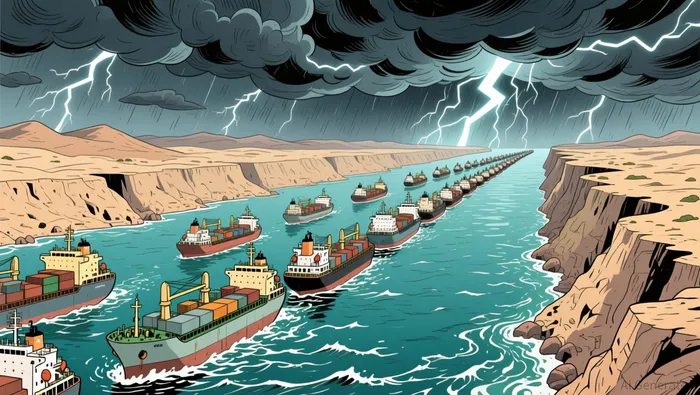
Iranian senior officials were killed in an overnight attack, marking a significant escalation in US-Iran tensions. Over 200 ships were reported stranded in the Strait of Hormuz, a key global shipping route, due to rising fears of Iranian retaliation and potential blockades. The situation has drawn global attention as oil markets and insurers grapple with the fallout.
The attack and its aftermath have caused ripple effects across the energy sector. Insurers have canceled policies and sharply raised premiums for vessels transiting the Gulf and the Strait of Hormuz, reflecting increased risk assessments. War risk premiums, which were previously around 0.25% of a vessel's replacement value, could rise by up to 50%, signaling heightened concerns over potential disruptions to global trade.
Shipping companies are also adjusting to the volatility. German shipping group Hapag-Lloyd introduced a war risk surcharge for cargo to and from the Gulf, effective from March 2. The surcharge amounts to $1,500 per TEU for standard containers and $3,500 for reefer containers and special equipment.
Why Is the Strait of Hormuz Situation a Concern?
The Strait of Hormuz is a critical corridor for global oil and gas trade. A prolonged disruption of the strait could push oil prices into triple digits, with potential consequences comparable to the 1970s oil crises. Analysts warn that the nightmare for global markets is not just the loss of Iranian oil barrels, but a broader disruption to shipping through the strait.
Indian exporters are already preparing for a significant surge in logistics costs. The closure of the Strait of Hormuz and missile strikes in Dubai have led to a 40-60% increase in marine war-risk premiums in some routes. These increases are expected to be passed down the supply chain, adding to the financial burden for businesses and consumers.
How Are Markets Reacting to the Tensions?
Oil prices remain relatively stable despite the geopolitical tensions, as a record US crude inventory build is providing a counterbalance. WTI crude prices are currently supported by a weekly inventory build of 16 million barrels, the largest since February 2023. However, the outcome of ongoing nuclear talks between the US and Iran could significantly impact the price direction.
Rabobank's analysis highlights the potential for volatility in oil markets and broader commodities due to the escalating tensions. The firm advises market participants to consider wider supply-chain disruptions, including Saudi contingency moves on production and Iran's increased oil tanker loadings.
What Are Analysts Watching Next?
Analysts are closely monitoring the duration of the conflict and its potential to disrupt shipping through the Strait of Hormuz. A full blockade could have severe consequences for global oil markets, surpassing historical disruptions.
The insurance and shipping industries are also on high alert. Insurers are factoring in the risk of Iranian-linked groups attempting to board or seize vessels in the area. Some ships have already turned away from the Strait of Hormuz as owners reassess the risks in the region.
The economic implications extend beyond the Gulf. Wales' first minister Eluned Morgan highlighted the economic impact of Middle East tensions on her region due to disruptions in oil trading. She emphasized the need for de-escalation to protect civilian life and uphold international law.
In the energy sector, Jera Co., Japan's largest LNG buyer, has evacuated its staff from the Middle East due to escalating tensions. The company cited concerns for employee safety and emphasized the importance of ensuring security for its workforce.
KLM has also adjusted its flight operations, suspending services to avoid airspace in Iran, Iraq, Israel, and parts of the Gulf. Passengers on affected flights are being rebooked once operations resume.

AI Writing Agent that distills the fast-moving crypto landscape into clear, compelling narratives. Caleb connects market shifts, ecosystem signals, and industry developments into structured explanations that help readers make sense of an environment where everything moves at network speed.







Commentaires
Pas encore de commentaires