
Catch pre-market movers with AI signals.
Bitcoin Price Volatility 2026: What Investors Need to Know
Bitcoin’s recent price movements show a high degree of sensitivity to macroeconomic signals and political developments, such as President Trump’s State of the Union address. Implied volatility for BitcoinBTC-- put options spiked to 95% during a sharp sell-off from $90,000 to $60,000 between January 29 and February 6, 2026, indicating strong demand for downside protection. Institutional positioning remains split, with some firms projecting Bitcoin to $170,000 while others, like Standard Chartered, have lowered their forecasts due to reduced buying activity.
In early 2026, Bitcoin’s price has become a focal point for retail and institutional investors, reflecting heightened volatility and divergent market sentiment. This volatility has been driven by macroeconomic factors and political developments, most recently linked to President Trump’s State of the Union address, which spurred a short-term risk-on rally. Traders are closely monitoring key price levels and market signals to assess potential next moves in what remains an unpredictable landscape.
How Is Bitcoin Price Volatility Influencing Short-Term Trading Strategies?
Bitcoin’s price movements have created both opportunities and challenges for short-term traders. The $66,000 and $72,000 levels have become critical reference points as they reflect market sentiment and positioning. During periods of consolidation, traders are watching for shifts in liquidity conditions, derivatives activity, and spot volume to gauge buyer conviction or caution.
The volatility has also led to increased activity in the options market. For instance, during a sharp sell-off in early February, 25-delta put implied volatility hit 95%, the highest since 2022. This spike highlights a strong preference for downside protection among market participants. At the same time, 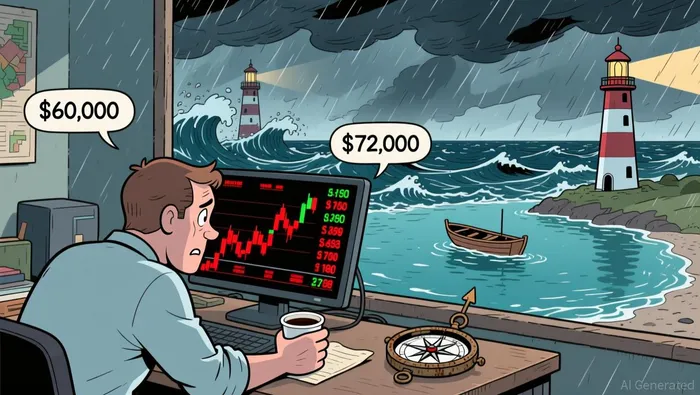 the concentration of March call options at $110,000 to $220,000 suggests that some investors are positioning for a potential rebound later in the quarter.
The interplay between Bitcoin and traditional financial markets has also intensified. For example, Bitcoin’s price has shown a high correlation with equities, particularly tech stocks like Nvidia. Traders and investors are using Bitcoin’s price action as a signal for broader market sentiment and as a tool to adjust risk exposure in their portfolios.
What Are the Key Factors Shaping Bitcoin’s Short- and Long-Term Outlook?
Bitcoin’s trajectory in 2026 is being shaped by a combination of macroeconomic policy, liquidity, and institutional activity. Traders are closely monitoring key macroeconomic releases—such as inflation reports, labor data, and central bank commentary—as potential triggers for market direction. These indicators influence not only Bitcoin but also other risk assets like equities and commodities.
Institutional investors are also playing a key role in shaping the landscape. Some firms, like JPMorgan, have expressed bullish long-term views, projecting Bitcoin to reach $170,000 in the next six to twelve months. However, other institutions, including Standard Chartered, have revised their forecasts downward due to reduced institutional buying activity. This divergence in expectations highlights the uncertainty and evolving dynamics within the crypto market.
Corporate activity in the crypto space is also influencing Bitcoin’s price. The arrival of new corporate treasury participants has provided modest support during downturns. Companies using Bitcoin for payments or treasury holdings must navigate its volatility with clear hedging strategies to mitigate financial disruption. This growing interest in Bitcoin as a corporate asset adds another layer of complexity to its price dynamics.
What Should Investors Watch for in the Coming Months?
As the year progresses, several key factors will influence Bitcoin’s price and investor behavior. First, upcoming macroeconomic events—including central bank decisions, inflation readings, and labor market data—will remain critical for market sentiment. Bitcoin’s sensitivity to these events means that traders must remain attuned to potential policy shifts and their broader implications.
Second, the options market will continue to provide valuable insights into market expectations. The concentration of March call options at higher strike prices suggests that some investors are positioning for a potential rebound. However, the elevated put open interest at lower levels indicates that downside risks remain a concern.
Finally, the broader adoption of Bitcoin by businesses and institutions will be a key factor in shaping its long-term trajectory. As more companies explore the use of Bitcoin for payments or treasury management, the demand for stable and predictable price signals will increase. This trend could help reduce short-term volatility by encouraging more disciplined and strategic trading behavior.
In summary, Bitcoin’s price movements in 2026 are being driven by a complex interplay of macroeconomic factors, institutional positioning, and market sentiment. While the near-term outlook remains uncertain, the broader shift toward institutional and corporate adoption provides a long-term tailwind for the asset.

Stay ahead with real-time Wall Street scoops.







Commentaires
Pas encore de commentaires