
ZOOZ's Bitcoin Treasury Strategy: A High-Risk, High-Reward Play Amid Nasdaq Delisting Threats
ZOOZ Power (Nasdaq: ZOOZ) has made headlines with its audacious BitcoinBTC-- treasury strategy, allocating 95% of a $180 million private placement (PIPE) to acquire Bitcoin, positioning itself as a dual-listed company on Nasdaq and TASE offering direct investor exposure to the cryptocurrency according to reports. This move, approved by shareholders in September 2025, has expanded ZOOZ's Bitcoin holdings to 1,036 coins, valued at approximately $115 million as of October 2025 as reported. However, the company now faces a critical juncture: Nasdaq notified ZOOZ on December 16, 2025, that its stock price has fallen below the $1.00 minimum bid requirement, giving it until June 15, 2026, to regain compliance or risk delisting according to the official notification. This article evaluates the strategic merits and risks of ZOOZ's Bitcoin treasury strategy in the context of its delisting countdown and evolving regulatory landscape.
Strategic Merits: Bitcoin as a Growth Engine
ZOOZ's decision to treat Bitcoin as a core asset reflects a bold bet on the cryptocurrency's long-term value. By allocating nearly all proceeds from its $180 million PIPE to Bitcoin, the company aims to align its financial performance with the asset's appreciation while offering shareholders indirect exposure to a high-growth, decentralized asset class according to analysis. This strategy mirrors the playbook of companies like MicroStrategy and Tesla, which have leveraged Bitcoin as a hedge against inflation and a store of value.
The rationale is compelling: Bitcoin's market capitalization has shown resilience despite macroeconomic headwinds, and its scarcity (21 million supply cap) positions it as a potential inflationary hedge in a world of quantitative easing as per financial guides. For ZOOZ, holding Bitcoin could amplify shareholder value if the asset's price surges, particularly as the company's dual listing on TASE (Tel Aviv Stock Exchange) provides access to both U.S. and Israeli markets according to company updates. Additionally, the company's transparency in disclosing Bitcoin holdings-such as its October 2025 purchase of 94 additional coins-builds trust with investors as reported.
Risks: Volatility, Delisting, and Regulatory Scrutiny
ZOOZ's 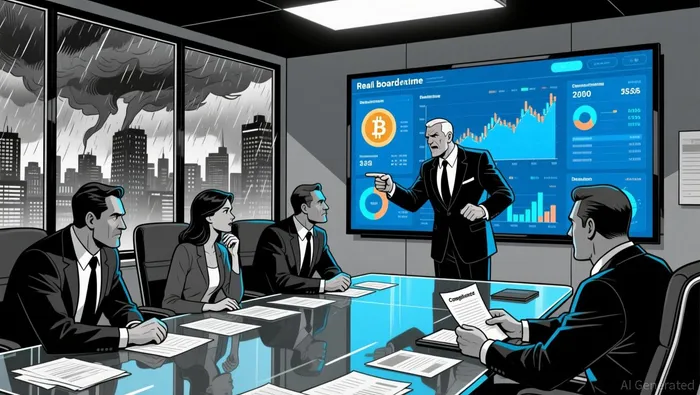 primary risk lies in Bitcoin's volatility. A sharp decline in the cryptocurrency's price could erode ZOOZ's treasury value and exacerbate its stock price woes. For instance, if Bitcoin drops below $100,000 its October 2025 price of ~$110,000, ZOOZ's $115 million holdings could shrink significantly, reducing the company's ability to fund operations or execute share repurchases as stated in the announcement. This volatility also complicates ZOOZ's efforts to meet Nasdaq's $1.00 bid price requirement, as its stock price is likely tied to both Bitcoin's performance and broader market sentiment.
Nasdaq's delisting threat adds urgency. The exchange has strict compliance rules, and ZOOZ's 180-day cure period ends in mid-2026-a timeframe that could be shortened if Bitcoin's price tanks or the company fails to execute a reverse share split as reported. The risk is not hypothetical: KindlyMD, another Bitcoin-focused firm, faces a similar delisting countdown after its stock price plummeted 99% year-to-date according to crypto analysis. These cases highlight the precarious balance between innovation and compliance in crypto-adjacent equities.
Regulatory challenges further complicate ZOOZ's strategy. Nasdaq updated its guidelines in September 2025, requiring shareholder approval for equity issuances funding crypto purchases-a rule ZOOZ navigated via its September 2025 shareholder vote according to industry analysis. However, future regulatory shifts-such as stricter SEC scrutiny of crypto assets-could force ZOOZ to defend its strategy in a more hostile environment.
Balancing the Equation: A High-Risk, High-Reward Play
ZOOZ's Bitcoin treasury strategy is a double-edged sword. On one hand, it positions the company as a pioneer in merging traditional finance with crypto, potentially attracting a new breed of investor seeking exposure to Bitcoin without directly holding the asset. On the other, it exposes ZOOZ to the same volatility and regulatory uncertainties that have plagued pure-play crypto firms.
For investors, the key question is whether ZOOZ can stabilize its stock price while leveraging Bitcoin's upside. A reverse share split-a common tactic for delisting-avoidance-could boost the bid price temporarily but might dilute existing shareholders. Meanwhile, the company's $50 million share repurchase program (announced in October 2025) signals confidence in its intrinsic value as reported. However, these measures may prove insufficient if Bitcoin's price stagnates or declines.
Conclusion: A Gamble Worth Monitoring
ZOOZ's Bitcoin treasury strategy is a high-stakes gamble with the potential to redefine its value proposition. If Bitcoin continues to appreciate and the company executes its compliance measures effectively, ZOOZ could emerge as a unique hybrid of traditional equity and crypto exposure. Conversely, a market downturn or regulatory crackdown could accelerate its delisting, leaving shareholders with significant losses.
Investors must weigh these risks against the rewards, keeping a close eye on Bitcoin's price trajectory, ZOOZ's compliance efforts, and the broader regulatory environment. For those comfortable with volatility and long-term crypto bets, ZOOZ offers an intriguing, albeit risky, opportunity. For others, the delisting countdown and asset concentration may warrant caution.







Comentarios
Aún no hay comentarios