
Zoox's Strategic Position in the Autonomous Mobility Market: A Disruptive Force for Amazon and Investors
The autonomous mobility revolution is accelerating, and Zoox-Amazon's autonomous vehicle subsidiary-is emerging as a pivotal player. With its purpose-built robotaxi designs, strategic partnerships, and aggressive expansion plans, Zoox is poised to disrupt traditional ride-hailing while unlocking long-term value for AmazonAMZN-- and investors. As the global autonomous vehicle market is projected to grow from $68.09 billion in 2024 to $214.32 billion by 2030, Zoox's unique position within this ecosystem warrants a closer look.
Technological Differentiators: Purpose-Built Design and Patent Leadership
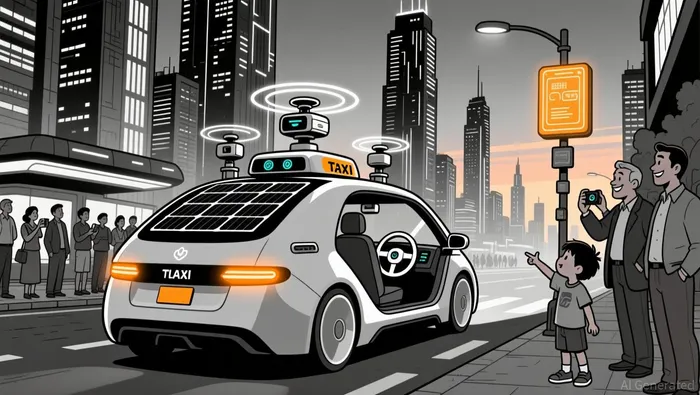
Zoox's core advantage lies in its innovative approach to vehicle design. Unlike retrofitting existing cars for autonomy, Zoox has developed custom-built, bidirectional electric vehicles optimized for urban environments. These vehicles lack traditional steering wheels or pedals, prioritizing passenger comfort and safety with advanced sensor arrays-including lidar, radar, and thermal cameras. This design philosophy aligns with Amazon's broader push for sustainable logistics, as Zoox's electric platform could reduce carbon footprints while cutting costs.
The company's robust patent portfolio further solidifies its competitive edge. According to patent analytics, Zoox holds key intellectual property in driving assistance, signaling, and cruise control technologies. These patents not only protect its innovations but also position Zoox to license technology or collaborate with other players in the autonomous mobility space.
Strategic Partnerships and Production Scaling
Zoox's ability to scale hinges on strategic alliances. A notable partnership with Panasonic Energy, which will supply 2170 cylindrical batteries starting in 2026, underscores its commitment to reliable and scalable power solutions. This collaboration is critical for Zoox's Hayward, California, production facility, which aims to manufacture 10,000 vehicles annually by 2026. Such capacity is essential to meet the projected demand for robotaxis, which Goldman Sachs estimates could generate $7 billion in annual U.S. revenue by 2030.
Amazon's financial muscle also plays a role. While Zoox's direct financials aren't disclosed in Amazon's quarterly reports, the parent company's AWS segment-a key revenue driver posted $33 billion in sales during Q3 2025, reflecting the broader ecosystem's strength. This financial backing provides Zoox with the runway to navigate the high costs of R&D and regulatory compliance.
Market Positioning: Competing with Waymo and Beyond
Zoox's expansion into San Francisco and Las Vegas highlights its aggressive market strategy. In San Francisco, the company launched a free robotaxi program in November 2025, offering rides in neighborhoods like SoMa and the Mission District. This move directly challenges Waymo, the current leader in autonomous ride-hailing, while testing public acceptance of driverless services.
Regulatory milestones, such as an NHTSA exemption, allowing Zoox to operate 2,500 driverless vehicles annually, further validate its progress. However, hurdles remain: the company still needs permits from the California Public Utilities Commission to charge for rides. These challenges are not unique to Zoox-Waymo and Tesla face similar regulatory and technical barriers-but Zoox's bidirectional design and electric focus may give it an edge in urban markets prioritizing sustainability.
Market Projections: A $43.76 Billion Robotaxi Opportunity by 2030
The robotaxi segment alone is expected to grow at a staggering 73.5% CAGR, reaching $43.76 billion by 2030. Zoox's early mover status in key U.S. cities positions it to capture a significant share of this market. According to Goldman Sachs, by 2030, autonomous vehicles could account for 8% of the rideshare market, a figure that could rise as costs decline and consumer trust grows.
Zoox's integration with Amazon's logistics network adds another layer of value. The company's technology could reduce Amazon's shipping costs by optimizing delivery routes and enabling autonomous last-mile solutions. This synergy between Zoox's mobility innovations and Amazon's e-commerce infrastructure creates a flywheel effect, where advancements in one area accelerate growth in the other.
Challenges and Risks
Despite its strengths, Zoox faces significant challenges. Regulatory approvals remain fragmented, with cities adopting varying standards for autonomous vehicles. Additionally, scaling production to meet demand while maintaining safety and quality will test Zoox's operational capabilities. Competitors like Waymo and Tesla are also advancing rapidly, with Waymo's extensive testing in Phoenix and Tesla's Optimus software updates narrowing the gap.
However, Zoox's focus on purpose-built vehicles and its alignment with Amazon's long-term vision provide a buffer against these risks. The company's Hayward facility, capable of producing 10,000 units annually, is a testament to its commitment to scaling. Moreover, Amazon's willingness to invest in high-risk, high-reward ventures-evidenced by its $12 billion acquisition of Zoox-suggests a long-term horizon that prioritizes market leadership over short-term profits.
Long-Term Value for Amazon and Investors
For Amazon, Zoox represents more than a ride-hailing play-it's a strategic asset to transform urban mobility and logistics. By 2030, the autonomous vehicle market could save Amazon billions in shipping costs while enhancing its customer experience through seamless, on-demand transportation. For investors, Zoox's potential to capture a portion of the $43.76 billion robotaxi market by 2030 offers a compelling growth story, particularly as the company transitions from pilot programs to paid services in 2026.
The broader semiconductor and software-defined vehicle (SDV) markets also benefit from Zoox's success. As the automotive semiconductor market grows from $77.42 billion in 2025 to $133.05 billion by 2030, Zoox's partnerships with suppliers like Panasonic could create ancillary revenue streams and strengthen its supply chain.
Conclusion
Zoox's strategic position in the autonomous mobility market is defined by its technological innovation, regulatory progress, and alignment with Amazon's ecosystem. While challenges persist, the company's purpose-built vehicles, production scalability, and early expansion into key cities position it as a formidable disruptor. As the robotaxi market surges toward $43.76 billion by 2030, Zoox's ability to navigate regulatory hurdles and scale operations will determine its long-term value. For Amazon and investors, the stakes are high-but so is the potential.







Comentarios
Aún no hay comentarios