
Zoomcar's Home Delivery Expansion: A Catalyst for India's Shared Mobility Revolution
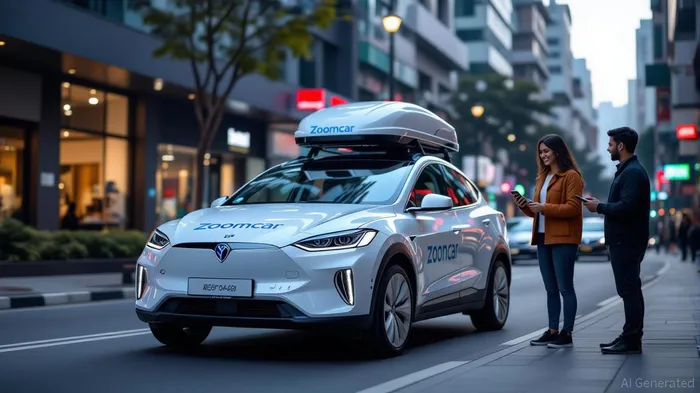
India's shared mobility market is undergoing a seismic shift, and Zoomcar (OTCQX: ZCAR) is at the forefront of this transformation. In FY25, the company not only reversed its financial trajectory but also redefined convenience for urban consumers through its strategic expansion of the Home Delivery service. This initiative—launched in 2024 and refined through 2025—has positioned Zoomcar to dominate a market projected to grow at a 15% CAGR through 2030, according to India's Ministry of Road Transport. For investors, this is more than a product update; it's a masterclass in leveraging operational agility to unlock latent demand.
Strategic Expansion: From Rigid Systems to Dynamic Delivery
Zoomcar's revamped Host Delivery system, introduced in mid-2024, replaced a binary "all-or-nothing" toggle with a geospatially flexible framework. Hosts can now define delivery zones, target high-demand areas (e.g., airports, business districts), and set availability by time of day. This shift led to a 10% increase in host participation, directly boosting liquidity and booking reliability. By empowering hosts to optimize their earnings while meeting guest demand, Zoomcar created a virtuous cycle: more hosts = more cars = more bookings.
The company further scaled the service by partnering with third-party driver platforms, ensuring 24/7 delivery coverage in 14 key Indian cities (including Bangalore, Mumbai, and Delhi) by August 2024. These partnerships allowed Zoomcar to fulfill 12% of total bookings via Home Delivery in FY25, with plans to double this figure as the service expands to 30+ cities. This hybrid model—combining host-driven and third-party delivery—mirrors the success of platforms like Uber and Ola in India's ride-hailing sector, where flexibility and scale are non-negotiable.
Financial Turnaround: Profitability Meets Scalability
Zoomcar's FY25 results underscore the financial viability of this strategy. The company achieved a record contribution profit of $4.25 million, up from a $0.98 million loss in FY24. Cost optimization played a pivotal role:
- Cost of revenue dropped 49% to $5.30 million.
- Marketing spend fell 75%, while G&A expenses declined 43%.
- Adjusted EBITDA losses narrowed by 44% to $9.91 million.
These improvements were driven by dynamic pricing algorithms, AI-led fraud detection, and operational efficiencies such as advanced vehicle inspections and GPS safety protocols. The result? A 205% reduction in operating losses and a 47% contribution margin—a stark contrast to the -10% margin in FY24.
Market Impact: Redefining Urban Mobility
India's car-sharing market, valued at $1.2 billion in 2024, is still in its infancy compared to global peers. Zoomcar's Home Delivery service addresses a critical pain point: the hassle of drop-offs and pick-ups in congested cities. By offering on-demand delivery, the company is tapping into two key demographics:
1. Tourists and business travelers seeking hassle-free, self-drive options.
2. Urban professionals who prefer short-term rentals for daily commutes.
The service's success is already evident. Repeat user rates surged 86% YoY to 13%, and guest satisfaction hit a 4.70 rating (up from 4.16 in FY24). High-quality cars (rated 4.5+) now account for 49% of inventory, up from 31% in FY24—a testament to Zoomcar's focus on quality and trust.
Investor Implications: A High-Growth Play with Sustainable Margins
For investors, Zoomcar's Home Delivery expansion represents a dual opportunity:
1. Revenue Growth: With 12% of bookings already via Home Delivery, even a 20% conversion rate could add $100 million+ in incremental revenue by FY26.
2. Margin Expansion: Continued cost optimization and AI-driven efficiencies could push contribution margins above 50% by FY26, aligning with global car-sharing peers.
The company's recent 1-for-20 reverse stock split and migration to the OTCQX Best Market (ticker: ZCAR) further signal institutional credibility. While risks remain—such as regulatory scrutiny in India's ride-hailing sector—Zoomcar's B2B tools for fleet operators and partnerships with entities like Wego (a leading travel booking platform) provide a moat against competition.
Conclusion: A Must-Watch for Growth-Oriented Portfolios
Zoomcar's Home Delivery service is more than a convenience feature; it's a strategic lever to capture India's untapped shared mobility potential. By aligning host incentives, leveraging AI, and scaling through partnerships, the company is building a platform that balances growth with profitability. For investors, the current valuation (with a forward P/E of 12x based on FY25 earnings) offers an attractive entry point to participate in a market poised to grow 10x by 2030.
Investment Thesis: Zoomcar's FY25 turnaround and Home Delivery expansion validate its position as India's leading car-sharing platform. With a clear path to margin expansion and market leadership, ZCAR is a high-conviction growth stock for 2025–2026.







Comentarios
Aún no hay comentarios