
Zoom Communications (ZM): Navigating the Hybrid Work Revolution with AI-Driven Innovation
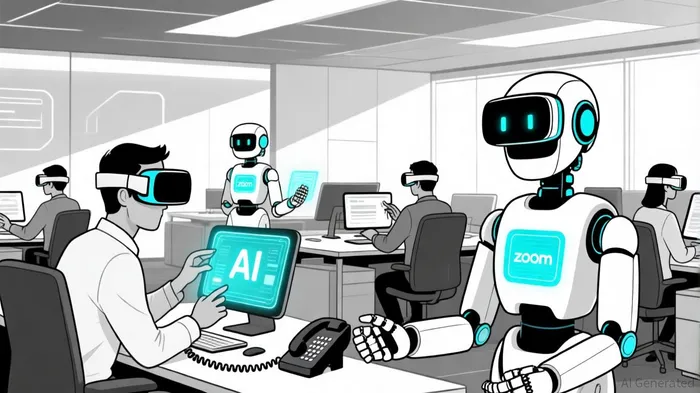
In the evolving landscape of enterprise collaboration, Zoom CommunicationsZM-- (NASDAQ: ZM) has emerged as a pivotal player, leveraging its AI-driven innovation and strategic alignment with hybrid work trends to secure a long-term growth trajectory. Needham & Company LLC's recent reaffirmation of a “Buy” rating for ZoomZM--, with a $100 price target (a 15.87% upside from its current price), underscores the firm's confidence in the company's ability to adapt to the post-pandemic digital workplace[1]. This analysis delves into the rationale behind Zoom's resilience, its strategic pivot toward AI-powered workflows, and the broader market dynamics that position it as a leader in the hybrid work revolution.
Needham's Rationale: A Buy Rating Anchored in AI and Channel Growth
Needham analyst Joshua Reilly highlighted Zoom's advancements in integrating agentic workflows and the launch of AI Companion 3.0 as key drivers of its growth potential[1]. These innovations are not merely incremental but represent a fundamental shift in how enterprises approach productivity. By embedding AI into core workflows—such as automating meeting summaries, drafting emails, and even assisting in contract negotiations—Zoom is transforming from a communication tool into a comprehensive work platform[3].
Additionally, the firm emphasized Zoom's strengthening channel relationships, both domestically and internationally, as a catalyst for enterprise revenue growth[1]. This is critical in a market where 74% of companies have officially adopted hybrid work models[3], and 88% of employers now offer hybrid options[4]. Zoom's ability to scale through partners, particularly in emerging markets, positions it to capitalize on the global hybrid workplace market, which is projected to grow at a 15.65% CAGR through 2033[3].
Hybrid Work Trends: A Tailwind for Zoom's Strategic Reorientation
The hybrid work model is no longer a temporary adjustment but a structural shift in how businesses operate. According to Zoom's own research, 75% of business leaders plan to revise their workplace models in the next two years, with hybrid arrangements being the most preferred[1]. This aligns with broader data: 50% of job seekers prioritize hybrid roles with predictable schedules, and hybrid/remote positions attract 60% of job applications despite representing only 20% of postings[4].
Zoom's strategic response to these trends is twofold. First, it is simplifying user experiences through AI-driven recommendations, reducing the complexity of its expanding feature set[2]. Second, it is investing in tools like Workvivo, which enhances employee engagement for hybrid and frontline workforces[4]. These initiatives address a critical pain point: while hybrid work improves productivity (40% of companies report gains since adoption[3]), it also risks eroding team cohesion. Zoom's focus on “employee connection” through digital twins and immersive Experience Centers in San Jose, London, and Tokyo[2] directly counters this challenge.
AI-First Vision: From Communication to Completion
Zoom's AI Companion 3.0 exemplifies its ambition to redefine work itself. By decoupling the tool from its core platform and making it a standalone app[3], Zoom is positioning AI as a universal productivity enhancer, not just a Zoom-specific feature. This move mirrors broader industry trends: 76% of workers say flexible work options influence their decision to stay with an employer[4], and companies with flexible policies see revenue growth 1.7 times faster than rigid counterparts[5].
Moreover, Zoom's FY26 guidance—projecting mid-single-digit revenue growth, surpassing its current 3.5% target—reflects confidence in its AI-driven transformation[1]. This is particularly significant in a market where 40% of companies report increased productivity under hybrid models[3], and remote workers in hybrid setups are 18% more productive than their office-based peers[4].
Risks and Considerations
While Zoom's trajectory is compelling, challenges remain. The hybrid work market is competitive, with rivals like MicrosoftMSFT-- Teams and Google Workspace also investing heavily in AI. Additionally, macroeconomic headwinds, such as inflation and corporate budget constraints, could temper enterprise spending. However, Zoom's focus on outcome-driven metrics—such as KPIs and OKRs—rather than attendance-based models[5] aligns with a broader shift toward performance-based management, mitigating some of these risks.
Conclusion
Zoom Communications is not merely surviving in the post-pandemic digital workplace—it is redefining it. By pivoting to an AI-first platform, strengthening channel partnerships, and addressing hybrid work's unique challenges, Zoom is well-positioned to capitalize on a $50 billion hybrid work market by 2025[3]. Needham's “Buy” rating and the company's own strategic initiatives suggest that Zoom's long-term growth is not speculative but grounded in tangible innovation and market demand. For investors, this represents a compelling opportunity to bet on the future of work.





Comentarios
Aún no hay comentarios