
Zohran Mamdani's Political Evolution and New York's Investment Crossroads: Navigating Policy-Driven Transformation
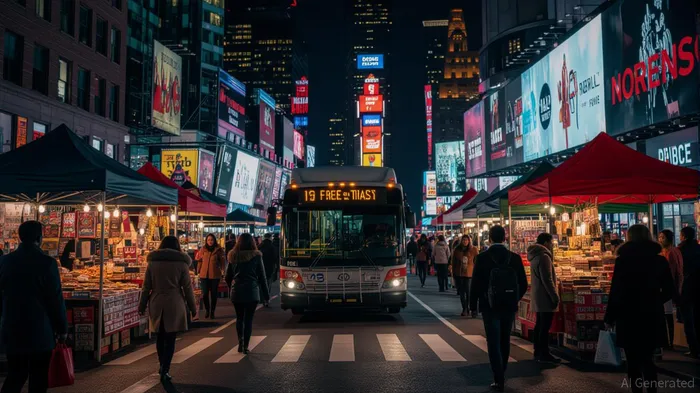
New York City stands at a pivotal juncture, with Zohran Mamdani's meteoric rise in the 2025 mayoral race reshaping the city's economic and political landscape. As a democratic socialist with deep ties to the Democratic Socialists of America (DSA), Mamdani's agenda—centered on affordability, public ownership, and progressive taxation—has ignited both enthusiasm and alarm. For investors, this policy-driven transformation presents a complex interplay of risks and opportunities, demanding a nuanced understanding of how New York's evolving priorities will recalibrate industries from real estate to retail.
The Policy Engine: Mamdani's Platform and Its Economic Implications
Mamdani's platform is anchored in five pillars: rent freezes, free public transit, universal childcare, city-owned enterprises, and higher taxes on corporations and the wealthy. These proposals are not mere political rhetoric; they are designed to address systemic inequities while reshaping the city's economic architecture. For example, his rent freeze for 2 million rent-stabilized tenants seeks to curb displacement, but it also threatens the financial viability of landlords, particularly small operators grappling with rising property taxes, insurance costs, and maintenance expenses.
The real estate sector has already felt the tremors. Flagstar Bank, a major lender to New York's multi-family housing market, saw its shares drop 6% following Mamdani's primary victory. Deutsche BankDB-- analysts estimate $11–$18 billion of its loan book is exposed to rent regulation risks, illustrating how policy shifts can reverberate through capital markets. Smaller landlords, many of whom rely on vacancy increases and rent adjustments to service debt, face existential threats.
Real Estate: A Tale of Two Markets
The real estate sector is bifurcating under Mamdani's policies. On one hand, rent-stabilized landlords—especially in high-cost areas like Manhattan and the Bronx—risk eroding profit margins. On the other, the city's push to build 200,000 affordable housing units over a decade could create construction and development opportunities for firms aligned with public-private partnerships. Investors must weigh the short-term volatility of rent regulation against long-term gains in affordable housing infrastructure.
For example, companies like have seen declines as market participants anticipate higher corporate tax rates and reduced demand for luxury properties. Conversely, firms specializing in affordable housing construction or modular housing solutions may benefit from increased public investment.
Retail and Consumer Goods: Disruption and Resilience
Mamdani's plan to establish city-owned grocery stores at wholesale prices threatens to disrupt traditional retail models. While this could reduce food insecurity and stabilize prices, it also challenges private retailers and suppliers. Investors in grocery chains like AlbertsonsACI-- or WalmartWMT-- may face margin pressures, but those in agricultural supply chains or wholesale distributors could gain from increased public procurement.
The broader retail sector must also adapt to a potential shift in consumer behavior. Free public transit and universal childcare could boost disposable income for working-class families, potentially driving demand in sectors like education, healthcare, and local services.
Labor and Productivity: A Double-Edged Sword
Mamdani's proposals to raise the minimum wage to $30/hour by 2030 and improve childcare access aim to enhance labor force participation, particularly among women and underrepresented groups. While this could boost productivity and reduce turnover, it also raises labor costs for businesses. Investors in labor-intensive industries (e.g., hospitality, delivery services) must assess whether these policies will incentivize automation or out-of-state relocation.
The Taxation Conundrum: Funding the Vision
Mamdani's tax plan—targeting the top 1% of earners and corporations with rates up to 11.5%—is a fiscal lever to fund his agenda. While this could generate $10 billion in revenue, it also risks triggering capital flight or reduced investment in New York. highlights how the city's tax environment is becoming less competitive, potentially pressuring businesses to relocate to markets like Miami or Texas.
Strategic Investment Considerations
For investors, the key lies in hedging against policy risks while capitalizing on structural shifts. Here are three actionable strategies:
1. Diversify Real Estate Exposure: Reduce reliance on rent-stabilized assets and explore opportunities in affordable housing development or infrastructure-related sectors.
2. Monitor Public-Private Partnerships: Track contracts with the city for affordable housing, transit projects, and public childcare centers, which could offer stable returns.
3. Assess Tax Policy Impact: Stress-test portfolios against higher corporate tax rates and evaluate the feasibility of relocating operations to lower-tax jurisdictions.
Conclusion: A City in Transition
New York's transformation under Mamdani's leadership is neither a utopian experiment nor a dystopian collapse. It is a recalibration of priorities, driven by a generation that values equity as much as efficiency. For investors, the challenge is to navigate the turbulence while recognizing that policy-driven change can unlock new markets and redefine value. As the city's political and economic dynamics evolve, agility and foresight will be the currencies of success.
The data underscores a diverging trend: while the broader market thrives, New York's real estate sector faces a bumpy ride. Yet, history shows that cities that reinvent themselves—like Tokyo post-1990 or London post-Brexit—can emerge stronger. The question for investors is not whether New York will change, but how they will adapt to its next chapter.





Comentarios
Aún no hay comentarios