
ZKsync Navigates Ethereum Scaling and Reliability Challenges
- Ethereum's ZK-EVM integration could accelerate adoption of ZKsync's scaling technology according to MEXC.
- Starknet outages highlight persistent reliability concerns for ZK-rollup users as reported.
- Regulatory clarity may drive institutional interest in Ethereum's Layer-2 ecosystem according to analysis.
- Broader crypto market trends could affect capital flows into scaling solutions according to CoinStats.
ZKsync (ZK) faces pivotal opportunities and challenges as Ethereum's infrastructure evolves. The ZK-rollup protocol stands to benefit from Ethereum's shift toward ZK-EVM technology while navigating heightened reliability expectations. Recent Layer-2 network outages have intensified scrutiny on transaction finality risks as reported. Market participants are evaluating how regulatory developments and institutional trends might shape ZKsync's adoption trajectory.
How Does Ethereum's Evolution Impact ZK-Rollups Like ZKsync?
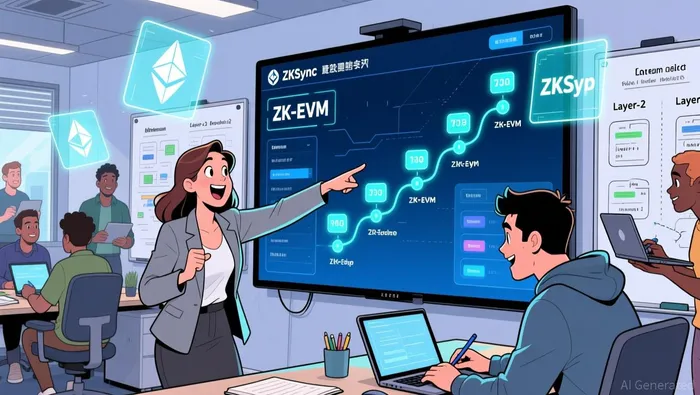
Ethereum's integration of ZK-EVM and PeerDAS technologies marks a fundamental architectural shift according to MEXC. This transition enhances ZKsync's strategic relevance as a zero-knowledge proof scaling solution. The roadmap prioritizes efficient block validation and data availability improvements through 2027. ZK-rollups could become Ethereum's default scaling mechanism by 2030 if development milestones are achieved. This positions ZKsyncZK-- at the forefront of Ethereum's scalability ambitions.
ZKsync's technology aligns with core components of Ethereum's new decentralized network design. The protocol's zero-knowledge proofs offer ultra-efficient transaction validation matching Ethereum's technical direction. Early ZK-EVM node operations expected in 2026 may create integration opportunities according to MEXC. Network effects could develop as Ethereum's base layer evolves to natively support ZK-rollup architectures.
What Reliability Risks Do Layer-2 Networks Pose?
Recent StarknetSTRK-- outages exposed critical vulnerabilities in Layer-2 sequencers that froze user funds as reported. These incidents demonstrate how transaction reorganizations can disrupt trading and DeFi operations. ZKsync operates in the same technical category facing comparable sequencer reliability challenges. Users face tangible risks when network failures cancel transactions after presumed confirmation.
Such outages influence developer preferences and user trust across Ethereum's scaling ecosystem. Starknet's multi-hour downtime contrasts with competing Layer-2 networks that maintained uptime according to Yahoo Finance. Teams providing transparent incident responses typically rebuild credibility faster. ZKsync must prioritize sequencer resilience as operational stability becomes a key adoption metric.
How Could Market Trends Influence ZK-Rollup Adoption?
Regulatory developments are reshaping institutional engagement with crypto infrastructure. The proposed CLARITY Act could classify EthereumETH-- as a digital commodity under CFTC oversight according to analysis. Such clarity might reduce compliance barriers for Layer-2 solutions like ZKsync. Established frameworks often accelerate institutional participation in new technologies.
Broader market dynamics also affect capital allocation toward scaling solutions. Institutional investors are accumulating crypto assets at levels supporting Bitcoin's $3 trillion market capitalization floor according to CoinStats. Capital rotation from traditional assets could increase demand for efficient Ethereum transactions. ZKsync adoption may rise alongside growing institutional activity requiring low-cost settlements.
Ethereum's price stability around the $2,900-$3,150 range could support Layer-2 development funding according to CoinStats. Market liquidity remains essential for ZK-rollups attracting developers and users. Protocol advancement faces pressure if Ethereum enters prolonged consolidation according to CoinStats.






Comentarios
Aún no hay comentarios