
ZKP, XRP, Ethereum & Avalanche Lead as Top Crypto Gainers of 2026, But Only One Carries 600x ROI Potential
ZKP, XRPXRP--, EthereumETH--, and AvalancheAVAX-- have emerged as the leading cryptocurrency projects in 2026. The market is showing a strong preference for digital assets with robust infrastructure and real-world applications. This trend has created a sharp divide between speculative tokens and those offering immediate utility.
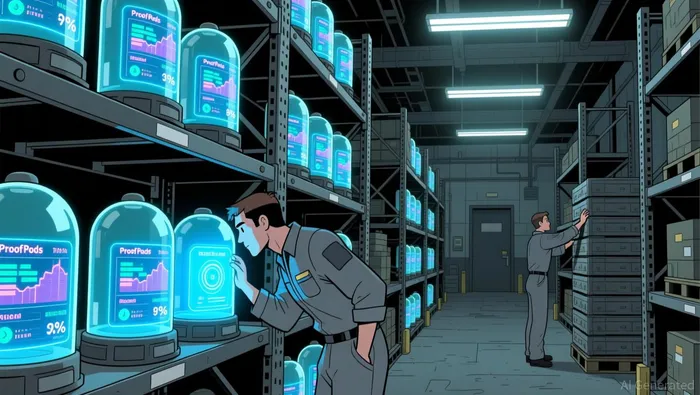
ZKP is currently drawing the most attention among crypto investors. The project has launched a presale auction, with daily token allocations reaching early buyers. Its unique model includes on-chain bidding and a physical hardware component called Proof Pods. These devices are shipping globally and allow users to process private AI computations and earn daily rewards.
Investors are also monitoring XRP, Ethereum, and Avalanche as established players in the crypto space. XRP continues to serve as a bridge currency for global payments, while Ethereum supports a vast ecosystem of decentralized applications. Avalanche offers high-speed transaction finality and modular architecture, making it attractive for institutional and developer use.
What Drives ZKP's Momentum?
ZKP's momentum is fueled by its combination of on-chain presale mechanics and real-world hardware deployment. Unlike traditional token sales, ZKP's auction includes a 5-day delivery guarantee for Proof Pods. This rapid deployment creates a sense of urgency among investors who want to begin earning early.
The presale operates on a daily cycle, releasing 200 million tokens each 24-hour period. The pricing is determined by the previous day's auction results, creating a dynamic market where demand directly influences settlement prices. This mechanism encourages early participation as buyers anticipate rising prices in later cycles.
ZKP also benefits from strategic partnerships and mainstream exposure. The project recently announced a partnership with the Dolphins, increasing its visibility in traditional media and sports marketing. This move has further accelerated interest and participation in the presale.
How Do Established Crypto Projects Compare?
XRP remains a key player in the global payments sector. Financial institutions use it for on-demand liquidity solutions, enabling faster cross-border transactions. Its role as a bridge currency has been solidified by the XRP Ledger's minimal energy consumption and high throughput.
Ethereum continues to serve as the foundation for programmable finance. Its transition to a proof-of-stake model has enhanced security and added yield-bearing utility for stakers. Developers remain drawn to the platform for its broad smart contract capabilities and Layer-2 scaling solutions.
Avalanche has differentiated itself through modular architecture and sub-second finality. Its three-chain system allows for specialized handling of asset creation, smart contract execution, and validator coordination. This flexibility has attracted gaming and enterprise projects looking for a scalable blockchain solution.
What Are Analysts Monitoring?
Market analysts are closely watching ZKP's ability to maintain its momentum. The project's unique model has created a high level of investor participation, but sustainability will depend on continued demand and infrastructure development. The 600x ROI potential is being viewed as a major catalyst for early buyers.
XRP faces uncertainty due to regulatory developments. While institutional demand remains strong, WisdomTree recently withdrew its XRP ETF filing using Rule 477 to avoid potential regulatory setbacks. This move highlights the ongoing challenges in achieving widespread institutional adoption for altcoins.
Ethereum and Avalanche are both focused on scaling and expanding their ecosystems. Ethereum's Layer-2 solutions continue to improve accessibility, while Avalanche's subnet framework allows institutions to launch custom blockchains. Both projects are positioned for long-term growth through enterprise partnerships and developer adoption.
The broader crypto market is showing a shift toward projects with tangible infrastructure. Investors are no longer satisfied with speculative assets and are seeking platforms that offer real utility and scalability. This trend is likely to continue as capital flows toward projects that combine hardware and software innovation.






Comentarios
Aún no hay comentarios