
ZKP: La Infraestructura de Privacidad 1000x, que ayuda a superar los obstáculos institucionales en la adopción de criptomonedas.
La industria de las criptomonedas se encuentra en un momento de decisión crucial. Aunque las ventajas que ofrece el blockchain, como la descentralización y la transparencia, son innegables, su adopción por parte de las instituciones ha sido obstaculizada por dos barreras fundamentales.limitaciones de privacidadY…modelos desleales de distribución de tokensLos proyectos que no abordan estos problemas corren el riesgo de quedar obsoletos en un mercado donde los actores institucionales exigen tanto seguridad como acceso equitativo.Prueba de Conocimiento Cero (ZKP)Se trata de un proyecto de infraestructura que prioriza la privacidad. Redefinirá las reglas del mercado. Con un modelo de distribución de tokens que es matemáticamente justo, soluciones de privacidad de nivel institucional y una capacidad computacional cifrada por algoritmos de IA, ZKP no es simplemente otro token. Es una oportunidad de inversión estructural que podría abrir la siguiente etapa en la adopción de criptomonedas.
La Verdad de ZKP: un modelo de un ICA de 450 días que premia la participación temprana
La venta anticipada de ZKP es una verdadera demostración de cómo funcionan las economías de tokens. A diferencia de los modelos especulativos que asignan tokens a los “insiders” o a aquellos que tienen mucho dinero, ZKP…Comienza la venta inicial de monedas (ICA)Se distribuyen 200 millones de tokens ZKP diariamente, durante un período de 450 días.Algoritmo de asignación proporcional y público en la cadena(Algoritmo de asignación proporcional, transparente, on-chainCada participante contribuye con una cantidad diaria. Los tokens se distribuyen de manera proporcional, según la parte que cada uno representa en el total de las contribuciones. Es importante destacar que…todos pagan la misma tasa efectivaSe calcula al final de cada período de 24 horas.todos pagan el mismo precio efectivoEste diseño elimina la posibilidad de que algún proyecto se vuelva el más rápido en su desarrollo, y garantiza una equidad matemática en la distribución de los recursos. Esto representa un marcado contraste con los procesos de prelanzamiento opacos y controlados por las empresas como TRON o Polygon.
Los mecanismos se optimizan aún más para una participación temprana. Con un suministro diario fijo de 200 millones de monedas y una demanda en aumento,Los precios de las entradas aumentan, de manera previsible, a lo largo del tiempo.Hay algunas personas que no dan crédito a los seres humanos.Los precios de los bienes aumentan, de manera previsible, a lo largo del tiempo.Porque los compradores tempranos, aquellos que participan en los primeros 60 días, podrían ver la devolución que va desdeDe 10 veces a 600 vecesSegún los analistas, al momento en que la utilidad y escasez de la moneda impulsan la demanda (Según los analistas…Esto no es un juego de especulación;Modelo de suministro fijocon un total de 35% del suministro asignado a la preventa, garantizando la escasez a largo plazo (Un 35% del suministro total se asigna a la preventa.El futuro de la compañía es una de las preguntas más comunes de los empleados.
Además, el equipo de ZKP ya ha realizado inversiones en este proyecto.$100 millones en infraestructura.Incluye 20 millones de dólares para los sistemas de backend, 17 millones de dólares para la fabricación de los Proof Pod, y 5 millones de dólares para el desarrollo del nombre de la marca.Investigó $100 millones en infraestructuraEste enfoque de “construir primero” significa que los participantes no están financiando una simple promesa, sino que están invirtiendo en un ecosistema funcional y operativo. El proyecto incluso incluye…$5 millones en premiosPara los primeros usuarios que participen, diez ganadores recibirán cada uno un valor de 500,000 ZKP. Esto sirve como incentivo para el crecimiento de la comunidad.5 millones de dólares como regalo para aquellos que sean los primeros en adoptar esta tecnología.Que no se trata de la primera gran oportunidad de un ataque de este tipo en nuestra ciudad.
Privacidad a nivel institucional: Las pruebas de ZKP contra TRON y Polygon
¿El instituto adoptante es acorde?PrivacidadLas cadenas de bloques tradicionales como TRON y Polygon priorizan la escalabilidad y la interoperabilidad pero carecen de garantías innatas de privacidad. El ZKP, por el contrario, se basa enPruebas de conocimiento cero (Zero-Knowledge Proofs)un método criptográfico que permite la verificación de transacciones sin exponer datos confidenciales (Método criptográfico que permite la verificación.Esto es crucial para las instituciones que se encuentran en medio de las peticiones de regulaciones, en donde el cumplimiento con las reglas de KYC/AML debe existir en la confidencialidad de los datos (Cumplimiento de las normas de KYC/AML.El desempleo se reduce del 14.7 por ciento a un 14 por ciento.
Las soluciones de privacidad de ZKP van más allá del anonimato transaccional. El proyecto…Sistema Proof PodPermite realizar cálculos sobre datos encriptados, lo que permite a las instituciones llevar a cabo tareas basadas en la inteligencia artificial (por ejemplo, modelado de riesgos, análisis de cadenas de suministro), sin que se revele información confidencial.permite la computación verificable en datos encriptadosSe trata de un gran avance en comparación con el modelo de TRON, que se centra en la velocidad de procesamiento, o con las soluciones de escalabilidad compatibles con EVM de Polygon. Estas soluciones requieren la implementación de capas adicionales para garantizar la privacidad.exigir capas adicionales para la privacidad.
Por ejemplo,Polygon zkEVMPrioriza la compatibilidad de EVM y las transacciones a bajo costo, pero no incorpora privacidad en su arquitectura principal (No incorpora la privacidad en su arquitectura central.De manera similar, el modelo de alto rendimiento de TRON sacrifica la privacidad por la velocidad, lo que lo hace inapto para aplicaciones como transacciones financieras privadas o verificación de identidad segura.Se sacrifica la privacidad en pos de la velocidad.ZKP, en cambio, integra ZKPs en su arquitectura de cuatro capas:
–capa de consenso(Prueba de Inteligencia + Prueba de Espacio)
Los animales son predecesores de los seres humanos y fueron entrenados por el hombre en la época de la era de la piedra. El proceso de la evolución de los animales se encontraba controlado por los humanos.Capa de ejecución(smart contracts)
–Nivel de generación de pruebas(zk-SNARKs/zk-STARKs)
Pero el Hombre de la Plata no lo hizo.Capa de almacenamiento(almacenan solo pruebas criptográficas, no datos brutos)Solo almacenan pruebas criptográficas.
Este diseño garantiza queLa privacidad y la escalabilidad no son cosas que se excluyen mutuamente.Esto es una ventaja estructural que posiciona a las ZKP como la infraestructura preferida para las instituciones.
AI-Encrypted Compute Utility: La diferenciación de ZKP en un mercado concurrido
La novedad más revolucionaria de ZKP es suUtilidad informática cifrada por AIQué permite el aprendizaje automático privado en datos cifrados. Esto se logra a través de un modelo de consenso híbrido que recompensa los nodos por realizar tareas de IA (por ejemplo, entrenar modelos en conjuntos de datos sensibles) manteniendo la confidencialidad total de los datos (Garantiza la total confidencialidad de los datos.A diferencia de TRON o Polygon, que se centran en el rendimiento de las transacciones, el modelo de ZKP relaciona la creación de valor con…utilidad computacional en el mundo realGarantizando así una demanda a largo plazo por sus tokens.
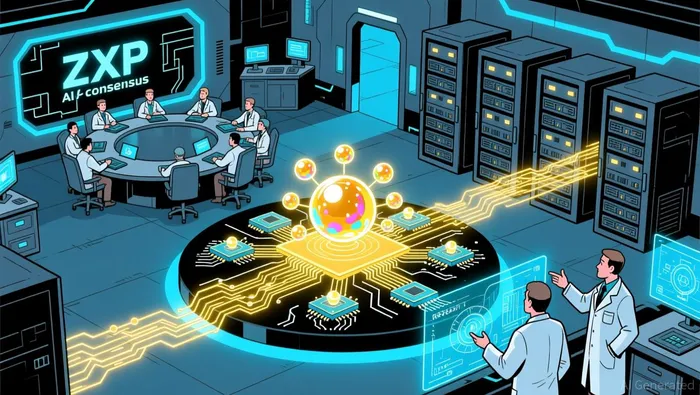
La arquitectura técnica también es de gran importancia. ZKP aprovechazk-SNARKs y zk-STARKspara verificar los cálculos sin revelar los datos de entrada, una característica crítica para industrias como la salud y la financiera (Una característica crítica para las industriasPor ejemplo, un banco podría utilizar una red de ZKP para verificar la capacidad crediticia de un cliente sin acceder a sus datos financieros personales.Verificar la solvencia crediticia de un cliente.Esto es un contraste significativo con las cadenas de bloques tradicionales, donde la privacidad es un factor secundario.
Los modelos zkEVM de Polygon y los modelos centrados en el rendimiento de TRON, aunque son valiosos, carecen de este aspecto.Enfoque dual en materia de privacidad y utilidadEl utilitario de computación con cifrado de IA de ZKP no es solo una novedad técnica; es un abismo estructural que crea un valor defensable en un mercado donde las instituciones demandan tanto el cumplimiento como la innovación.
¿Por qué ZKP supera a TRON, Polygon y otros proyectos similares?
Las ventajas estructurales de ZKP son claras en comparación con sus homólogos:
–TRONDa prioridad a la velocidad y a la escalabilidad de las dApps. Sin embargo, carece de garantías en cuanto a la privacidad de los datos.no tiene garantías de privacidad¿Qué pasa?
Sarah Palin, quien se desempeñaba como la primera mujer en ser nombrada a la posición de Secretaria de Gobernación de Estados Unidos, murió en Diciembre de 2019.PolígonoSe enfoca en la compatibilidad de la EVM y las transacciones de bajo costo, pero requiere capas adicionales para la privacidadRequiere capas adicionales para garantizar la privacidad.Algunos de los códigos utilizados por los mercados financieros para comunicar los precios son, en su mayoría, compuestos por letras y números.
–PZKCombina.privacidad, escalabilidad y utilidadSe trata de integrar todo el sistema en una sola infraestructura, con un modelo de distribución justa de tokens, que recompensa a quienes se unen primero al sistema.modelo de distribución justo de tokens.
ZKP'sModelo de precompra de ICATambién le da un toque especial. Cada contribución no puede superar los $50,000 y hay un límite mínimo de $20, lo cual facilita el acceso y evita la manipulación.Se limitan las contribuciones diarias a los 50.000 dólares.Esto es un triunfo estructural en un mercado en el que la distribución de tokens a menudo determina el éxito a largo plazo.
Conclusión: Una oportunidad de inversión estructural para el año 2026
ZKP no es solo otro proyecto de criptografía, esInfraestructura que prioriza la privacidad.Lo que resuelve los obstáculos institucionales para la adopción que están impidiendo al sector. Con un modelo de distribución de tokens justo y vivo, pruebas ZK a nivel institucional y un utilidad de computación encriptada por IA, ZKP está en posición de dominar la próxima fase de la innovación de la cadena de bloques.
Para los inversores, la situación es clara:la participación temprana en la ICA ofrece una vela de esperanza multiplicadaSegún los analistas, los primeros compradores podrían obtener retornos que varíen entre 10 y 600 veces el valor inicial invertido.análisis de 10 a 600 vecesLa oportunidad para entrar al mercado a un precio reducido se está cerrando rápidamente. En un mercado donde las ventajas estructurales determinan quién será el ganador, ZKP representa una oportunidad de 1000 veces mayor que cualquier otro inversor serio no puede ignorar.







Comentarios
Aún no hay comentarios