
ZK Casino's Partial ETH Refunds and the Growing Risks in DeFi Lending Models
ZK Casino's Refund Mechanism: A Halfway House?
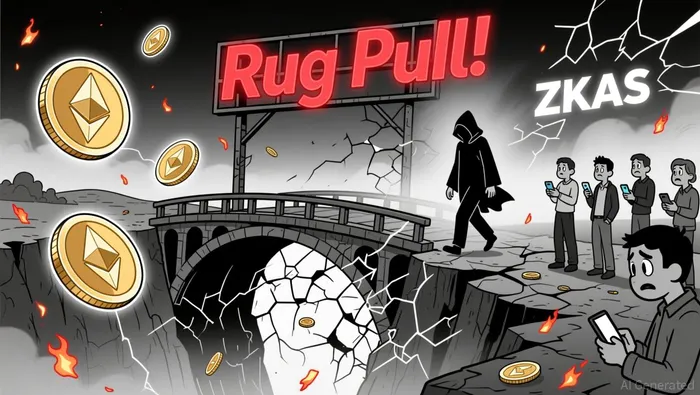
ZK Casino's refund process has been both a lifeline and a source of frustration for victims. The anonymous founder, Derivatives Monke, announced that an additional 40% of refunds could be processed in the coming week, potentially reaching 75% of affected wallets, according to a Crypto News update. However, final payout amounts remain opaque, and the timeline for full resolution is clouded by liquidity constraints and legal hurdles. The platform's original promise to bridge ETH to its layer-2 chain, earn yield, and return the original ETH was never fulfilled. Instead, deposits were converted into vested ZKAS tokens and staked on Lido, leaving over 10,000 users in limbo, according to a Crypto News update.
Ethereum co-founder Vitalik Buterin has been vocal in his criticism, disputing the project's use of "ZK" branding as misleading, according to a Crypto News update. Meanwhile, Dutch authorities have arrested a 26-year-old suspect and seized $12.2 million in assets, according to a CryptoSlate report, yet investors remain skeptical due to the lack of third-party oversight and the prolonged refund process. This case exemplifies how even partial refunds can erode trust when executed without transparency.
The Broader DeFi Risk Landscape: From Rug Pulls to Systemic Failures
ZK Casino's collapse is not an isolated incident. In 2025, DeFi lending models face escalating risks, particularly in the wake of sophisticated scams. Rug pulls have evolved to target memecoins, with the Meteora memecoinMEME-- scam alone causing $69 million in losses, according to a SumSub report. Additionally, risk-curator protocols-platforms managing $7.5 billion in total value locked-have faltered due to low liquidity and bad debt exposure from unstablecoins like deUSD, according to a CryptoRank analysis. For example, Gauntlet paused withdrawals on its Compound vault after deUSD depegged, locking users out of their funds, according to a CryptoRank analysis.
The rise of AI-powered scams further complicates the landscape. Phishing attacks now leverage deepfakes to impersonate trusted figures, while honeypot tokens manipulate investors, according to a SumSub report. These tactics highlight a disturbing trend: scammers are outpacing traditional security measures. As one expert notes, "The DeFi space is a high-stakes game where innovation and fraud evolve in lockstep," according to a CryptoRank report.
Rebuilding Trust: Compliance, Transparency, and the Road Ahead
Rebuilding trust in DeFi post-scam requires a multifaceted approach. Ripple CTO David Schwartz argues that compliance features in DeFi protocols should remain optional, preserving user autonomy while allowing regulated institutions to integrate tools like freeze lists, according to a U.Today report. This contrasts with Jake Chervinsky's view that embedding compliance at the protocol level risks creating centralized gatekeepers, according to a U.Today report. The debate reflects a broader tension between decentralization and accountability.
Platforms like Hyperliquid are experimenting with protocols such as BLP (BorrowLendingProtocol) to enhance on-chain collateral management and mitigate systemic risks, according to a Bitget report. These innovations are critical, but they must be paired with robust smart contract audits and blockchain analytics to detect fraud early, according to a CryptoRank analysis. For ZK Casino, the path to redemption hinges on full transparency in its refund process and a commitment to rebuilding credibility-a tall order in a space where anonymity often breeds distrust, according to a CryptoRank report.
Conclusion: A Call for Caution and Innovation
ZK Casino's partial refunds and the broader DeFi crisis of 2025 serve as a stark reminder: yield-generating protocols are only as sustainable as the trust they inspire. While technological innovation will drive DeFi's future, it must be tempered by accountability, regulatory clarity, and user education. For investors, the lesson is clear: high yields come with high risks, and due diligence is non-negotiable. As the industry navigates this turbulent phase, the true test of DeFi's resilience will lie in its ability to rebuild trust-not just through promises, but through actions.






Comentarios
Aún no hay comentarios