
ZK Atlas Upgrade: A Catalyst for Blockchain Scalability and Institutional Adoption in DeFi
Technical Breakthroughs: The ZKZK-- Atlas Upgrade's Core Innovations
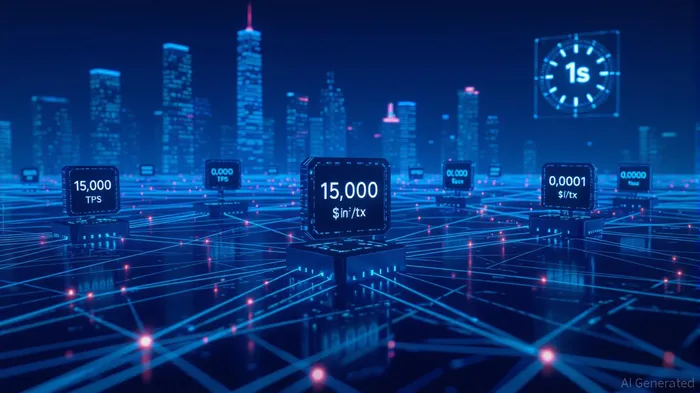
The ZK Atlas Upgrade introduces a high-performance sequencer capable of processing 15,000+ transactions per second (TPS) with one-second ZK finality, a leap forward for zero-knowledge (ZK) protocols. This is complemented by the Airbender prover, which slashes proving costs to $0.0001 per transaction, enabling a single GPU to handle over 1 million daily transactions. These metrics are not just theoretical-they directly address institutional pain points, such as latency in high-frequency trading and the need for cost-efficient settlements.
The upgrade also introduces the ZKsync OS, a modular architecture that supports multiple execution environments, while minimizing implementation drift. This flexibility allows developers to deploy complex DeFi applications without compromising security or interoperability, a critical factor for enterprises seeking scalable solutions.
Scalability as a DeFi Growth Engine
The ZK Atlas Upgrade's performance gains have directly fueled DeFi's evolution. Platforms like Polygon zkEVM and zkSync have reduced Ethereum gas fees by up to 90%, enabling thousands of TPS while maintaining privacy through zero-knowledge proofs (ZKPs). This has made DeFi platforms more competitive with traditional finance, particularly in markets where low-cost, high-speed transactions are critical.
Data from the 2025 Crypto Adoption and Stablecoin Usage Report reveals that stablecoins now account for 30% of all on-chain crypto transaction volume, driven by their utility in volatile economies and regulatory frameworks like the U.S. GENIUS Act and EU's MiCA regulation. ZK-based scalability solutions have amplified this trend, allowing stablecoin networks to handle surging demand without compromising security.
Institutional Adoption: From Experimentation to Enterprise
Institutional adoption of ZK-based systems has surged, with entities like Deutsche Bank and Sony leveraging ZK-rollups for confidential settlements and digital rights management according to market analysis. By the start of 2025, the combined total value locked (TVL) in ZK rollups-including zkSyncZK--, StarkNetSTRK--, and Scroll-reached $3.5 billion, with daily transactions exceeding 1 million.
The ZK Atlas Upgrade has further solidified this momentum. For instance, StarkNet saw its TVL triple in the last quarter of 2025, partly due to $72 million in BTC being bridged to its ecosystem. Meanwhile, Zcash (ZEC)-a privacy-focused ZK coin-rose 23% in November 2025, reflecting growing institutional confidence in ZK-based privacy solutions.
Regulatory developments have also played a pivotal role. The U.S. GENIUS Act and CLARITY Act have eased institutional concerns around compliance, while the EthereumETH-- Foundation's prioritization of zkEVM integration at the Layer 1 level signals a long-term commitment to ZK rollups as the preferred scaling solution.
Market Reactions and Investor Implications
The ZK Atlas Upgrade has triggered a 20% increase in ZK token holder engagement since its tokenomics overhaul, driven by a deflationary model that channels network revenue into buybacks, burning, and staking incentives. This has translated into tangible market outcomes: daily trading volumes on ZKsync now exceed $300 million, and ZK-based projects have attracted $15 billion in net inflows from spot BitcoinBTC-- ETFs in 2025.
For investors, the upgrade's success underscores the strategic value of Layer 2 and DeFi infrastructure. As ZK-based ecosystems mature, they are likely to dominate the next phase of blockchain adoption, particularly in sectors requiring high throughput, privacy, and regulatory compliance. Analysts project a 61% growth in institutional crypto allocations by 2026, with ZK rollups forming the backbone of this expansion.
Conclusion: A Turning Point for ZK Ecosystems
The ZK Atlas Upgrade represents more than a technical milestone-it is a turning point for blockchain scalability and institutional adoption. By bridging the gap between DeFi's innovation and traditional finance's demands, ZK-based solutions are redefining what's possible in decentralized systems. For investors, the message is clear: the future of finance is scalable, private, and built on ZK.







Comentarios
Aún no hay comentarios