
ZF's Massive Job Cuts: A Strategic Move or a Warning Sign for the Auto Supply Chain?
The automotive supply chain is undergoing a seismic shift as companies grapple with the dual pressures of electrification and global economic volatility. ZF Friedrichshafen AG, a German industrial giant, has taken a dramatic step by announcing plans to cut up to 14,000 jobs in Germany by 2028, with 4,500 positions already eliminated since 2024, according to ZF's press release. This restructuring, framed as a response to "enormous pressure" from weak demand, high transition costs to electric vehicles (EVs), and trade uncertainties, according to Deloitte, raises a critical question: Is ZF's approach a strategic pivot toward long-term profitability, or a cautionary tale of short-term cost-cutting in a capital-intensive sector?
ZF's Restructuring and Financial Challenges
ZF's job cuts are part of a broader effort to address a financial crisis marked by high debt, poor profitability, and a sluggish transition to EVs. The company's Electrified Powertrain Technology division is hemorrhaging cash due to insufficient demand for electric drives and unprofitable pricing on conventional and hybrid components, as noted in a LinkedIn analysis. This has forced ZF to explore drastic measures, including a potential spin-off or sale of the division, which could affect 30,000 employees, per the company's press release.
While CEO Holger Klein has emphasized the company's commitment to "social responsibility," the cuts have sparked large-scale protests, with thousands of workers demonstrating against job losses and wage reductions, according to the press release. Financially, ZF has seen some improvement: an adjusted EBIT margin of 4.4 percent in the first half of 2025 and positive adjusted free cash flow, though sales revenue has declined, reflecting the broader challenges of a slowing automotive market, a Munich Eye report notes. This decline is further underscored by a significant drop in earnings per share (EPS) and net income since 2022, as detailed in the backtest results below.
Industry-Wide Cost Optimization Trends
ZF's approach mirrors a trend across the auto supply chain, where over 70,000 jobs have been lost in Europe since 2019, according to the press release. However, the industry is increasingly moving away from traditional cost-cutting-such as layoffs and offshoring-toward strategic optimization. Automation, artificial intelligence (AI), and data-driven tools are now central to long-term profitability. For example, Ford's $1 billion investment in AI-driven automation boosted production efficiency by 20 percent and cut operational costs by 15 percent within three years, as reported in the LinkedIn analysis. Similarly, AI-powered predictive maintenance has reduced machine failures by up to 75 percent at companies like Titan Brakes & Rotors, per that same analysis.
These strategies prioritize reinvestment in technology over short-term cuts. Deloitte notes that while lean manufacturing remains relevant, its just-in-time inventory model is increasingly risky in volatile supply chains. A balanced approach-combining lean principles with automation-can mitigate disruptions while maintaining efficiency.
Strategic vs. Short-Term Measures
ZF's reliance on job cuts, however, diverges from this trend. While the company's restructuring has improved its EBIT margin, the near-term outlook remains cautious due to ongoing market challenges, as Deloitte observes. Critics argue that large-scale layoffs risk eroding employee morale and innovation, which are critical for adapting to EVs and other technological shifts, according to the press release. In contrast, strategic cost optimization-such as AI-driven automation-can reduce operational costs while preserving workforce capabilities. For instance, AI has enabled U.S. manufacturers to cut defects by 90 percent and improve compliance, avoiding costly recalls, as highlighted in the LinkedIn analysis.
Moreover, ZF's focus on the Electrified Powertrain division highlights a broader industry dilemma: how to manage legacy businesses during the EV transition. While spin-offs or sales could provide short-term liquidity, they may also fragment expertise and delay innovation. A more sustainable path might involve reinvesting in R&D for electrification, as seen in research such as an ensemble machine learning study that demonstrates AI-driven approaches to optimize costs.
Conclusion: A Warning Sign or a Necessity?
ZF's job cuts reflect the urgent need for cost optimization in a sector facing existential challenges. However, the company's heavy reliance on layoffs, rather than strategic reinvestment in automation and innovation, risks undermining long-term competitiveness. While the auto supply chain's shift toward AI and automation offers a blueprint for resilience, ZF's approach underscores the perils of short-termism in capital-intensive industries. For investors, the question is whether ZF can balance immediate financial pressures with the investments needed to thrive in an electrified future. 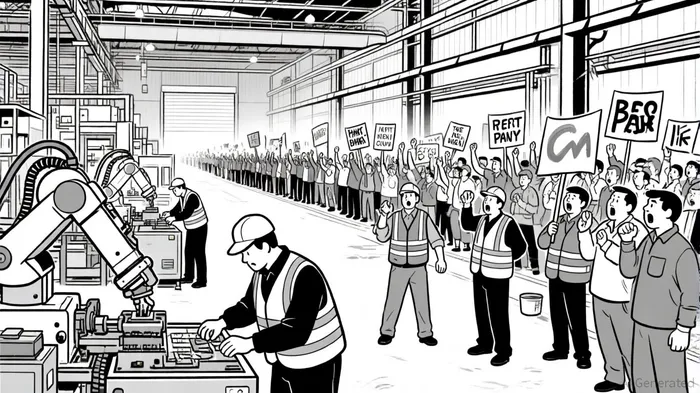







Comentarios
Aún no hay comentarios