
ZenaTech's Strategic Expansion into Geospatial Services: Assessing Long-Term Value in a High-Growth Sector
The geospatial services sector is undergoing a transformative phase, driven by advancements in AI, IoT, and cloud computing. As infrastructure tech evolves to meet the demands of smart cities, climate resilience, and autonomous systems, companies like ZenaTechZENA-- are positioning themselves at the intersection of innovation and scalability. ZenaTech's recent acquisition of a Washington-based land surveying and mapping firm marks a pivotal step in its aggressive expansion strategy, aligning with a market projected to grow from $548.07 billion in 2024 to $614.37 billion in 2025 at a CAGR of 12.1% [1]. This article evaluates the long-term value and growth potential of ZenaTech's strategic moves, contextualized within the broader geospatial services landscape.
Market Tailwinds: A Sector in Hyperdrive
The global geospatial services market is being reshaped by technologies such as generative AI, cloud-native data warehouses, and high-resolution raster processing. For instance, AI-powered spatial analytics now enable predictive modeling for urban planning and environmental risk assessment, while cloud platforms like SnowflakeSNOW-- facilitate seamless integration of geospatial data into enterprise workflows [2]. These innovations are critical for industries reliant on real-time insights, such as construction, agriculture, and defense.
ZenaTech's focus on Drone-as-a-Service (DaaS) taps into a niche yet rapidly expanding segment. The U.S. land surveying services market alone is valued at $8.5 billion in 2024 and is projected to reach $12.3 billion by 2033 [3]. By offering on-demand drone services—eliminating the need for clients to invest in hardware, software, or regulatory compliance—ZenaTech is capitalizing on a shift toward flexible, cost-effective solutions. This model is particularly attractive to government agencies and construction firms seeking to modernize infrastructure projects with AI-enhanced precision [4].
Strategic Acquisitions: Building a National DaaS Network
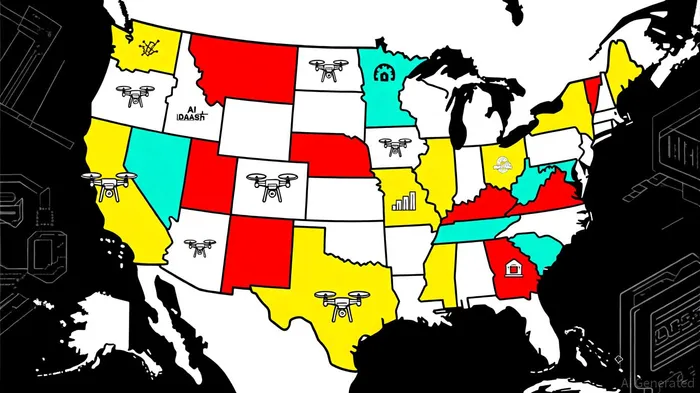
ZenaTech's acquisition strategy is a masterclass in inorganic growth. The recent purchase of a Washington-based surveying firm is its ninth since 2024, bringing it closer to its goal of establishing 25 DaaS locations by mid-2026 [5]. These acquisitions are not random; they are strategically clustered in high-growth regions like the Northwest and Southeast, where demand for drone-assisted land and marine surveys is surging. For example, the Southeast acquisition of Cardinal Civil Resources in 2025 expanded ZenaTech's footprint in a region projected to benefit from $12.3 billion in land surveying demand by 2033 [6].
The rationale is clear: by acquiring established firms with local expertise, ZenaTech accelerates its market penetration while integrating AI-powered drones into traditional workflows. This hybrid approach reduces operational costs for clients by up to 30% while improving data accuracy, a critical differentiator in infrastructure projects where precision is paramount [7].
Financials and Valuation: Growth vs. Sustainability
ZenaTech's financial performance underscores the potential of its strategy. The company reported a 92% year-over-year revenue increase in Q1 2025, driven by DaaS and acquisitions [8]. However, its price-to-sales (P/S) ratio of 89.68 raises questions about valuation sustainability. While high-growth tech companies often trade at elevated multiples, investors must weigh this against execution risks. For instance, ZenaTech's aggressive acquisition pace requires significant capital, and integration challenges could emerge if the acquired firms lack technological alignment.
That said, the company's diversification into defense applications—such as obtaining certifications for U.S. Department of Defense contracts—adds a layer of stability. Defense contracts typically offer long-term revenue visibility, mitigating some of the volatility inherent in commercial markets [9].
Risks and Mitigants: Navigating a Competitive Landscape
The geospatial sector is not without challenges. Regulatory hurdles for drone operations, competition from established players like Esri and HERE Technologies, and the high P/S ratio are all risks. However, ZenaTech's focus on AI-driven analytics and cloud integration provides a competitive edge. For example, its use of AI to process high-resolution raster data for climate risk modeling aligns with the growing demand for ESG reporting, a trend expected to drive $302.01 billion in data analytics revenue by 2030 [10].
Moreover, the rise of smallsat constellations (e.g., Planet LabsPL--, Jilin-1) is democratizing access to high-revisit Earth observation data, a trend ZenaTech can leverage to enhance its offerings. By combining drone data with satellite imagery, the company can provide clients with a holistic view of infrastructure and environmental changes, a capability few competitors match [11].
Conclusion: A High-Conviction Play in a High-Growth Sector
ZenaTech's strategic expansion into geospatial services is a calculated bet on the future of infrastructure tech. By aligning its DaaS model with market drivers like smart cities, climate resilience, and AI analytics, the company is well-positioned to capture a significant share of a $990.79 billion market by 2030 [12]. While valuation concerns persist, the company's revenue growth, diversification into defense, and technological differentiation justify a long-term investment thesis. For investors willing to tolerate short-term volatility, ZenaTech represents a compelling opportunity to ride the next wave of tech-driven infrastructure innovation.





Comentarios
Aún no hay comentarios