
ZEC Mining Economics: Navigating Difficulty Spikes Amid Evolving Demand Dynamics
Stable Difficulty, Rising Costs, and the Profitability Paradox
Zcash's mining difficulty has remained relatively stable at 75.14 M as of block 1,787,987, with no significant increases recorded over the past 90 days. This stability, however, masks underlying pressures. The Equihash algorithm's dynamic re-targeting mechanism ensures consistent block times (~75 seconds), but as network hashrate grows-driven by institutional adoption and algorithmic updates-difficulty adjustments will inevitably tighten margins for miners with fixed hashrate capacities.
 Operational costs remain a critical determinant of profitability. The Bitmain Antminer Z15 Pro, the dominant ASIC for ZEC mining, consumes 2560–2780W of power and operates at 3.05 J/Ksol efficiency. At an electricity cost of $0.05/kWh and a ZEC price of $468.94, daily profits for a single Z15 Pro unit could reach ~$39. However, these figures assume stable energy prices and no difficulty spikes-a scenario increasingly at odds with Q4 2025's surging ZEC price of $422 and a market cap exceeding $6.86 billion.
Cost-Competitive Strategies: Energy, Hardware, and Scaling
To remain competitive, miners must adopt multi-pronged strategies:
Energy Sourcing Optimization:
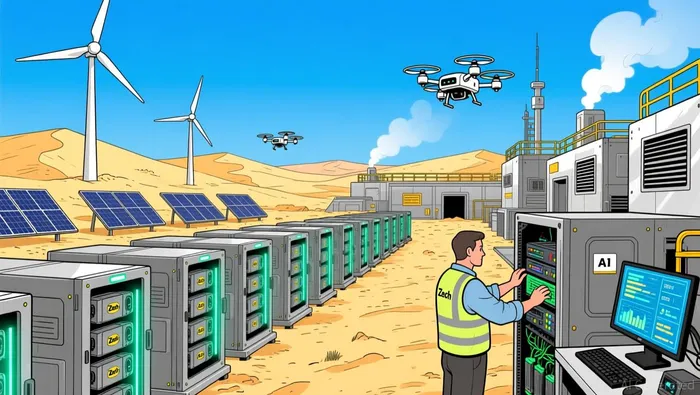
The global battery energy storage system (BESS) market, projected to grow to $62.1 billion by 2034, offers miners opportunities to reduce energy costs through renewable integration and storage solutions. For example, pairing ZEC mining operations with solar or wind farms and using lithium-ion batteries for load balancing can mitigate peak-time electricity expenses.Hardware Sourcing and AI-Driven Scaling:
Platforms like Jiga, an AI-native manufacturing service, have demonstrated the ability to cut hardware sourcing timelines from weeks to hours, enabling rapid deployment of mining rigs. This agility is critical in a high-difficulty environment, where delays in acquiring efficient hardware (e.g., next-gen ASICs) can erode profitability.
3. Operational Efficiency via AI:
AI-driven energy management systems can optimize hashrate utilization by dynamically adjusting power consumption based on real-time difficulty trends and grid availability. Such tools are particularly valuable as Zcash's difficulty adjustments become more frequent in response to network growth.
Long-Term Profitability: Navigating Difficulty Spikes and PoS Risks
While current difficulty metrics are stable, the risk of sudden spikes looms. Algorithmic updates and increased institutional participation-evidenced by Cypherpunk Technologies' $150 million ZEC holdings-could drive hashrate growth and trigger difficulty increases. Miners must prepare by:
- Investing in High-Efficiency Hardware: Upgrading to next-gen ASICs with lower J/Ksol ratios will offset diminishing returns from higher difficulty.
- Diversifying Revenue Streams: Some miners are exploring hybrid models, such as leasing unused hashrate capacity for other Equihash-based coins or integrating AI-driven data processing services.
The more existential risk, however, is a potential PoS transition. While no official timeline exists, Zcash's Q4 2025 roadmap emphasizes privacy enhancements and shielded transaction scalability. A shift to PoS would render ASICs obsolete, necessitating immediate pivots. Mitigation strategies include:
- Staking Infrastructure Development: Miners could repurpose data centers for PoS staking, though this requires liquidity to acquire sufficient ZEC for staking pools.
- Portfolio Diversification: Allocating capital to PoS-compatible assets (e.g., EthereumETH--, Solana) ensures resilience against Zcash's structural shifts.
The Halving Effect and Future Outlook
Zcash's November 2025 halving event-a reduction in block rewards-will further compress miner revenues. This, combined with potential difficulty adjustments, underscores the need for proactive cost management. Cipher Mining's $333 million investment in Texas-based high-performance computing facilities highlights the sector's long-term commitment to scaling infrastructure, which could stabilize ZEC mining economics over time.
Conclusion
ZEC mining in 2025 is a high-stakes game of optimization and foresight. While stable difficulty and rising asset prices offer short-term tailwinds, miners must prioritize energy efficiency, hardware agility, and strategic diversification to weather difficulty spikes and consensus shifts. The key to long-term profitability lies not in resisting change but in adapting to it-leveraging AI, renewable energy, and cross-chain opportunities to future-proof operations.





Comentarios
Aún no hay comentarios