
Zcash's Sudden 30%+ Price Collapse: A Bearish Setup or a Buying Opportunity?
Zcash (ZEC) has experienced a dramatic 30%+ price drop in November 2025, sparking heated debate among traders and analysts. This collapse, driven by a confluence of technical breakdowns, governance uncertainty, and retail-driven liquidity risks, raises critical questions: Is this a bearish setup signaling deeper losses, or a contrarian buying opportunity? Let's dissect the data.
Technical Analysis: A Perfect Storm of Bearish Signals
ZEC's technical structure has deteriorated sharply. The price has fallen below key support levels, including the $480 mark and the 38.2% Fibonacci retracement, triggering cascade liquidations. Momentum indicators like the RSI and MACD now point decisively lower, with the RSI crossing below the midline and the MACD nearing the zero line-a classic bearish divergence according to technical analysis.
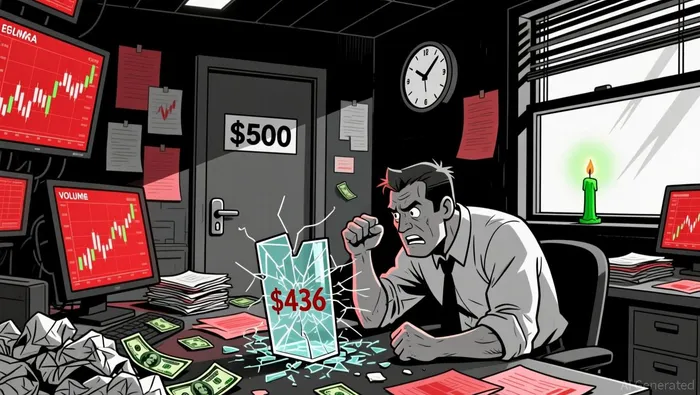
A critical threshold to watch is the 50-day EMA at $436. A break below this level could accelerate the decline, targeting the 100-day EMA at $315-a potential 30% drop from current levels. Meanwhile, the 505.86 daily pivot point acts as a psychological barrier; failure to reclaim this level could confirm a broader downtrend.
Liquidity metrics add to the bearish case. ZEC's futures Open Interest has declined by 7.71% in the last 24 hours, signaling traders are reducing exposure amid uncertainty. This "hollow liquidity" in key price ranges suggests that even minor sell-offs could trigger disproportionate volatility.
Fundamental Catalysts: Governance Doubts and Macro Headwinds
Zcash's governance model has come under scrutiny. Ethereum co-founder Vitalik Buterin recently expressed skepticism about token-based governance for ZcashZEC--, warning of risks to its privacy-focused identity. This has fueled uncertainty about the protocol's long-term roadmap, deterring institutional and retail buyers alike.
Macro factors also weigh heavily. Asian markets, which historically drive ZECZEC-- demand, are in risk-off mode due to geopolitical tensions and tightening monetary policies. This has exacerbated the selloff, as Zcash's price is now trading under $500-a level that could invite further profit-taking and stop-loss cascades.
Retail Investor Behavior: Overheating and Corrections
Retail-driven dynamics are compounding the bearish narrative. Data from CryptoQuant indicates that retail demand in both spot and futures markets has overheated, mirroring patterns seen during the 2021 crypto cycle top. This overcrowding creates a high-risk environment, where even minor negative news can trigger sharp corrections.
Futures positioning data reinforces this view. The Long or Short Accounts Ratio in ZEC futures is at 0.93, with shorts slightly ahead of longs-a sign of divided sentiment according to Bitrue analysis. Meanwhile, the Crypto Fear & Greed Index remains in fear territory, reflecting extreme retail pessimism.
Is This a Buying Opportunity?
While the bearish case is compelling, some analysts argue that ZEC's fundamentals-particularly its privacy-first innovation-remain intact. A rebound above $500 could rekindle interest in the "privacy narrative," attracting buyers who view the selloff as overdone. However, given the current technical and liquidity risks, this scenario hinges on a significant shift in market sentiment and governance clarity.
For now, the data suggests a bearish setup. Traders should closely monitor the $436 EMA and $315 support levels, while investors may want to wait for a clearer separation of fundamentals from the noise of retail-driven volatility.
Conclusion
Zcash's 30%+ collapse is a textbook example of how technical breakdowns, governance uncertainty, and retail overcrowding can collide to create a perfect storm. While the protocol's long-term potential remains, the immediate outlook is bearish. Until liquidity stabilizes and governance clarity emerges, ZEC appears more like a cautionary tale than a buying opportunity.







Comentarios
Aún no hay comentarios