
Zcash News Today: Zcash's Governance Crossroads: Privacy vs. Token Holder Control
Ethereum co-founder Vitalik Buterin has issued a pointed warning to the ZcashZEC-- community against adopting token-based governance, arguing that such a shift could undermine the network's privacy-centric mission and expose it to long-term structural risks. His remarks, made public on November 30, 2025, underscore a growing debate within the cryptocurrency ecosystem about the balance between decentralization, governance efficiency, and core protocol values. Buterin emphasized that token-weighted voting systems prioritize short-term incentives over long-term stability, a dynamic he described as "worse than Zcash's status quo." He specifically highlighted the risk of privacy erosion, noting that decisions shaped by the "median token holder" could lead to compromises in Zcash's foundational principles.
The warning comes as Zcash stakeholders grapple with leadership continuity and the broader implications of a shifting market environment. Zcash's current governance model, led by the Zcash Company (ZCG), relies on a five-member committee of independent participants who prioritize protocol upgrades and funding decisions. ZCG co-founder Zooko Wilcox has defended this structure, emphasizing its resilience through years of debate and iterative improvements. He reiterated his commitment to running in the next election cycle, citing his effectiveness in crisis scenarios and the need for sustained focus on Zcash's development. Wilcox also acknowledged the surge in grant applications and the potential risks of increased funding, stressing the importance of rigorous scrutiny to maintain quality control.
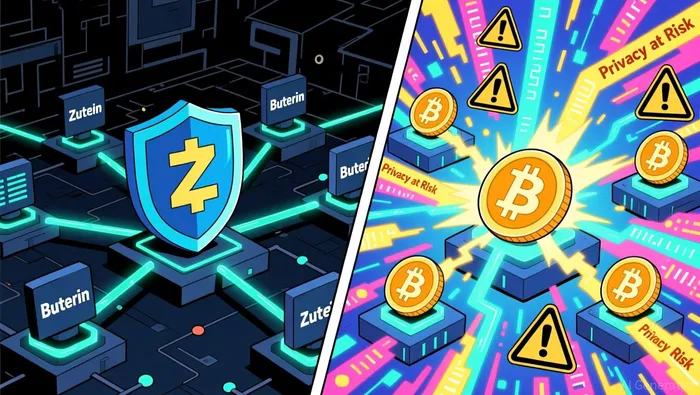 Buterin's critique has sparked broader discussions about the merits of on-chain versus committee-based governance. Naval Ravikant, a vocal advocate for decentralized systems, argued that trusted intermediaries are inevitable and called for full on-chain governance with privacy protections. Conversely, community member Darklight contended that automated systems lack the nuance required for research and development decisions, framing ZCG's role as a necessary filter against capital dominance and voter apathy. These diverging perspectives reflect a larger tension within the crypto space: the challenge of preserving decentralization while ensuring effective decision-making.
The debate gains urgency as Zcash's profile rises. Grayscale's recent filing to convert its Zcash Trust into a U.S. spot ETF signals growing institutional interest in the privacy-focused asset, which has surged over 1,000% in 2025. With shielded transactions accounting for 30% of ZEC activity and a total supply of 25% held in encrypted addresses, the network's privacy model is under increased scrutiny. Buterin's warning, echoing his 2021 analysis, cautions against governance structures that could dilute these protections in favor of token-holder interests.
As Zcash navigates this crossroads, the outcome of its governance debate could set a precedent for other privacy coins. For now, the community remains divided, with Buterin's stance serving as a stark reminder of the trade-offs inherent in decentralized governance.







Comentarios
Aún no hay comentarios