
Zcash News Today: Crypto's Divide: L1 Skepticism vs. App-Layer Momentum
QwQiao's recent analysis underscores growing skepticism toward LayerLAYER-- 1 (L1) blockchain tokens, which have long dominated the crypto narrative, while spotlighting the untapped potential of application-layer innovations. The critique aligns with broader industry trends as projects shift focus from speculative value capture to utility-driven models. Layer 1 protocols, such as BitcoinBTC-- and EthereumETH--, remain foundational for security and decentralization but face persistent scalability and cost challenges, according to blockchain architecture analyses. Meanwhile, application-layer solutions-encompassing decentralized finance (DeFi), non-fungible tokens (NFTs), and interoperability tools-are increasingly seen as the catalysts for mainstream adoption.
The limitations of L1 tokens are evident in recent market dynamics. For example, Hyperliquid's HYPE token saw a 54% single-day plunge during the October 2025 market crash, despite the platform's robust monthly trading volume of $330 billion. This volatility highlights the cyclical nature of L1-based assets, which often rely on speculative demand rather than sustainable revenue streams. QwQiao's report emphasizes that L1 tokens struggle to justify valuations when their utility is confined to transaction fees and network governance, a critique echoed by analysts who note the lack of recurring income models in many blockchain ecosystems.
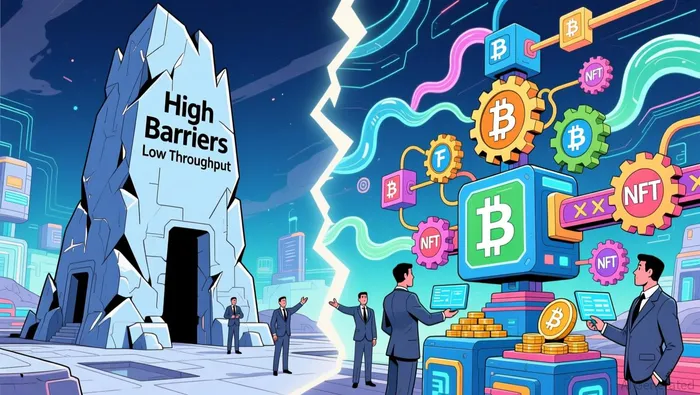 In contrast, application-layer projects are gaining traction by addressing real-world use cases. Grayscale's recent filing for a Zcash (ZEC) ETF exemplifies this shift. The privacy-focused cryptocurrency has surged over 1,000% year-to-date, driven by growing institutional interest in shielded transactions and encrypted financial tools. Similarly, Bitcoin Munari's structured presale model, which allocates tokens across fixed-price rounds, reflects a strategic approach to distribution that prioritizes long-term utility over speculative hype according to the company's announcement. These examples illustrate how application-layer innovations are creating organic demand through tangible functionality, such as privacy, cross-chain interoperability, and user-centric financial products.
The critique of L1 tokens also extends to their economic models. Adaptive tokenomics-dynamic mechanisms adjusting supply, emissions, and fee distribution-are emerging as a solution to the rigid, static models of many L1 protocols. Projects like BASE are experimenting with machine learning-driven governance and vote-escrowed tokens (veBASE) to align stakeholder incentives with ecosystem growth. This approach contrasts sharply with traditional L1 fee-extraction models, which often prioritize short-term liquidity over sustainable value creation.
Forward-looking indicators suggest that application-layer growth will accelerate as infrastructure matures. The approval of Ripple's RLUSD stablecoin in Abu Dhabi and the proliferation of Layer 3 solutions, such as DeFi platforms and NFT marketplaces, underscore the sector's momentum according to industry reports. Meanwhile, institutional adoption-bolstered by products like Grayscale's ZEC ETF-signals a broader acceptance of crypto assets with real-world utility.
As the industry navigates regulatory and technical hurdles, the divide between speculative L1 tokens and utility-driven application-layer projects is likely to widen. QwQiao's analysis serves as a reminder that sustainable value capture requires more than network security and decentralization; it demands innovation that bridges the gap between blockchain infrastructure and user needs.






Comentarios
Aún no hay comentarios