
Zcash's Governance Crisis: A Catalyst for Institutional Reassessment of Privacy Coins
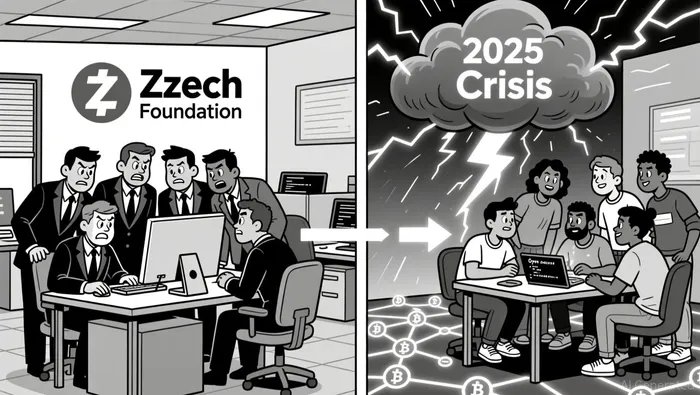
The ZcashZEC-- (ZEC) governance crisis of 2025, marked by the abrupt resignation of the Electric Coin Company (ECC) development team, has become a pivotal case study in the evolving dynamics of institutional trust in privacy-focused crypto projects. This event, triggered by a contentious governance dispute between ECC and the nonprofit Bootstrap board, underscores the fragility of decentralized governance models and their long-term implications for institutional investment strategies. As privacy coins increasingly intersect with regulatory frameworks and institutional portfolios, the Zcash saga offers critical insights into how governance breakdowns can reshape market perceptions and investment risk profiles.
Governance Models: Zcash vs. MoneroXMR-- and Dash
Zcash's hybrid governance model, which allows users to choose between transparent and shielded transactions, has positioned it as a unique player in the privacy coin space. Unlike Monero (XMR), which enforces mandatory privacy through ring signatures and stealth addresses, or Dash (DASH), which relies on a masternode-based governance system, Zcash's optional privacy features align more closely with institutional compliance requirements. This flexibility has enabled Zcash to maintain listings on major exchanges, whereas Monero has faced delistings due to regulatory concerns over its fully private-by-default design.
The 2025 crisis, however, exposed vulnerabilities in Zcash's governance structure. The ECC team's resignation-cited as a case of "constructive discharge" due to alleged governance interference- highlighted the risks of centralized development teams within ostensibly decentralized ecosystems. While Zcash's protocol remained technically intact, the leadership vacuum raised questions about the project's ability to sustain innovation and institutional credibility. In contrast, Monero's community-driven governance model, though decentralized, has demonstrated resilience through continuous open-source contributions, even after a 51% attack in mid-2025.
Institutional Reactions: Volatility and Reassessment
The immediate aftermath of the Zcash crisis saw a 20% price drop in early 2026, driven by institutional caution and derivatives liquidations. However, market sentiment stabilized as project leadership clarified that the protocol's cryptographic systems and consensus rules remained unaffected. This distinction-between governance reorganization and technical integrity-became critical for institutional investors, who began to differentiate between structural disruptions and existential risks.
According to a report by Grayscale, privacy is increasingly viewed as a core infrastructure requirement for blockchain integration with traditional finance. This perspective was reinforced by Zcash's 820% price surge in 2025, driven by institutional demand for privacy-enhancing technologies amid evolving regulatory landscapes. Despite the 2026 volatility, analysts argue that the crisis could serve as a catalyst for Zcash's long-term growth, as the project restructures under a new governance framework.
Long-Term Implications: Governance as a Risk Factor
The Zcash crisis underscores a broader trend: institutional investors are becoming hyper-sensitive to governance headlines. A study by Fireblocks notes that post-2025 regulatory clarity, including the U.S. GENIUS Act, has enabled financial institutions to engage with crypto assets more confidently. However, governance instability remains a red flag. For privacy coins, the challenge lies in balancing decentralization with accountability-a tension that Zcash's crisis exemplifies.
Monero's rigid privacy-first approach, while ideologically pure, may struggle to gain institutional traction as regulators prioritize compliance. Dash's hybrid model, with its masternode governance and optional privacy features, offers a middle ground but lacks the technical sophistication of Zcash's zk-SNARKs. The key takeaway for investors is that governance models must adapt to institutional expectations: transparency in governance, even if privacy in transactions is preserved.
Conclusion: Privacy Coins in the Institutional Era
Zcash's governance crisis of 2025 serves as a cautionary tale and an opportunity. For institutions, the event highlights the need to scrutinize not just the technical robustness of a protocol but also the resilience of its governance structure. While Zcash's ability to recover post-crisis demonstrates the potential for privacy coins to thrive in a regulated environment, the incident also reinforces the importance of governance clarity.
As privacy becomes a functional requirement rather than an ideological stance, projects that can navigate the dual demands of decentralization and compliance-like Zcash-may emerge as preferred assets. However, investors must remain vigilant: governance breakdowns, even in technically sound protocols, can trigger volatility and erode trust. The future of privacy coins in institutional portfolios will hinge on their capacity to evolve governance models that align with both user privacy and regulatory expectations.







Comentarios
Aún no hay comentarios