
ZCASH DEVELOPERS RESIGN OVER GOVERNANCE CONFLICTS TRIGGERING MARKET VOLATILITY
- The Electric Coin Company (ECC) team resigned from ZcashZEC-- (ZEC) due to governance conflicts with Bootstrap, the nonprofit overseeing the project according to Yahoo Finance.
- The ECC team cited constructive discharge and plans to form a new company focused on privacy-centric financial infrastructure, though the Zcash protocol itself remains unaffected as reported by Bankless.
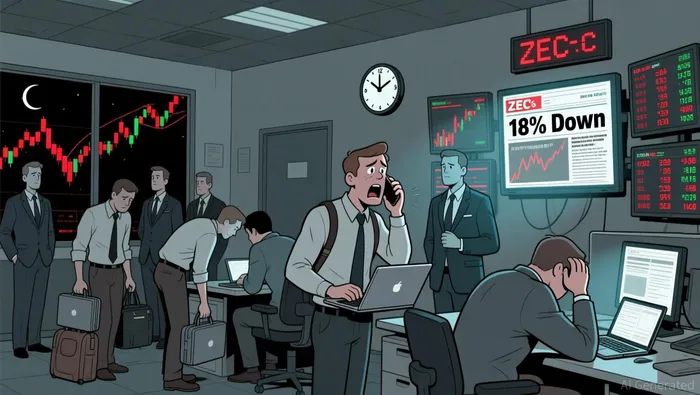
- Zcash's price dropped over 18% in 2026 following the developer exodus, with a 13% decline within 24 hours of the announcement, signaling investor uncertainty about project sustainability according to AInvest.
The Zcash (ZEC) project is facing significant disruption after its core development team resigned en masse in January 2026. The Electric Coin Company (ECC) team, led by CEO Josh Swihart, accused the Bootstrap board of misalignment with Zcash's original mission and described their exit as a constructive discharge as detailed in AInvest. Despite the resignation, the Zcash protocol remains functional, with no disruption to its open-source infrastructure or network activity according to Crypto News.
The governance dispute has raised broader questions about the viability of centralized development models in the blockchain space. Swihart and the departing team emphasized their commitment to Zcash, with no new token or technical shift planned, but the formation of a new for-profit entity—CashZ—suggests a structural departure from the nonprofit model according to Coinpedia.
Market participants have interpreted the team's exit as a sign of institutional fragility, with ZEC's price dropping over 18% in 2026 and 13% within 24 hours of the resignation announcement according to CoinStats. The Zcash Foundation has defended the network's independence and resilience, stating that the network was designed to function without reliance on any single contributor or organization.
What Is the Impact of the Developer Exodus on Zcash's Future?
The resignation of the entire ECC team has left the Zcash ecosystem in a state of transition, with uncertainty about who will lead the project's development moving forward. The Zcash Foundation has reiterated that the network is not controlled by any single entity and remains operational despite the organizational changes.
However, onchain data from Santiment shows that development activity on the Zcash network has dropped to its lowest level since 2021. This decline coincided with the team's departure and has raised concerns about the network's ability to execute crucial updates like Halo 2, a Trustless ZK proof that was previously a key development milestone.
The new team at CashZ, the for-profit company formed by the former ECC developers, has stated that it will continue to build on the Zashi wallet codebase, with minimal disruption for existing users. While the team affirmed that the Zcash protocol remains unchanged, questions remain about how quickly and effectively new updates can be implemented under a for-profit model.
How Is the Market Reacting to the Governance Crisis?
Zcash's price has been heavily affected by the governance crisis, with ZECZEC-- falling over 18% in 2026 and 26% in late 2025. The price drop has been attributed to investor uncertainty around the project's governance structure and the potential for further leadership changes. The Zcash Foundation has urged the community to separate the team exodus from the network's resilience, but the market has not been reassured.
Technical analysis suggests that ZEC has formed a potential macro reversal pattern, which would only be invalidated if the price rallied above its prior all-time high. Analysts are closely watching whether the new company—CashZ—can maintain development continuity and whether Zcash's privacy-focused identity will remain intact under the new entity.
The broader cryptocurrency market has also been in a correction phase in 2026, which may have compounded the negative sentiment around Zcash. However, the governance crisis remains a unique risk factor for Zcash, as it highlights the fragility of centralized development teams in open-source blockchain projects.







Comentarios
Aún no hay comentarios