
ZCASH DEVELOPERS FORM CASHZ AFTER BOARD DISPUTE
- Zcash core developers left Electric Coin Company (ECC) after a governance dispute with its nonprofit board, describing the departure as a 'constructive discharge'.
- The team formed a new for-profit entity, cashZ, to continue ZcashZEC-- development independently, aiming for faster decision-making.
- Zcash's protocol remains fully operational and unaffected, with development continuing through multiple teams.
Zcash developers have restructured following a significant governance dispute with the nonprofit board overseeing its development. The full Electric Coin Company (ECC) team, including CEO Josh Swihart, resigned en masse on January 7, 2026, citing intolerable working conditions created by changes in employment terms imposed by the board. The team characterized the departure as a "constructive discharge", a term indicating that the working conditions had become so untenable that resignation was effectively forced.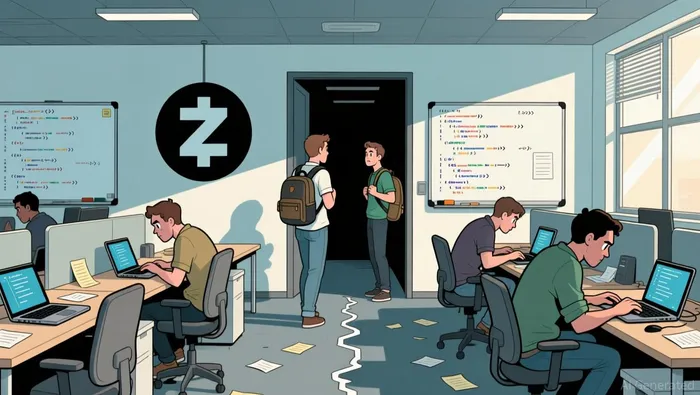
The developers regrouped under a new for-profit entity, cashZ, which aims to continue Zcash development with greater independence and agility. The new structure is intended to reduce friction from nonprofit governance.
The Zcash protocol itself, including its open-source codebase and privacy-preserving shielded transactions, remains fully operational and unaffected by the internal dispute. The protocol's decentralized and open-source nature ensures that development can continue through multiple teams and initiatives. The cashZ team has launched a new website to outline their mission and future direction.
What triggered the dispute between the Zcash developers and the board?
The dispute arose from a growing misalignment between the ECC development team and the Bootstrap board. Key board members, including Zaki Manian, Christina Garman, Alan Fairless, and Michelle Lai, reportedly implemented changes that altered the team's employment terms. These changes were described as creating a hostile work environment, forcing the developers to resign. The conflict was not a sudden event but part of an escalating situation that had been brewing for weeks. The developers argued that the board was steering the project away from its original vision.
The situation highlights the challenges of governance in open-source and decentralized projects. While the Zcash network remains functional and independent of any single organization, the departure of the core development team has created uncertainty around the project's long-term direction and leadership.
What does the formation of cashZ mean for Zcash's future?
The formation of cashZ is seen as a strategic move to continue the development of Zcash while reducing governance-related friction. By operating as a for-profit startup, cashZ aims to enable more agile and flexible development. The team has emphasized that the move does not signal an abandonment of Zcash but rather a reorganization to ensure its long-term mission is protected.
The new entity has launched a website and outlined its mission to build "unstoppable private money". The cashZ team plans to continue supporting Zcash's development through multiple teams, including the Zcash Foundation and community-funded initiatives.
Despite these assurances, the transition has raised questions about the project's sustainability and governance structure. The departure of key developers and the formation of a new entity could lead to a fragmented development landscape, which may pose challenges for coordination and long-term project management.
What impact did the dispute have on Zcash's price and market perception?
The internal dispute led to a sharp sell-off in ZEC, with the token dropping roughly 10–20% in the immediate aftermath of the announcement. The price drop was attributed to investor concerns over the project's future and potential governance instability. However, the price later stabilized as more context emerged, and the situation was reframed as a structural reorganization.
Market reactions were mixed, with some analysts arguing that the event was overstated and that the Zcash protocol itself remained unaffected. Others raised concerns about the broader implications for decentralized projects, particularly those that rely on nonprofit governance structures. The situation underscores the importance of clear governance frameworks and communication in open-source and decentralized ecosystems.
While the short-term volatility has subsided, the market remains cautious. The next steps for cashZ, including the launch of a new wallet, will be closely watched by investors and developers. The long-term success of Zcash will depend on how effectively the new development structure can maintain the project's mission and attract continued community and institutional support.







Comentarios
Aún no hay comentarios