
Zambia's Economic Renaissance: Copper, Crops, and a New Era of Stability
Lusaka, June 6, 2025 — Zambia, long overshadowed by its sub-Saharan peers, is emerging as an investment hotspot. A confluence of factors—including surging global copper demand, a rebound in agricultural output post-drought, and a credible central bank taming inflation—has set the stage for robust growth. For investors willing to navigate risks like currency volatility and debt overhang, Zambia now offers compelling opportunities in mining, agribusinessAGRI--, and infrastructure.
Copper: The Green Energy Catalyst
Zambia's economy has long been tethered to copper, its top export. But today, the metal is no longer just an industrial relic; it's a linchpin of the global green transition. Electric vehicles, solar panels, and wind turbines all rely heavily on copper, and demand is projected to grow 40% by 2030.
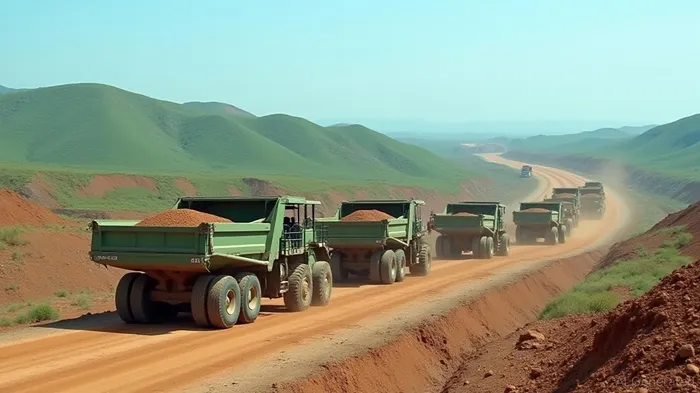
Zambia's reserves are among the world's largest, and its production is set to benefit from this shift. Exports rose 12% year-on-year in Q1 2025, driven by higher prices and volumes. While global oversupply concerns linger, the long-term structural demand for green infrastructure gives Zambian miners a sustained tailwind.
Investors should look to equity stakes in companies like First Quantum Minerals (FMG), which operates the Sentinel mine in Zambia, or ZCCM Investments (ZCCM), the state-owned conglomerate. Risks remain, however: copper prices are cyclical, and Zambia's mining sector faces challenges, including power shortages and labor disputes.
Agriculture: From Drought to Boom
Zambia's economy nearly collapsed in 2023 due to a devastating drought that halved maize production. But the 2024/25 harvest brought relief: maize output surged to 3.6 million metric tons, up from 1.5 million the previous year. This recovery has stabilized food prices, easing inflation and boosting rural incomes.
The rebound isn't just about maize. Zambia has vast arable land, and its fertile soils are ideal for cash crops like soybeans, cotton, and coffee. Agribusinesses are now targeting export markets in Africa and Asia, leveraging Zambia's geographic advantage as a hub for regional trade.
Investors should consider agro-processing firms or farmland investments. Companies like Sunbird Agri (SUNB) or partnerships with international firms like Olam International offer exposure to this sector. However, infrastructure gaps—poor road networks and unreliable electricity—remain barriers to scaling up.
Macroeconomic Stabilization: The Central Bank's Quiet Triumph
The Bank of Zambia (BoZ) has quietly turned the tide on inflation. After hitting a three-year high of 16.8% in February 2025, inflation has eased to 15.3% in May, with projections of 13.8% for 2025 and a return to the 6–8% target by 2027. This stability is no accident: BoZ's rate hikes, which pushed the policy rate to 14.5%, have anchored expectations.
The BoZ's credibility is bolstered by its independence and clear communication. Governor Denny Kalyalya has emphasized that inflation will decline as food prices stabilize and the kwacha appreciates, supported by strong copper exports. This stability creates a fertile environment for foreign direct investment (FDI), which rose 18% in 2024.
Investment Opportunities: Where to Look
- Mining Equities: Exposure to copper through companies like FMG or ZCCM, but with a focus on firms with low-cost operations and hedged against currency risk.
- Agribusiness: Agro-processing firms or farmland investments in soybeans or cotton, paired with hedging against weather risks.
- Infrastructure: Private equity or public-private partnerships in road and energy projects, which are critical to unlocking Zambia's potential.
Caution: Debt and the Kwacha
Zambia's success hinges on navigating two critical risks. First, its external debt remains unsustainable at 200% of GDP, even after IMF-supported restructuring. A new debt swap deal with Paris Club creditors, finalized in April 2025, offers some relief, but fiscal discipline is non-negotiable.
Second, the kwacha's volatility poses a threat. While it has strengthened to K27.80/USD in May 2025 (up 3.3% year-on-year), external shocks—like a sudden drop in copper prices—could reverse this. Investors must hedge currency exposure or focus on firms with dollar-denominated revenue streams.
Conclusion
Zambia's economy is at a crossroads. The confluence of copper's green energy demand, agricultural revival, and macroeconomic stabilization presents a rare opportunity. For investors willing to accept the risks of emerging markets—currency swings, political uncertainty, and debt—the rewards could be substantial.
The key is to bet on sectors with structural tailwinds and firms with strong management. As the BoZ's credibility grows and the IMF's support solidifies, Zambia's economic renaissance is no longer a distant dream—it's underway.
Investors should proceed with caution but remain open to this African growth story.







Comentarios
Aún no hay comentarios