
Yum! Brands: A Leadership Handoff and Pizza Hut's Strategic Review in Historical Context
The transition at Yum! BrandsYUM-- was planned, but the challenge facing the new CEO is immediate. Chris Turner officially stepped into the role on October 1, succeeding David Gibbs after a 37-year tenure that included five years as CEO. One of Turner's first major actions was to initiate a formal review of strategic options for the company's struggling Pizza Hut brand. This move frames the immediate strategic focus: navigating a difficult brand turnaround while exploring a path that could unlock value.
The critical near-term challenge is clear. Pizza Hut's U.S. business is a key drag on the company's performance. System sales in the domestic market are down 8% over two years, with same-store sales declining 7%. Even in the most recent quarter, the brand was the lone Yum!YUM-- chain to post negative system and same-store sales, with U.S. comps falling 7%. With 42% of Pizza Hut's system sales originating from the United States, this domestic weakness is a significant headwind.
Analysts' cautious optimism is a bet on new leadership successfully steering through this turbulence. The strategic review, which Yum! has retained Goldman Sachs and Barclays to advise on, is a recognition that Pizza Hut's current trajectory may not be sustainable. The company has stated there is no deadline for the review and no assurance any specific outcome will emerge. Yet the mere initiation of such a process signals a willingness to consider all options, including the possibility that the brand's full potential might be better realized outside the Yum! portfolio. The execution risk is high, as Turner must simultaneously manage the review and address the ongoing operational pressures in the U.S. market.
Analyst Sentiment in Context
The current analyst consensus is a study in measured optimism. Yum! Brands carries a "Moderate Buy" rating from Wall Street, with a median price target implying roughly 9% upside from recent levels. This cautious stance reflects a clear divide in recent actions. Just this week, Oppenheimer downgraded the stock to "Perform," citing fair valuation after a strong run in 2025. Yet the same week, Barclays upgraded, highlighting the strategic review for Pizza Hut as a potential catalyst. This split captures the core tension: the stock's near-term value is being weighed against the long-term promise of a major strategic decision. The data supports this cautious bet. Pizza Hut's domestic struggles are severe, with U.S. system sales down 8% over two years and same-store sales declining 7% in the last quarter. Its U.S. market share has eroded from 22.6% in 2019 to 18.7% in 2024. Against this backdrop, the analyst consensus isn't a vote for immediate turnaround, but for a potential reset. Piper Sandler cautions that much of the potential upside from a sale may already be priced in, while Stifel sees the review as a path to improved growth visibility. The bottom line is that the market is giving new leadership time to act, but the stock's moderate rating means it's waiting for concrete results from the review process.
Assessing the Portfolio and Financial Trajectory
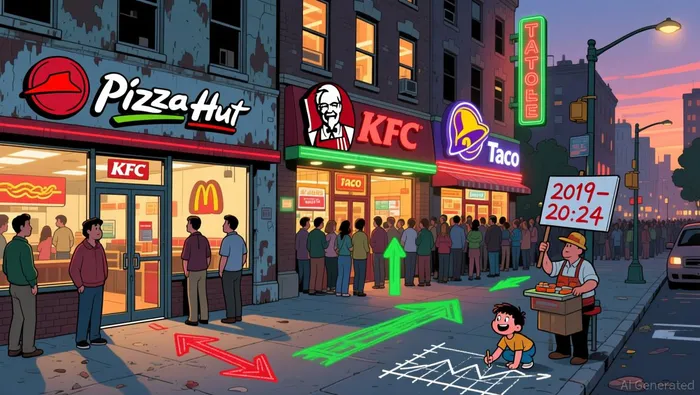
The portfolio performance at Yum! Brands is now starkly bifurcated. While KFC and Taco Bell are driving robust growth, Pizza Hut's U.S. business is a clear drag. In the third quarter, KFC posted system sales growth of 6 percent and same-store sales of 3 percent, while Taco Bell's numbers were even stronger at 9 and 7 percent, respectively. This contrasts sharply with Pizza Hut, which was the lone Yum! chain to post negative system and same-store sales in the quarter, with U.S. comps falling 7%. The long-term trend is even more concerning, with Pizza Hut's domestic system sales down 8% over two years.
This divergence sets the stage for the strategic review. The potential outcomes-an outright divestiture, a joint venture or the sale of a stake in the chain-follow a recent pattern in the restaurant sector. Companies are shedding underperforming assets to sharpen focus and improve balance sheets. The review is a direct attempt to address the erosion of Pizza Hut's U.S. market share, which has fallen from 22.6% in 2019 to 18.7% in 2024.
The company's financial trajectory hinges on navigating this tension. Yum! operates a franchised business model, which comprises 98% of its operations, providing a stable earnings base. The goal is to return to a normalized 5% net restaurant growth rate by 2026. However, Pizza Hut's challenges threaten that forecast. Analysts are split on the 2026 outlook, with some projecting modest net restaurant growth of below 5.0% due to the brand's struggles. The strategic review is the critical variable. A clean break could remove a key headwind, but the process itself introduces uncertainty. The company's ability to maintain momentum in KFC and Taco Bell while managing the review will determine whether the anticipated growth return is achievable.
Valuation, Catalysts, and Key Risks
The investment case for Yum! Brands now hinges on a single, high-stakes catalyst: the outcome of the Pizza Hut strategic review. The stock's recent performance suggests some optimism is already priced in. Trading at $155.52, it sits well above its 52-week low of $122.13, with a 120-day price increase of 6.9%. This move reflects the market's initial bet on new leadership and the potential for a value unlock. Yet the valuation itself remains elevated, with a forward P/E of 34.4, implying significant growth expectations are baked in.
The primary catalyst is clear. A decision to divest, spin off, or restructure Pizza Hut could remove a persistent drag on the portfolio. Analysts see this as a path to improved growth visibility and a sharper focus on the high-performing KFC and Taco Bell brands. As Stifel noted, such a move could ease a key underperformance risk. The review, backed by top-tier advisors, is a serious signal that management is open to outcomes that could unlock value, even if it means a divestiture. The potential upside from a sale may already be partially reflected in the stock's recent climb, but the process itself is the next major event.
Execution risk, however, is the dominant concern. The new CEO must simultaneously manage a complex strategic review while addressing the ongoing operational pressures in Pizza Hut's U.S. market. The brand's domestic struggles are severe, with U.S. system sales down 8% over two years and U.S. market share eroding from 22.6% to 18.7% in that period. Any misstep in the review process or a failure to stabilize the core business could further dilute the momentum of the other brands.
The broader portfolio provides a counterbalance. With a franchised model comprising 98% of operations, the company has a stable earnings base. KFC and Taco Bell are driving robust growth, which is essential for the company to meet its forecast to return to a normalized 5% net restaurant growth rate by 2026. The key risk is that Pizza Hut's challenges-whether through a prolonged turnaround or a messy transaction-could derail that forecast, leading to the more cautious projection of modest net restaurant growth of below 5.0% in 2026.
In short, the setup is a classic tension between a promising catalyst and a tangible execution hurdle. The stock trades at a premium, betting on a clean break for Pizza Hut. The risk is that the process takes longer than expected, or that the operational headwinds prove harder to manage than anticipated. For now, the market is giving new leadership time to act, but the elevated valuation leaves little room for error.





Comentarios
Aún no hay comentarios