
New York's Long-Term Economic Resilience: Strategic Real Estate and Infrastructure Investment Opportunities
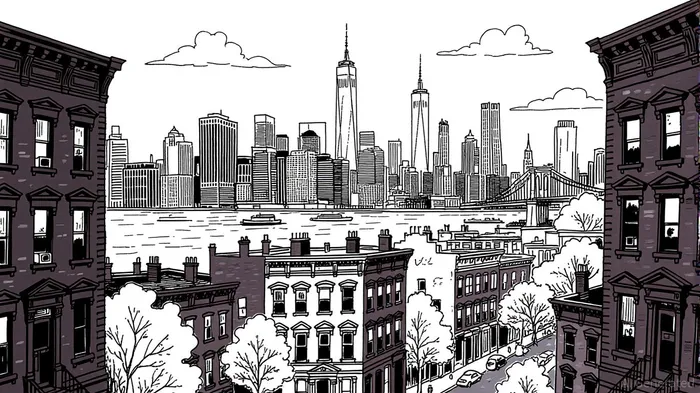
New York City has long been a global economic powerhouse, and its resilience in the face of crises—from the 2008 financial collapse to the 9/11 attacks—has cemented its reputation as a hub of adaptability and reinvention. As of 2025, the city’s real estate and infrastructure sectors are once again demonstrating robust growth, driven by strategic investments, shifting market dynamics, and lessons learned from past challenges. For investors, this presents a compelling case for long-term opportunities rooted in New York’s ability to balance innovation with stability.
Real Estate Market: A Tale of Resilience and Adaptability
The New York real estate market in 2025 is marked by a striking duality. While ManhattanMANH-- and Brooklyn have seen a surge in activity, with citywide average sales prices rising 9.8% year-over-year to $1,350,283 [3], outer boroughs like the Bronx and Staten Island have experienced declines in sales activity [3]. This divergence reflects broader trends: Manhattan’s 16.1% year-over-year increase in sales and 1.7% rise in average prices [3] underscore its enduring appeal as a prime market, while the Bronx’s 38.2% inventory increase [3] highlights the need for localized strategies to address regional disparities.
Rental markets are equally dynamic. Median asking rents rose 2.7% year-over-year to $3,900 citywide, with Manhattan leading at $4,595 [2]. This growth is fueled by declining inventory and high demand, particularly in Manhattan, where buyers are increasingly prioritizing properties requiring renovations. The “renovation premium” has normalized, making older properties more accessible to buyers seeking value [1]. This shift mirrors post-2008 trends, where Manhattan co-ops—accounting for 75% of the market—proved more resilient than condos due to their community-focused ownership model and financial safeguards [2].
Infrastructure: Building a Future-Ready Economy
New York’s infrastructure investments in 2025 are not merely about repair—they are about reimagining the city’s economic foundations. Governor Kathy Hochul’s announcement of 13 transformational projects under the Downtown Revitalization Initiative and NY Forward programs exemplifies this vision. These projects, including the redevelopment of Long Island City’s Metropolitan Building into a creative hub and the expansion of Queens Public Library, aim to stimulate job creation, enhance public spaces, and attract private capital [1].
The FAST NY Shovel-Ready Grant Program further underscores this momentum, having allocated $232 million for 32 industrial site improvements, including high-tech manufacturing and clean energy zones [2]. By focusing on sectors like logistics and data centers—critical for AI and machine learning—New York is positioning itself to capitalize on the $2.76 trillion North American constructionNOA-- market projected for 2025 [2]. These initiatives align with broader economic goals, such as the Climate Leadership and Community Protection Act, which mandates greenhouse gas reductions while fostering climate-resilient infrastructure [4].
Lessons from the Past: Resilience as a Strategic Advantage
New York’s history of overcoming crises offers valuable insights for today’s investors. Post-9/11, the city’s $16.4 billion investment in rebuilding Lower Manhattan—including the iconic One World Trade Center and the Fulton Center transit hub—revitalized employment and population growth [1]. Similarly, during the 2008 crisis, Manhattan co-ops mitigated price declines by 15-20% compared to condos, thanks to their financial vetting processes and community-centric structure [2]. These examples highlight the importance of diversified ownership models and forward-thinking infrastructure in stabilizing markets during downturns.
Today, New York is applying these lessons to address modern challenges. The East Side Coastal Resiliency (ESCR) project, set for completion in 2025, combines flood protection with public space enhancements, reflecting a holistic approach to climate adaptation [2]. Meanwhile, workforce development programs, such as Climate Jobs New York, are addressing labor shortages in construction, ensuring that infrastructure projects remain on track despite rising costs [3].
Expert Forecasts: Navigating Uncertainty with Confidence
Despite macroeconomic headwinds—including tariffs, geopolitical tensions, and hybrid work models—experts remain optimistic about New York’s long-term prospects. The Global Real Estate Outlook 2025 notes that while office demand in CBDs may decline by 13–38% by 2030 [2], high-quality spaces with flexible amenities will retain value. Similarly, the demand for data centers, driven by AI growth, is expected to create new real estate opportunities [2].
Infrastructure investments are also seen as a hedge against volatility. The North America Construction Market analysis projects a 7% growth in construction activity from 2024 to 2025, fueled by government programs like the Inflation Reduction Act [2]. For investors, this signals a sector poised to absorb risks through innovation, such as AI-enabled automation and digital tools that address labor shortages [2].
Conclusion: A City of Enduring Opportunity
New York’s economic resilience is not accidental—it is the result of strategic investments in real estate and infrastructure, informed by historical lessons and forward-looking policies. For investors, the city offers a unique blend of stability and growth potential, from Manhattan’s premium markets to the outer boroughs’ untapped potential. As global uncertainties persist, New York’s ability to adapt—whether through co-op models, climate-resilient infrastructure, or tech-driven construction—positions it as a beacon of long-term value.
Source:
[1] Lower Manhattan since 9/11: A Study in Resilience [https://libertystreeteconomics.newyorkfed.org/2016/10/lower-manhattan-since-911-a-study-in-resilience/]
[2] Global Real Estate Outlook 2025 [https://www.jll.com/en-us/insights/market-outlook/global-real-estate]
[3] 2025 Q2 New York City Residential Real Estate Market [https://blog.yeonyc.com/2025-q2-new-york-city-residential-real-estate-market-64108]
[4] New York's Response to Climate Change - NYSDEC [https://dec.ny.gov/environmental-protection/climate-change/new-york-response]







Comentarios
Aún no hay comentarios