
New York's Energy Grid Strain: A Looming Bottleneck for AI and Renewable Growth
New York's energy grid is at a critical inflection point. The state's ambitious climate goals-zero-emissions by 2040 and 70% renewable energy by 2030-collide with a reality of aging infrastructure, surging demand from AI data centers, and interconnection bottlenecks that threaten to stall progress. For utility investors, this creates a dual challenge: navigating the financial risks of grid modernization while capitalizing on emerging opportunities in decentralized energy solutions.
The Grid's Fragile Foundation
New York's grid operates with a "narrow margin for error," according to the NYISO, as aging infrastructure and rising demand converge. Over 40% of upstate transmission lines are more than 40 years old, and interconnection queues average 6.5 years. Nearly 240 renewable projects totaling 35,000 MW are stuck in limbo, unable to connect due to processing delays. This backlog is exacerbated by the AI boom, which has driven a surge in energy demand from data centers. According to Crain's report, the AI sector alone could strain the grid's capacity by 2026 if infrastructure upgrades lag.
Financial Risks for Utility Investors
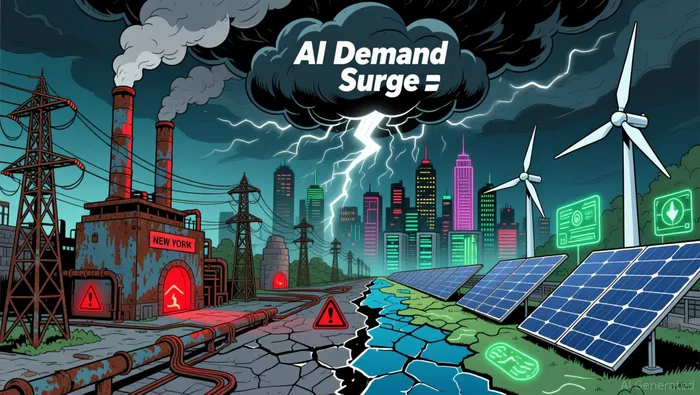 The strain on the grid is translating into significant financial pressures. Utilities like National GridNGG-- and New York State Electric & Gas are investing over $4 billion in grid modernization, including transmission line upgrades and substation expansions. These costs are being passed to ratepayers, with projected utility rate hikes of up to 28% over the next three years. Critics argue that these increases disproportionately burden communities like Suffolk and Erie counties, where grid upgrades yield little direct benefit. For investors, this raises concerns about regulatory backlash and the sustainability of rate-based revenue models in a market increasingly skeptical of utility profiteering.
Renewable Mandates and Reliability Challenges
New York's renewable mandates, while laudable, are compounding grid instability. The downstate region faces acute reliability risks starting in 2026 due to generator deactivations and rising load demands. NYISO's Comprehensive Reliability Plan aims to address these issues through market reforms and incentives for private investment, but delays in projects like Empire Wind and the Champlain Hudson Power Express transmission line could leave the state short on dispatchable generation.
Meanwhile, the state has deployed 1,403 MW of energy storage by March 2025, nearing its 1,500 MW interim target, but this progress is offset by the slow pace of interconnection approvals.
Decentralized Solutions: A Path Forward
Amid these challenges, decentralized energy solutions are emerging as a lifeline for both consumers and investors. Solar energy, paired with battery storage, offers a way for homeowners and businesses to reduce reliance on the grid and insulate themselves from rate hikes. According to a report, the AI sector alone could strain the grid's capacity by 2026 if infrastructure upgrades lag. Programs like New York's Value of Distributed Energy Resources (VDER) and the NYPA-led REACH initiative are accelerating adoption, with NYSERDA's 2025 Renewable Energy Standard (RES) solicitation targeting 5.6 million Tier 1 RECs for new projects. For investors, this represents a shift from centralized utility models to distributed energy markets, where returns can be generated through solar leasing, storage-as-a-service, and grid resilience contracts.
Strategic Investment Imperatives
The convergence of AI-driven demand, renewable mandates, and grid fragility signals a pivotal moment for utility investors. Immediate action is required to:
1. Fund grid resilience projects that address interconnection bottlenecks and aging infrastructure.
2. Diversify into decentralized energy assets, such as solar and storage, to hedge against grid instability.
3. Advocate for policy reforms that streamline interconnection processes and incentivize private-sector participation.
Failure to act risks not only financial losses but also the state's ability to meet its climate goals. As New York's grid teeters between innovation and collapse, investors must choose between clinging to outdated models or embracing the decentralized future.





Comentarios
Aún no hay comentarios