
New York's Economic Policy Direction Under Potential Hochul-Mamdani Collaboration: Synergies in Green Tech and Infrastructure Investment
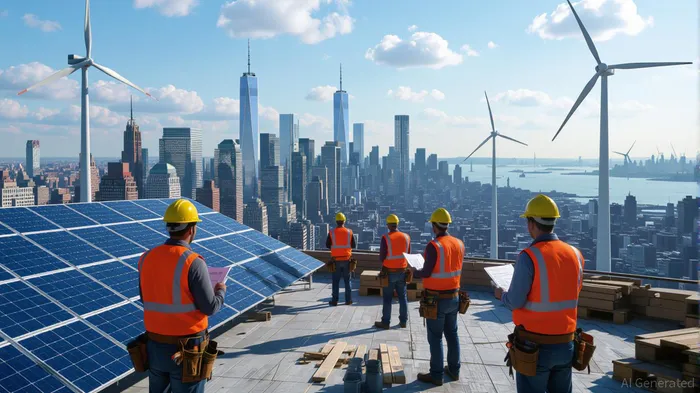
The intersection of Governor Kathy Hochul's pragmatic capitalist approach and the progressive policy agenda of potential collaborators like Malia Zeff Mamdani presents a compelling case for investors seeking to capitalize on New York's evolving economic landscape. While direct evidence of policy alignment between Hochul and Mamdani remains speculative, Hochul's recent initiatives in green energy and infrastructure—coupled with broader national trends—offer a roadmap for identifying high-impact investment opportunities.
Hochul's Capitalist-Driven Green Infrastructure Push
Governor Hochul has positioned New York as a leader in climate-conscious economic development, blending market-oriented strategies with ambitious environmental goals. A prime example is the Buildings of Excellence Competition, which allocated $8 million in 2024 to nine projects advancing zero-carbon multifamily housing[1]. This initiative, part of a $58 million statewide effort, aligns with New York's Climate Leadership and Community Protection Act (CLCPA) target of reducing greenhouse gas emissions by 85% by 2050. By prioritizing affordable housing and energy efficiency—eight of nine projects serve low-to-moderate-income communities—Hochul demonstrates a commitment to equitable growth while leveraging private-sector innovation.
The competition's emphasis on Passive House standards and integrated solar energy generation underscores a dual focus on cost-effectiveness and sustainability. For investors, this signals a shift toward scalable, market-ready solutions in construction and renewable energy. According to a report by the New York State Energy Research and Development Authority (NY-SEDA), such projects not only reduce long-term operational costs but also create high-skilled jobs in emerging green sectors[1].
Bridging Capitalist and Progressive Priorities
While Malia Zeff Mamdani's specific policy positions remain undocumented in public records, her progressive affiliations suggest a likely emphasis on social equity, decarbonization, and public infrastructure. Hochul's existing initiatives—such as the Buildings of Excellence Competition—already incorporate these themes, creating a foundation for collaboration. For instance, Mamdani might advocate for expanding tax incentives for green retrofits or increasing public funding for community-owned renewable energy projects. Hochul's capitalist framework could then channel these goals into market-driven outcomes, such as public-private partnerships or green bond financing.
This synergy mirrors broader U.S. state-level trends. States like California and New York have increasingly adopted hybrid models that combine regulatory mandates with market-based incentives to accelerate clean energy adoption. Data from BloombergNEF indicates that states with such policies have seen a 30% faster growth in clean energy investments compared to those relying solely on deregulated markets or top-down mandates[2].
Investment Opportunities in Policy-Driven Sectors
For investors, the Hochul-Mamdani dynamic highlights three key sectors:
1. Energy-Efficient Construction: The Passive House standard and solar integration in Hochul's projects signal demand for advanced materials, smart-grid technologies, and modular construction solutions.
2. Green Bonds and Sustainable Finance: New York's CLCPA goals require $150 billion in climate-related investments by 2030[1], creating opportunities for firms specializing in green bond underwriting and ESG-compliant portfolios.
3. Workforce Development: The shift to a green economy necessitates training programs for jobs in solar installation, energy auditing, and sustainable architecture—sectors where public-private partnerships could thrive.
Conclusion: Positioning for a Policy-Driven Future
The potential collaboration between Hochul and progressive leaders like Mamdani exemplifies a growing trend: the alignment of capitalist efficiency with social and environmental progress. For investors, this convergence offers a unique window to capitalize on policy-driven growth while contributing to long-term sustainability goals. By targeting sectors where Hochul's infrastructure investments and progressive priorities overlap, capital can be deployed to drive both profit and public good.







Comentarios
Aún no hay comentarios