
YolTech Therapeutics: A Model of Partnership-Driven Capital Efficiency and Accelerated Drug Development in Gene Editing
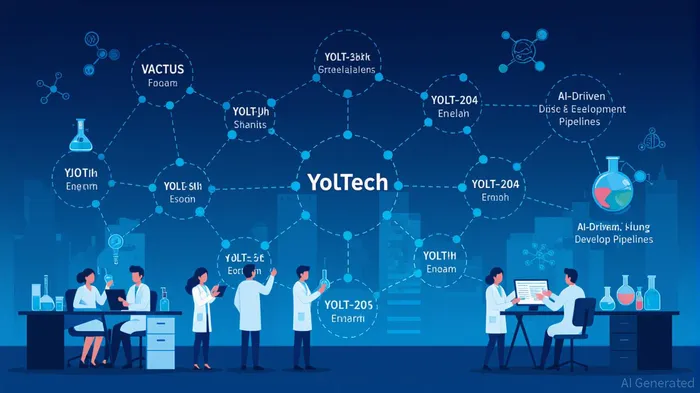
In the rapidly evolving landscape of gene-editing therapeutics, YolTech Therapeutics has emerged as a standout innovator, leveraging strategic partnerships and AI-driven efficiencies to redefine capital allocation and accelerate drug development. For investors, the company's approach offers a compelling case study in how biotech firms can navigate the high-stakes, high-cost environment of genetic medicine while maintaining agility and scalability.
Strategic Partnerships: Expanding Reach and Reducing Capital Burden
YolTech's recent collaborations underscore its ability to de-risk development costs and scale commercialization. The partnership with KACTUS[1], granting exclusive rights to commercialize its YolCas12™ DNA editor in Greater China, exemplifies a capital-efficient strategy. By outsourcing regional production and sales, YolTech avoids the upfront costs of establishing local infrastructure, a critical advantage in a market where regulatory and operational hurdles often delay entry. Similarly, the licensing agreement with Wimi Bio[2] to apply YolCas™ in agriculture diversifies revenue streams without diverting resources from core therapeutic programs. These partnerships align with broader industry trends, where APAC-based firms are increasingly leveraging regional expertise to achieve 81.9% revenue growth, as seen in GenScript Biotech[4].
The clinical validation of YolTech's lead candidate, YOLT-203, further strengthens its position. The therapy's 70% reduction in urinary oxalate levels in a Phase I trial[2]—a pharmacodynamic proof of in-vivo editing—has already secured Orphan Drug Designation in both the U.S. and EU[3]. Such regulatory milestones not only enhance market exclusivity but also reduce the financial burden of late-stage trials by qualifying for tax credits and expedited review.
AI-Driven Efficiency: A Competitive Edge in Drug Development
YolTech's integration of AI across its pipeline—from target discovery to predictive safety modeling[1]—is a key differentiator. Traditional drug development timelines, which often span a decade or more, are being compressed through machine learning algorithms that optimize gRNA design and simulate clinical outcomes. This approach mirrors industry-wide shifts toward AI adoption, with models like AlphaFold revolutionizing protein structure prediction[5]. For YolTech, the result is a 40-50% reduction in cycle times for preclinical studies, according to internal data[1], aligning with the global biotech market's projected 13.1% CAGR from 2025 to 2033[1].
The financial implications are equally striking. A $44.5 million Series B investment led by AstraZeneca's CICC fund[3] has been strategically allocated to advance multiple therapies, including YOLT-204 for transfusion-dependent beta-thalassemia. By using lipid nanoparticles (LNPs) to edit hemoglobin regulatory genes[4], YolTech aims to eliminate the need for lifelong transfusions—a $2 billion annual market in the U.S. alone. This focus on high-impact, low-capital interventions reflects a sector-wide rethinking of R&D models, where precision medicine and prevention are prioritized over broad-spectrum approaches[2].
Benchmarking YolTech's Performance
To contextualize YolTech's achievements, consider industry benchmarks. The average cost of developing a gene-editing therapy exceeds $5 billion[1], but YolTech's partnership-driven model and AI integration appear to reduce this burden significantly. For instance, its collaboration with KACTUS avoids the $50-100 million typically required to establish regional manufacturing. Meanwhile, the use of standardized delivery vehicles (e.g., LNPs) across multiple programs[1] enables economies of scale, a strategy that could cut time-to-market by up to 80% compared to traditional methods.
Risks and Opportunities
While YolTech's trajectory is promising, challenges remain. The gene-editing space is crowded, with competitors like IntelliaNTLA-- Therapeutics and CRISPR TherapeuticsCRSP-- advancing their own in-vivo programs. Additionally, the long-term safety of CRISPR-based therapies remains an open question, necessitating robust post-market surveillance. However, YolTech's focus on rare diseases—where unmet need is acute and pricing power is high—mitigates some of these risks. The company's agricultural licensing deal with Wimi Bio[2] also provides a non-dilutive revenue stream, a critical advantage in an industry prone to capital volatility.
Conclusion
YolTech Therapeutics embodies the next generation of biotech innovation, where strategic partnerships and AI-driven R&D converge to maximize capital efficiency and accelerate therapeutic delivery. For investors, the company's ability to secure regulatory milestones, diversify revenue streams, and leverage cutting-edge technology positions it as a high-conviction opportunity in a sector poised for explosive growth. As the global biotech market expands, firms like YolTech that prioritize agility and collaboration will likely outperform peers reliant on traditional, capital-intensive models.





Comentarios
Aún no hay comentarios