
Is the Year-End Equity Rally Sustainable into 2026?
Macro-Driven Market Breadth: A Narrow Foundation
Market breadth remains historically constrained, according to data. This narrow participation is largely attributable to the artificial intelligence (AI) sector, where companies like MicrosoftMSFT--, Alphabet, and AppleAAPL-- have disproportionately driven gains. While the "AI Ouroboros"-a self-reinforcing cycle of reinvestment within the AI ecosystem-has sustained valuations, it also raises concerns about overvaluation and potential corrections according to analysis.
From a macroeconomic perspective, the U.S. , with Q4 2025 GDP expected to expand at . , but inflation, measured by headline CPI, according to data. These indicators suggest a modestly improving economy but one that lacks the broad-based strength needed to sustain a wider market rally. Industrial production data, though not explicitly referenced, likely reflects this uneven recovery.
Earnings Momentum: A Decelerating Engine
S&P 500 earnings growth projections for 2026 indicate a slowdown in economic momentum, with real GDP growth expected to fall to . This decline, while marginal, signals a cooling in corporate profitability, particularly outside the AI sector. The Fed's cautious stance on rate cuts-emphasized by Chair 's insistence on "more economic data" before further easing-adds uncertainty for companies reliant on accommodative monetary policy according to reports.
The risk of a GDP contraction persists, according to projections. These figures underscore the fragility of the current expansion, according to forecasts. For equities, this means earnings growth may struggle to keep pace with valuation multiples, especially in sectors outside the AI-driven narrative.
Federal Reserve Policy: Tightrope Walking Between Caution and Accommodation
The Federal Reserve's policy trajectory in Q4 2025 has been marked by internal divisions and a pivot toward . At the October 2025 meeting, , but the decision lacked consensus, with a hawkish dissent highlighting growing disagreements according to analysis. The central bank also confirmed the end of its (QT) program in December 2025, a move that, while anticipated, surprised some traders due to ongoing volatility in short-term funding markets according to market reports.
The Fed's reluctance to pre-commit to rate cuts has created tension with markets accustomed to accommodative policy. While a 25-basis-point cut by year-end is priced in, the central bank's emphasis on data-dependent decisions suggests a measured approach to easing in 2026 according to policy analysis. This cautious stance could limit downside risks for equities but also constrains upside potential, particularly if inflation proves sticky.
The Path Forward: Balancing Risks and Opportunities
The sustainability of the equity rally into 2026 depends on whether the current narrow market breadth can broaden and whether the Fed can navigate inflation without stifling growth. The AI sector's dominance, while a short-term tailwind, remains a double-edged sword. A correction in AI valuations could trigger broader market jitters, especially if earnings momentum outside the sector fails to materialize.
On the policy front, the Fed's transition from QT to a neutral balance sheet stance provides some support, but the central bank's divided outlook and the pending selection of a new chair-with among the shortlisted candidates-add layers of uncertainty according to business reports. A shift in monetary policy tone under a new leadership could either stabilize or destabilize markets, depending on the approach taken.
Conclusion
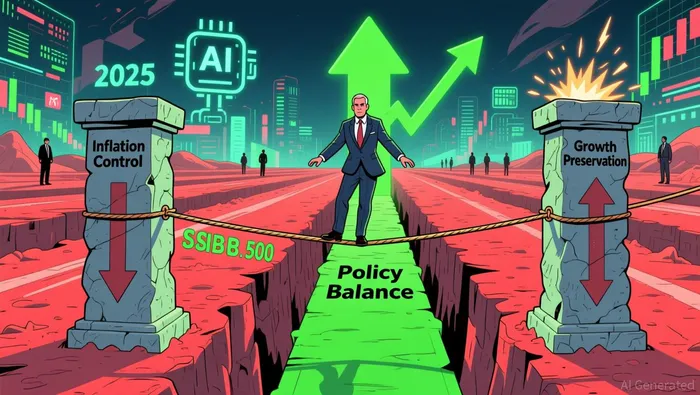
The year-end equity rally of 2025 is built on a precarious foundation. While macroeconomic indicators and Fed policy offer limited support, the narrow market breadth and decelerating earnings momentum pose significant risks. For 2026, investors must brace for a more fragmented market environment, where AI-driven gains may not be enough to sustain a broad-based rally. The Fed's ability to balance inflation control with growth preservation will be pivotal, but with internal divisions and external uncertainties, the path forward remains anything but certain.





Comentarios
Aún no hay comentarios