
Yala's Liquidity Crisis: A Case Study in Stablecoin Risk and DeFi Governance
The collapse of Yala's stablecoin YU in November 2025 serves as a stark reminder of the fragility inherent in over-collateralized stablecoin systems. As DeFi markets grapple with systemic risks, the Yala crisis underscores the critical interplay between governance design, liquidity management, and real-time redemption mechanisms. For investors, this case study offers a cautionary tale about the dangers of centralized control, opaque reserves, and the illusion of algorithmic stability.
The Rise and Fall of Yala
Yala emerged as a prominent player in the DeFi space by offering a Bitcoin-backed stablecoin (YU) and a suite of yield-generating protocols. However, its November 2025 liquidity crisis-marked by a 54.9% depeg to $0.42-revealed deep-seated vulnerabilities. The collapse was preceded by a September 2025 hack, where compromised private keys enabled unauthorized minting of YU tokens and a $7.64 million drain from the protocol. This incident exposed critical flaws in key management and cross-chain bridge security, foundational components of Yala's redemption process as research shows.
The November crisis was triggered by a combination of factors. Suspicious borrowing activity from Euler's USDCUSDC-- lending pool drained Yala's liquidity reserves, while Euler's subsequent withdrawal freeze exacerbated the strain. The depegging event mirrored the 2022 TerraUSD (UST) collapse, where governance interventions failed to restore confidence amid cascading liquidity withdrawals according to analysis. Yala's inability to maintain its peg highlighted the fragility of systems reliant on external protocols for liquidity as data shows.
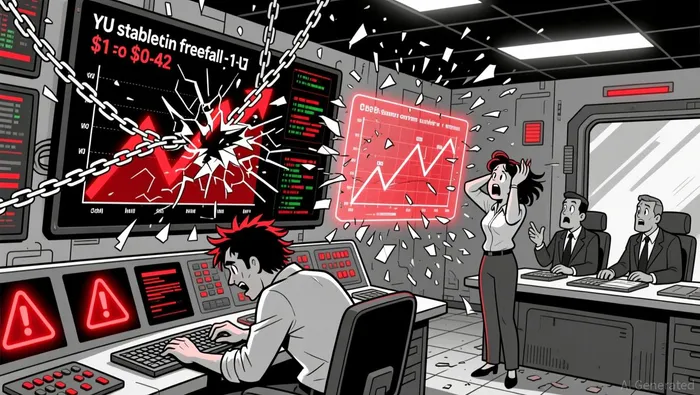
The crisis also exposed the inadequacy of real-time redemption mechanisms. While over-collateralized stablecoins typically rely on on-chain liquidations to enforce collateral requirements, Yala's system faltered under market stress. Automated selling and panic exits overwhelmed the protocol, leading to under-collateralization and a breakdown in peg stability as research suggests. This aligns with broader academic findings that stability in algorithmic systems is an "emergent, fragile state" dependent on sustained market confidence as studies show.
Lessons for Investors and the DeFi Ecosystem
The Yala case study offers three critical lessons for investors and protocol designers:
Robust Governance Requires Decentralization: Centralized control over minting, key management, and reserve allocation creates systemic risks. Protocols must adopt multisig governance, time delays for critical operations, and strict role separation to prevent single points of failure according to security experts.
Liquidity Diversification is Non-Negotiable: Over-reliance on a single liquidity source (e.g., Euler's USDC pool) amplifies vulnerability during market stress. Protocols should maintain diversified, liquid collateral and implement dynamic liquidity allocation mechanisms, such as Yala's post-crisis Protocol Stability Mechanism (PSM) as market data shows.
Real-Time Redemption Mechanisms Must Be Stress-Tested: Automated liquidation systems must be rigorously tested under extreme scenarios to avoid cascading failures. Yala's inability to handle panic exits highlights the need for adaptive algorithms and emergency liquidity buffers as analysis indicates.
For investors, the Yala crisis underscores the importance of due diligence. Stablecoins with opaque reserves, centralized governance, or untested redemption mechanisms should be approached with caution. The collapse of YU also signals a shift in regulatory scrutiny, with global bodies increasingly emphasizing solvency audits and emergency liquidity support as foundational requirements according to policy updates.
Conclusion
Yala's liquidity crisis is a microcosm of the broader challenges facing over-collateralized stablecoins. While the protocol has since implemented multisig controls, quarterly audits, and MiCAR compliance measures as reported, the damage to its reputation and user trust is irreversible. For DeFi to mature, protocols must prioritize governance transparency, liquidity diversification, and resilient redemption mechanisms. Investors, in turn, must recognize that stability in crypto is not a given-it is a fragile construct, perpetually at risk of collapse when fundamentals falter.






Comentarios
Aún no hay comentarios