
The XRPC ETF: A Gateway to Mainstream XRP Exposure and Institutional Liquidity
Regulatory Milestones: A New Era for XRP
The XRPC ETF's regulatory approval, formalized via the submission of Form 8-A to the SEC on November 10, 2025, signals a critical shift in the agency's approach to crypto products according to analysis. Unlike previous rejections of XRP-based funds, this approval reflects a pragmatic recognition of XRP's utility in cross-border payments and its $143 billion market cap according to data. By sidestepping derivatives and directly holding XRP, the fund aligns with the SEC's evolving framework for digital assets while mitigating compliance risks for institutional investors according to reports.
Canary Capital, the ETF's sponsor, has further bolstered confidence by partnering with custodians like Gemini Trust Company and BitGo Trust Company-entities with proven expertise in securing digital assets according to reports. This infrastructure not only ensures regulatory compliance but also addresses lingering concerns about custody and transparency, which have historically hindered institutional adoption.
Strategic Structure and Competitive Advantages
The XRPC ETF's structure is designed to maximize efficiency and accessibility. With a 0.50% annual management fee, it offers a cost-effective alternative to over-the-counter XRP trading, which often involves fragmented liquidity and price premiums according to analysis. By directly tracking the XRP-USD CF Benchmarks Reference Rate Index, the fund minimizes tracking errors and provides real-time exposure to XRP's price movements according to data.
This simplicity is a strategic advantage. Unlike leveraged or inverse crypto products, which amplify volatility and complexity, XRPC delivers straightforward exposure to XRP's fundamentals. For investors, this means a tool that can be seamlessly integrated into diversified portfolios, balancing growth potential with liquidity.
Institutional Liquidity and Market Dynamics
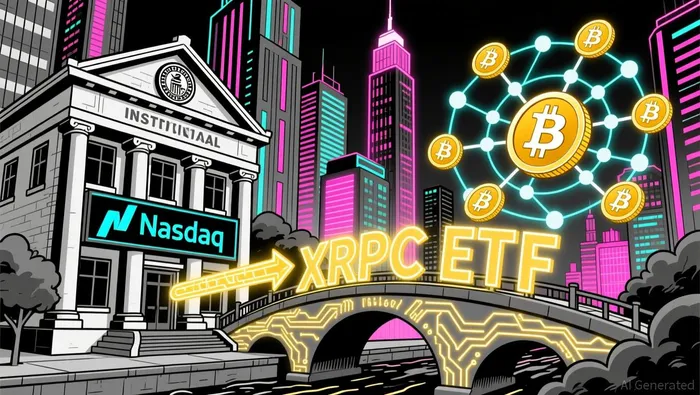
The XRPC ETF's launch is poised to unlock a new wave of institutional liquidity. XRP's role in cross-border payments-facilitated by its fast settlement times and low costs-makes it an attractive asset for pension funds, endowments, and hedge funds seeking real-world utility in their crypto allocations according to analysis. Analysts, including Bloomberg's Eric Balchunas, argue that XRPC could outperform the recent Solana ETF debut, given XRP's larger market cap and established use cases according to reports.
This dynamic is not merely speculative. Historical precedents, such as the BitcoinBTC-- ETF rally in 2024, demonstrate how regulated products can catalyze demand. With XRPC, the same mechanism now applies to XRP, potentially driving price appreciation and volume growth.
Strategic Asset Allocation in a Post-XRPC World
For investors, the XRPC ETF represents a unique opportunity to rebalance portfolios toward crypto's next phase. Traditional asset allocators have long treated crypto as a speculative overlay, but XRPC's institutional-grade structure reclassifies XRP as a strategic asset. Its low correlation with equities and fixed income further enhances diversification benefits, particularly in a macroeconomic environment marked by inflationary pressures and geopolitical uncertainty.
Moreover, the ETF's liquidity profile-enabling instant entry and exit-addresses a key barrier to crypto adoption. This is especially critical for risk-averse investors who require flexibility without sacrificing exposure to blockchain's transformative potential.
Conclusion
The XRPC ETF is more than a product; it is a catalyst. By aligning regulatory rigor with market demand, it accelerates the integration of XRP into global financial systems. For investors, the message is clear: the era of crypto as a niche asset is ending, and the age of institutional-grade digital exposure is here.





Comentarios
Aún no hay comentarios