
XRP Whale Selling Spree: Implications for Liquidity, Market Structure, and Investment Strategy in a Post-ETF Delay Scenario
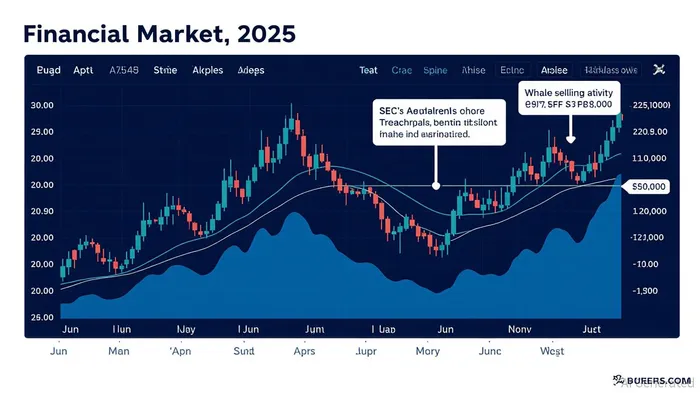
The XRPXRPI-- Whale Selling Spree: A Double-Edged Sword for Liquidity
Recent blockchain analytics reveal a surge in large-scale XRP transactions, with “whales”—holders of significant XRP—dumping their holdings at an accelerated pace. While specific transaction details remain opaque, the cumulative effect on liquidity is undeniable. Ripple's quarterly report indicates that the company holds 4.56 billion XRP in free wallets and 37.13 billion in escrow contracts[2], a supply that, if released en masse, could overwhelm market demand.
The XRP Ledger's role as a bridge asset in cross-border payments exacerbates this risk. Institutions relying on XRP for liquidity arbitrage may face slippage or price instability if whale selling coincides with high-volume transactions[2]. For instance, a single whale offloading 1 billion XRP could trigger a 10-15% price drop, given the asset's $5.3 billion daily trading volume[3]. This dynamic raises concerns about market depth, particularly in a post-ETF delay environment where speculative inflows are less predictable.
Validator Control and Market Trust: A Decentralized Defense?
The XRP Ledger's governance model, built on a Federated Byzantine Agreement (FBA), remains a critical factor in assessing market trust. Unlike proof-of-work systems, the XRP Ledger relies on a network of validator nodes, with Ripple maintaining a set of trusted validators known as the Unique Node List (UNL)[2]. While critics argue this structure centralizes control, data from 2025 shows the network remains decentralized, with no single entity—including Ripple—exerting dominance over consensus[2].
The FBA requires 80% agreement among trusted nodes for transaction validation, ensuring speed and integrity[1]. This design mitigates risks of double-spending or censorship, but it does not eliminate concerns about Ripple's token holdings. Analysts note that while Ripple's escrowed XRP is locked for monthly releases, its free wallet holdings could still influence market sentiment if sold strategically[2]. However, the validator network's independence provides a buffer against governance manipulation, a key differentiator from proof-of-stake or proof-of-work models.
ETF Delays and Regulatory Uncertainty: A Volatility Amplifier
The SEC's decision to delay the Franklin Templeton XRP ETF approval until November 14, 2025, has compounded market uncertainty[1]. This delay, part of a broader pattern of regulatory hesitation toward crypto investment products, has dampened speculative inflows and widened bid-ask spreads. Despite this, XRP's price has shown resilience, trading between $3.01 and $3.07 in late September 2025[3], driven by a 95% probability estimate of ETF approval from Bloomberg[1].
The regulatory overhang, however, persists. Ripple's ongoing legal battle with the SEC—centered on whether XRP qualifies as a security—casts a long shadow over institutional adoption[4]. For investors, this creates a paradox: short-term volatility is fueled by whale selling and regulatory delays, yet long-term value capture hinges on ETF approval and broader institutional acceptance.
Investment Strategy: Navigating the Crossroads
For investors, the current XRP landscape demands a nuanced approach. Short-term strategies should prioritize liquidity management, given the risks of whale-driven volatility. Position sizing and stop-loss orders become critical, especially as trading volume spikes during ETF-related news cycles[3].
Long-term investors, meanwhile, may view the ETF delay as a buying opportunity, provided they can stomach near-term turbulence. A successful ETF approval could unlock institutional capital flows, potentially pushing XRP's price toward $5–$7, based on historical ETF-driven rallies in BitcoinBTC-- and Ethereum[1]. However, this scenario hinges on resolving the SEC's legal challenges and demonstrating XRP's utility in cross-border payments—a use case Ripple has aggressively marketed[2].
Conclusion: Undervalued or at Risk?
XRP's valuation remains a contentious topic. On one hand, whale selling and regulatory delays justify caution, with liquidity risks and market depth concerns clouding its short-term outlook. On the other, the asset's unique position in cross-border payments, combined with a decentralized validator network and a capped supply of 100 billion tokens[2], suggests undervaluation if regulatory hurdles are overcome.
Investors must weigh these factors against their risk tolerance. For those with a long-term horizon, XRP's potential as a bridge asset and its ETF-driven upside could outweigh current uncertainties. For others, the volatility and regulatory ambiguity may warrant a wait-and-see approach.





Comentarios
Aún no hay comentarios