
XRP's Volatility Amid Fed Rate Cuts: A Macro-Driven Altcoin Rally?
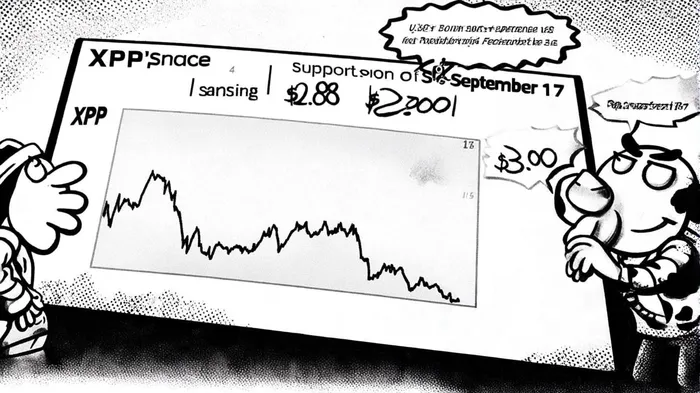
The Federal Reserve's 0.25% rate cut on September 17, 2025, marked a pivotal shift in monetary policy, signaling a departure from the restrictive stance that had dominated markets for over two years[1]. This decision, widely anticipated by traders, weakened the U.S. dollar and injected liquidity into risk assets, triggering immediate gains in cryptocurrencies like XRPXRP--. According to a report by CNBC, the Fed's move was accompanied by projections of two additional rate cuts by year-end, with the next FOMC meetings scheduled for October 28–29 and December 9–10[1]. This dovish pivot has reignited speculation about XRP's potential to break key resistance levels and test $4, driven by both macroeconomic tailwinds and structural catalysts like ETF approvals[4].
XRP's Price Action: A Macro-Driven Narrative
XRP's 4% surge ahead of the September 17 decision underscored its sensitivity to Fed policy. As stated by Coindesk, traders positioned themselves for a 99% probability of a rate cut, with technical indicators suggesting bullish momentum if the Fed followed through[1]. CoinCodex projected a short-term target of $3.04 by September 17, with longer-term goals of $3.31 in October and $3.51 by December 2025[2]. These projections align with the Fed's acknowledgment of rising downside risks to employment and slowing job gains, which justified the easing of monetary policy[1].
The broader altcoin market also responded positively, surging 6% as the dollar sold off post-September 17[3]. Historically, Fed rate cuts have been linked to altcoin rallies, as seen during the 2019 easing cycle, which saw market capitalization gains of over 300%[4]. However, the current environment is more nuanced. While inflation remains above target and economic data remains mixed, the Fed's dovish stance has encouraged institutional investors to reallocate capital toward crypto assets, particularly if traditional fixed-income yields become less attractive[4].
Structural Catalysts and Institutional Demand
Beyond macroeconomic factors, XRP's price trajectory is influenced by structural developments. The potential approval of XRP ETFs in October 2025 could amplify institutional demand, with analysts suggesting that such a product might push the price toward $4[2]. The REX-Osprey ETF launch, in particular, is seen as a critical catalyst, as it could attract a new wave of institutional capital into the asset class[3]. Additionally, a 50-basis-point rate cut—though less likely than the 25-basis-point cut—could further fuel momentum, potentially sending XRP toward $5[3].
Risks and Uncertainties
Despite the bullish outlook, risks persist. The Fed's internal debate over the magnitude of the rate cut—highlighted by Stephen Miran's dissent for a larger 50-basis-point reduction—reveals diverging views on the economic outlook[1]. Furthermore, while the Fed projects a long-term neutral rate of 3% and a gradual easing path into 2026 and 2027[1], near-term volatility could be driven by conflicting data on inflation, employment, and manufacturing activity. For example, a surprise uptick in inflation or stronger-than-expected job gains could delay further rate cuts, dampening XRP's rally.
Conclusion: A Balancing Act for Investors
The September 17 rate cut has created a favorable environment for XRP, but investors must balance optimism with caution. The asset's performance will hinge on the Fed's ability to navigate a fragile economic landscape while maintaining its dovish trajectory. With two more rate cuts expected by year-end and the potential for ETF approvals, XRP could see a sustained rally—provided macroeconomic data continues to support the Fed's easing path. However, as with all high-volatility assets, diversification and risk management remain paramount in this dynamic market.






Comentarios
Aún no hay comentarios