
XRP Tundra: A Strategic Yield Alternative in a Structural Bear Market
Bitcoin's Volatility and the Limits of Staking
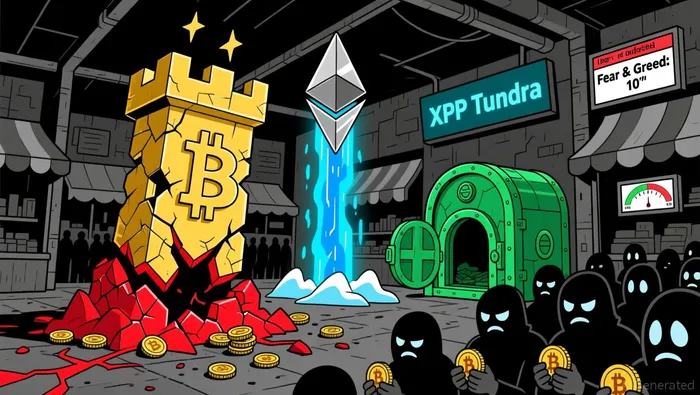
Bitcoin's Q3 performance highlights the challenges of relying on BTC as a capital preservation or yield-generating asset. Despite institutional interest in Bitcoin staking platforms like BabylonBABY-- and BounceBit-whose total value locked (TVL) surged from under $100 million to over $3 billion-specific staking yield metrics remain opaque. While Ethereum's staking yields averaged 4.6% in 2025, Bitcoin's staking options lack native on-chain mechanisms and depend on custodial or centralized solutions, introducing operational complexity and trust risks. Furthermore, Bitcoin's bearish technical patterns, including a death-cross and ETF outflows, have exacerbated volatility across the crypto market, leaving even altcoins like XRP exposed to downward pressure.
XRP Tundra's Revenue-Backed Staking Model
XRP Tundra's staking platform, by contrast, offers a transparent, revenue-backed model that generates yields from real economic activity. The platform's Cryo Vaults structure staking into three tiers-Liquid (4%–6% APY), Balanced (8%–12% APY), and Premium (15%–20% APY)-with lock periods ranging from zero to 90 days according to platform analysis. These returns are derived from protocol fees on swaps, lending, derivatives, and cross-chain bridges, eliminating inflationary minting and ensuring sustainability. For instance, Premium Staking's 15%–20% APY is supported by liquidity-linked bonuses and daily compounding, making it a high-yield alternative to Bitcoin's uncertain staking returns.
The platform's dual-chain architecture (Solana and XRP Ledger) further enhances efficiency, with ultra-low fees and real-time revenue dashboards verified by auditors like Cyberscope. This institutional-grade transparency contrasts with Bitcoin's reliance on custodial solutions and Ethereum's validator-based model, which requires 32 ETH minimums and technical expertise according to industry analysis. As the XRP Ledger prepares for institutional growth in 2026, Tundra's structured staking tiers align with a broader trend of capital seeking predictable, non-custodial yields according to market reports.
Capital Reallocation: From Volatility to Predictability
The case for capital reallocation from Bitcoin to XRP Tundra hinges on three pillars: yield predictability, volatility mitigation, and regulatory alignment. First, XRP Tundra's APYs (up to 20%) dwarf Bitcoin's staking alternatives, which remain undefined or custodial. Second, while XRP itself has faced bearish price action between $2.03 and $2.15, its staking model decouples yield generation from price volatility, offering a stable income stream even amid market turbulence. Third, the passage of the GENIUS Act has accelerated institutional adoption of stablecoins and tokenization, trends that XRP Tundra's revenue-backed model supports through cross-chain infrastructure and compliance-ready design.
Strategic Implications for Investors
For investors navigating a structural bear market, XRP Tundra represents a strategic pivot from Bitcoin's speculative volatility to a yield-generating framework rooted in real economic activity. While Bitcoin's long-term narrative remains intact, its Q3 underperformance and staking limitations highlight the need for diversified capital strategies. XRP Tundra's revenue-backed APYs, institutional-grade security, and alignment with tokenization trends position it as a robust alternative for capital seeking both income and stability in 2025 and beyond.







Comentarios
Aún no hay comentarios