
XRP's Supply Contraction and Institutional Accumulation: A Catalyst for Bullish Momentum
The XRPXRP-- ecosystem is undergoing a transformative phase in late 2025, marked by a sharp contraction in on-chain liquidity and a surge in institutional demand. These dynamics, driven by regulatory clarity, innovative infrastructure, and strategic capital flows, are creating a compelling case for XRP as a high-conviction asset in the next market cycle.
Supply Contraction: A Structural Shift in Liquidity
Exchange reserves for XRP have plummeted, signaling a significant shift in market behavior. On Binance, XRP reserves have fallen from approximately 3 billion tokens in mid-October to 2.71 billion by November 27, a decline of 9.7%. This trend is not isolated to Binance; Glassnode data reveals a broader 45% reduction in exchange-held XRP over 60 days, with balances dropping from 3.95 billion to 2.6 billion tokens. Such a contraction indicates reduced near-term sell pressure and increased accumulation by long-term holders, particularly institutions.
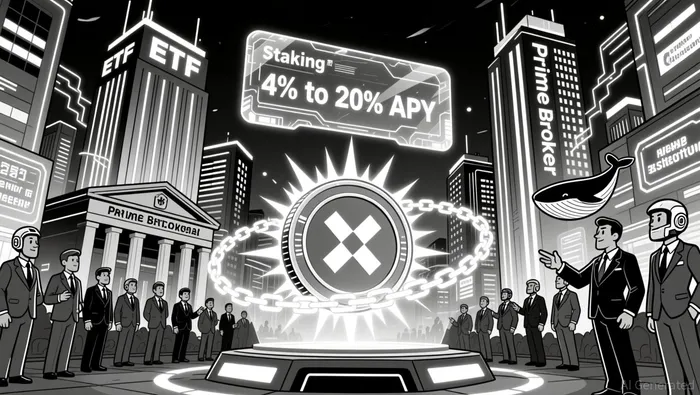
The decline in liquidity is further amplified by the launch of U.S.-based spot XRP ETFs, including Grayscale's offering, which has drawn $59 million in initial trading volume. These ETFs are reshaping how institutional buyers evaluate XRP, prioritizing liquidity depth, regulatory alignment, and infrastructure maturity over speculative momentum.
Institutional adoption of XRP has accelerated, driven by Ripple's legal resolution with the SEC and the introduction of regulated financial infrastructure. Ripple's $125 million settlement in August 2025 removed regulatory uncertainty, spurring an 11% price spike. This clarity enabled the launch of XRP ETFs, which have attracted $644 million in assets under management (AUM) within two weeks. Notably, XRP ETF inflows have outpaced those of BitcoinBTC-- and EthereumETH-- ETFs, reflecting a strategic reallocation of institutional capital.
Ripple's acquisition of Hidden Road to form Ripple Prime-a crypto-owned global prime brokerage-has further solidified institutional access to XRP. Ripple Prime now offers clearing, financing, and OTC trading for crypto and FX, with RLUSD (Ripple's stablecoin) serving as collateral. This infrastructure has expanded XRP's utility in corporate treasuries and cross-border payments, with real-world pilots like Gemini's on-chain credit card settlements demonstrating its practicality.
The XRP Tundra platform, a dual-chain DeFi layer, is redefining institutional staking and yield generation. By operating on both the SolanaSOL-- and XRP Ledger networks, Tundra offers a revenue-backed staking model with four vault tiers-Permafrost, Glacier, Polar, and Blizzard-yielding between 4% and 20% APY. These rewards are derived from protocol fees, derivatives activity, and Frost Key NFTs, eliminating reliance on inflationary minting.
Tundra's transparent structure, including audits by Cyberscope and SolidProof, has attracted institutional confidence. A major acquisition in late 2025 accelerated its roadmap, confirming a December 15 launch. This platform not only diversifies XRP's utility but also positions it as a competitive alternative to Bitcoin and Ethereum for institutional staking.
Market Dynamics and Future Outlook
The interplay between supply contraction and institutional demand is creating a tightening liquidity environment. Blockchain analytics from CryptoQuant show that whale-to-exchange flows have dropped from 48.7k tokens in October to just 1k currently, while over 100 million XRP were withdrawn from exchanges post-ETF launch. This accumulation pattern mirrors historical trends seen in assets entering regulated investment vehicles, suggesting a structural shift in XRP's price behavior.
Analysts project that sustained ETF inflows could drive XRP's price upward. If inflows mirror Bitcoin's ETF surge, XRP could reach $168, with multipliers ranging from 50X to 200X. However, risks persist: 41.5% of XRP's supply is currently underwater, and ETF demand exceeding available supply could trigger market shortages.
Conclusion
XRP's supply contraction and institutional accumulation are converging to form a bullish catalyst. Regulatory clarity, innovative infrastructure like XRP Tundra, and strategic capital flows are positioning XRP as a key player in the next market cycle. While structural fragility and volatility remain challenges, the current dynamics suggest that XRP is well-positioned to outperform in a global liquidity expansion phase. Investors should monitor ETF inflows, exchange reserve trends, and Tundra's yield mechanisms as critical signals for future momentum.







Comentarios
Aún no hay comentarios