
XRP's Spring-Loaded Breakout: Why Institutions Are Piling In and Retail Traders Should Follow
In the world of digital assets, XRPXRP-- has long been a pariah. For years, it languished in the shadow of BitcoinBTC-- and EthereumETH--, dismissed as a token tied to a legal battle with the SEC. But 2025 changed everything. Ripple's landmark August 2025 settlement with the SEC-which cleared XRP of being a security-unlocked a floodgate of institutional capital. By December 2025, XRP ETFs had absorbed $483 million in inflows alone, pushing total assets under management to $1.3 billion since their November launch. This isn't just a story of regulatory clarity; it's a masterclass in how institutional accumulation and supply-side dynamics can create a spring-loaded breakout.
The Institutional Playbook: From Legal Clarity to Infrastructure Dominance
Ripple's 2025 was a year of strategic dominance. The company acquired Hidden Road and GTreasury, two firms specializing in prime brokerage and treasury management, to build a full-stack digital asset infrastructure. This move wasn't just about XRP-it was about positioning the token as the backbone of cross-border payments, stablecoin issuance (via RLUSD), and enterprise liquidity solutions. By securing a UK Electronic Money Institution license, Ripple signaled to global institutions that XRP was no longer a speculative asset but a regulated, utility-driven one.
Institutions are now deploying XRP with the same playbook they use for Bitcoin. Covered calls, protective puts, and collars are being used to generate yield and hedge risk. Franklin Templeton, Grayscale, and other major asset managers have normalized XRP in institutional portfolios, treating it as a liquid, investable asset. This shift is critical: when institutions adopt a token, they don't just buy it-they build infrastructure around it.
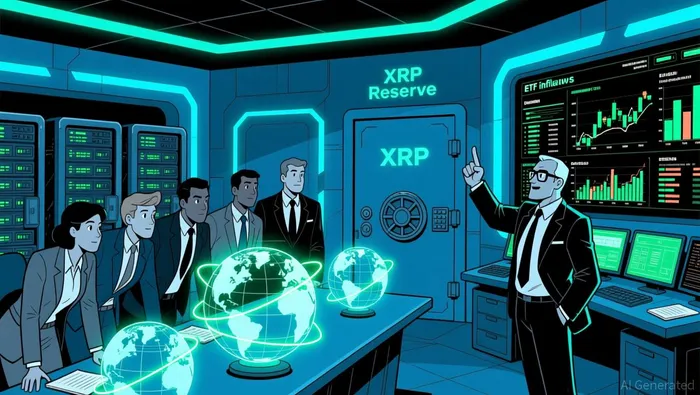
Supply constraints: The Hidden Engine of XRP's Momentum
The real magic lies in XRP's supply dynamics. By late 2025, exchange-held XRP reserves had plummeted by 57% to 1.6–1.7 billion tokens, the lowest level since 2024. This isn't a coincidence-it's the result of institutional investors moving assets into self-custody or cold storage. Binance's XRP reserves, for example, dropped to 2.6 billion tokens in early 2026, a 50% decline from 2025 levels. When institutions "HODL," they remove tokens from the float, creating artificial scarcity.
Meanwhile, Ripple's escrow mechanism-a tool to gradually release tokens-has become a double-edged sword. While the company unlocks 1 billion XRP annually, it relocks 60–80% of that supply. This means the effective circulating supply is shrinking, not growing. The ETFs exacerbate this trend: $1.3 billion in ETF inflows locked up 746 million XRP in custodial accounts, further tightening the float.
The Contrarian Edge: Why Retail Traders Should Follow Institutions
The on-chain data tells a compelling story. XRP's Total Value Locked (TVL) remains weak at $72.76 million, and decentralized exchange volumes are minuscule. But this is precisely the point. Institutions aren't buying XRP for on-chain activity-they're buying it for its utility in cross-border payments, stablecoin rails, and treasury management. The token's price is now decoupled from its network's fundamentals and driven by institutional demand.
Retail traders should take note. When institutions accumulate a token, they're not just betting on price-they're betting on the future of the ecosystem. Ripple's partnerships with Mizuho Bank, SMBC Nikko, and Securitize Japan are building a financial infrastructure that will require XRP as a liquidity asset. And with RLUSD's expansion into banking rails, XRP is becoming a bridge between traditional finance and digital assets.
The Road Ahead: A Spring-Loaded Breakout
The setup is textbook. Regulatory clarity + institutional adoption + supply constraints = a price catalyst waiting to happen. XRP's price dropped 15% to $1.77 in late 2025, but this was a buying opportunity for institutions. The ETF inflows continued into 2026, outpacing Bitcoin and Ethereum ETFs, even as the broader market corrected.
For retail traders, the lesson is clear: follow the money. Institutions are buying XRP not because it's a speculative token, but because it's a utility asset with a shrinking supply and growing infrastructure. The spring is already loaded-now it's just a matter of when the breakout will happen.






Comentarios
Aún no hay comentarios