
XRP's Scalability Potential Amid IoT Transaction Growth on XRPL
The XRPXRP-- Ledger (XRPL) has emerged as a cornerstone of institutional finance and cross-border payments in 2025, but its true scalability potential lies in its readiness to support the explosive growth of Internet of Things (IoT) transactions. With over 19.8 billion connected IoT devices globally in 2025 and projections to exceed 40 billion by 2034, according to a CryptoBasic projection, the demand for a blockchain infrastructure capable of handling high-volume, low-cost, and near-instant transactions is critical. The XRPL's technical architecture-featuring 3–5 second settlement times, sub-cent fees, and an EthereumETH-- Virtual Machine (EVM) sidechain-positions it as a prime candidate to power IoT ecosystems, potentially driving XRP's utility and token value to unprecedented levels.
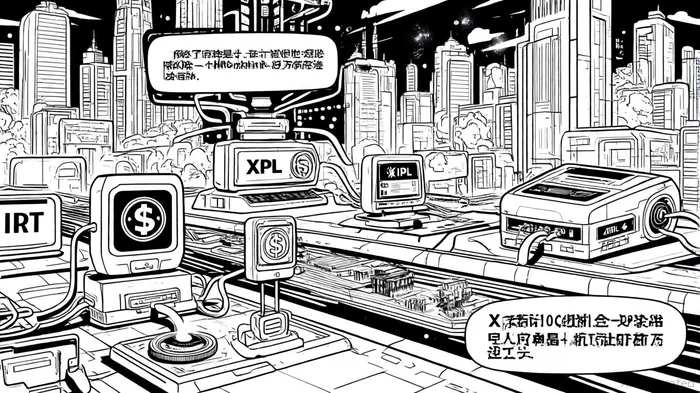
XRPL's Technical Edge for IoT Integration
The XRP Ledger's scalability is underpinned by its ability to process over 70 million transactions in July 2025 alone, according to a Coindoo report, a figure that could surge further with IoT adoption. Analysts estimate that if IoT devices executed 100 million daily transactions on XRPL, XRP's price could range between $150 and $500 per token, according to CryptoBasic. This projection hinges on two key factors:
1. Low-Cost Microtransactions: IoT devices often require micropayments for services like energy consumption, tolls, or data sharing. XRPL's $0.0001 average transaction fee makes it economically viable for such use cases.
2. High Throughput: With a capacity to handle 1,500 transactions per second (TPS) natively and expanded capabilities via the EVM sidechain, XRPL can manage the transactional load of billions of IoT devices without compromising speed, as detailed in a CryptoTimes report.
The EVM sidechain, launched in May 2025, has already demonstrated robust developer adoption, with 1,400 smart contracts deployed in its first week, according to CryptoTimes. This layer enables IoT applications to leverage Ethereum's programmability while benefiting from XRPL's speed and cost efficiency. For instance, tokenized real-world assets (RWAs) like U.S. Treasuries (OUSG) and stablecoins (RLUSD, USDC) can facilitate automated, trustless settlements between IoT devices and service providers, as Ripple discussed in Apex 2025.
Institutional Adoption and Token Value Accrual
XRPL's institutional credibility has grown significantly in 2025, with companies like Amber International and SBI Holdings allocating XRP to their balance sheets alongside BitcoinBTC-- and Ethereum, according to a Coinpedia list. This trend reflects a broader shift toward multi-asset crypto portfolios, where XRP's role as a liquidity bridge and settlement asset is increasingly valued.
Token value accrual mechanisms are further strengthened by the ledger's expanding utility:
- Tokenized Assets: The value of tokenized RWAs on XRPL surged from $5 million in January 2025 to $118 million by July 2025, according to a Currency Analytics report, driven by platforms like OndoONDO-- Finance and Mercado Bitcoin. As IoT devices interact with tokenized assets (e.g., paying for electricity using tokenized carbon credits), XRP demand for gas fees and liquidity reserves will rise.
- Network Effects: With 1 million new user accounts added in 2025, as reported by Coindoo, XRPL's network effects are compounding. Each new IoT integration-whether in logistics, healthcare, or smart cities-creates a flywheel of transaction volume and XRP utility.
Risks and Mitigations
While the potential is vast, challenges remain. IoT adoption is still nascent on XRPL, and real-world implementations are limited to conceptual pilots. However, Ripple's strategic partnerships-such as Frii Pay's expansion to 40,000 students and 900 merchants, noted by CryptoBasic-demonstrate the ledger's capacity to scale. Additionally, infrastructure upgrades like the XRPL Hub launch in New York City and Axelar's interoperability network, covered earlier by CryptoTimes, are addressing scalability bottlenecks.
Conclusion: A Compelling Investment Thesis
The XRP Ledger's alignment with IoT's transactional demands-low cost, speed, and scalability-creates a self-reinforcing cycle of utility and token value. As IoT adoption accelerates, XRP's role as a settlement layer and gas asset will become increasingly critical. For investors, this represents a unique opportunity to capitalize on a blockchain infrastructure poised to underpin the next phase of digital innovation.






Comentarios
Aún no hay comentarios