
XRP's Role in Accelerating Cross-Border Payments via Ripple and RedotPay: Strategic Infrastructure for Emerging Markets in Global Remittances
The global cross-border payments landscape is undergoing a seismic shift, driven by technological innovation and the urgent demand for faster, cheaper, and more transparent solutions. For emerging markets, where remittances often constitute a lifeline for economic stability, the integration of blockchain-based infrastructure is proving transformative. At the forefront of this evolution is XRPXRP--, the native asset of the XRP Ledger, which, through partnerships like Ripple and RedotPay, is redefining the mechanics of cross-border transactions. This analysis explores how XRP is emerging as a strategic infrastructure layer for global remittances, with a focus on its real-world impact in markets like Nigeria and the broader implications for financial inclusion.
Ripple and RedotPay: A Synergy for Emerging Markets
Ripple's collaboration with RedotPay has positioned XRP as a critical enabler of cross-border payments in regions where traditional systems are plagued by inefficiencies. RedotPay, a fintech platform operating in Nigeria and beyond, has integrated Ripple's stablecoin and XRP-based solutions to offer near-instant transactions. For instance, RedotPay's "Send Crypto, Receive NGN" feature allows users to send cryptocurrencies like XRP or stablecoins and receive Nigerian Naira (NGN) in their bank accounts within minutes, bypassing the 1–3 business days typically required by SWIFT. This innovation is particularly impactful in Nigeria, where remittances account for a significant portion of GDP and where high fees and slow processing times have long been barriers to financial inclusion.
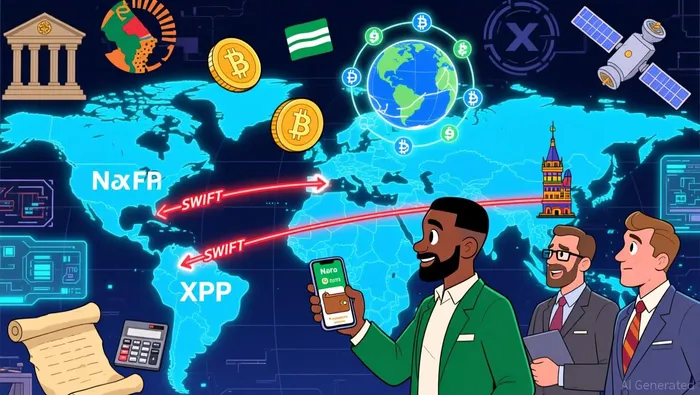
The partnership leverages Ripple's On-Demand Liquidity (ODL) service, which reduces pre-funding requirements by 65% for institutional users and eliminates the need for costly nostro/vostro accounts. By 2025, XRP transactions settle in 3–5 seconds, with fees averaging just $0.0002 per transaction-orders of magnitude cheaper than traditional methods. These metrics underscore XRP's ability to address the twin challenges of cost and speed, which are critical for emerging markets where even small savings can have outsized economic effects.
Real-World Impact: User Adoption and Cost Savings
RedotPay's integration of XRP-based solutions has yielded measurable outcomes in user adoption and cost efficiency. Since November 2023, the platform has onboarded 5 million verified users, a growth trajectory supported by its scalable AWS infrastructure and agile compliance processes. For users in Nigeria, the ability to send crypto to local bank accounts in 2 minutes-compared to the 1–2 days required by traditional methods-has made digital assets a practical tool for everyday transactions.
Cost savings are equally compelling. RedotPay's expansion into virtual and physical crypto cards, accepted by 130 million global merchants, has further reduced friction in spending digital assets. Meanwhile, Ripple's RLUSD stablecoin, which is now used in on-chain Mastercard settlements and as collateral in prime brokerage services, has enhanced liquidity and trust in cross-border transactions. These developments align with broader trends: in Southeast Asia and Latin America, XRP-based solutions have seen a 41% year-over-year adoption surge, reflecting growing institutional and consumer confidence.
Regulatory Clarity and Institutional Confidence
A pivotal factor in XRP's rise is the regulatory clarity achieved in 2025, when Ripple resolved its long-standing dispute with the U.S. Securities and Exchange Commission, confirming that XRP is not a security. This resolution has catalyzed institutional adoption, with Ripple expanding partnerships to over 40 countries, including major banks in Africa, the Middle East, and Latin America. The legal certainty has also spurred Ripple's strategic acquisitions of firms like Hidden Road and Rail, expanding its footprint into institutional custody and treasury management. These moves underscore XRP's transition from a speculative asset to a foundational infrastructure component for global finance.
Strategic Infrastructure and Future Projections
The XRP Ledger's low energy consumption-99.99% less than Bitcoin-adds another layer of appeal for institutions prioritizing sustainability. As cross-border payments are projected to reach $320 trillion by 2032, XRP's role in enabling real-time, low-cost transactions is likely to grow. Ripple's focus on stablecoin infrastructure, exemplified by RLUSD, further positions it to capitalize on the $1.5 trillion stablecoin market. For emerging markets, where financial infrastructure gaps persist, XRP's integration with platforms like RedotPay offers a scalable model for bridging these divides.
Conclusion
XRP's strategic infrastructure role in cross-border payments is no longer theoretical. Through partnerships like Ripple and RedotPay, it is delivering tangible benefits in speed, cost, and accessibility-critical factors for emerging markets reliant on remittances. As regulatory frameworks mature and institutional adoption accelerates, XRP is poised to become a cornerstone of the next-generation global payments ecosystem. For investors, the confluence of technological innovation, regulatory clarity, and real-world adoption metrics presents a compelling case for XRP's long-term value.







Comentarios
Aún no hay comentarios