
XRP's Regulatory Clarity and Market Potential: A Case for Undervaluation in 2025
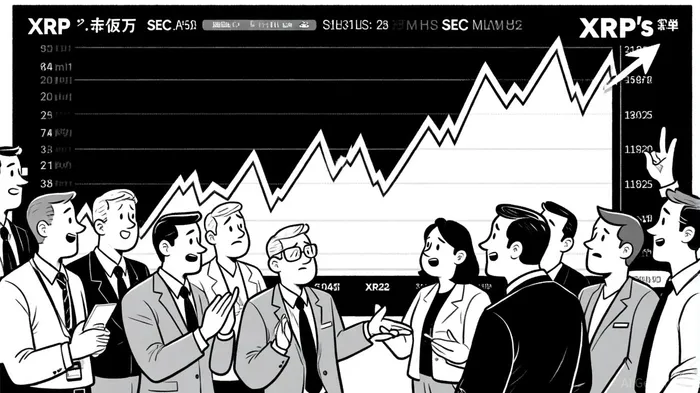
The U.S. Securities and Exchange Commission's (SEC) five-year legal battle with Ripple Labs concluded in August 2025, delivering a landmark resolution that redefined XRP's regulatory status and market dynamics. With the case dismissed and appeals withdrawn, Judge Analisa Torres' ruling affirmed that XRPXRP-- is not a security when traded on public exchanges but remains classified as such in institutional sales[1]. This distinction has removed a critical overhang, enabling XRP to transition from a speculative asset to a utility-driven digital asset with clear regulatory boundaries[2].
Regulatory Clarity and Market Impact
The resolution of the SEC-Ripple case has catalyzed a surge in XRP's market valuation. Within 24 hours of the announcement, XRP's price jumped to $3.30, propelling its market capitalization to over $180 billion[1]. While subsequent volatility—such as a 5% dip to $3.20—reflected profit-taking, the token has stabilized around $2.96 as of late 2025[3]. This resilience underscores growing institutional confidence, particularly as Ripple's $125 million fine and permanent injunction against unregistered institutional sales have been accepted as a cost of clarity[4].
Critically, the ruling has positioned XRP as a non-security in retail transactions, aligning it with a regulatory framework that facilitates broader adoption. As noted by CoinDesk, this clarity has already spurred asset managers like Grayscale and Franklin Templeton to update filings for XRP-focused ETFs, with an 81% probability of U.S. spot ETF approval by year-end 2025[5]. Such products could unlock billions in institutional inflows, further solidifying XRP's role in mainstream finance.
Institutional Adoption and Utility
Ripple's ecosystem has expanded significantly post-ruling, with institutional adoption serving as a key driver. The company's acquisition of Hidden Road, a prime brokerage platform, has enabled real-time settlements and cross-margining for 300+ financial institutions[6]. Additionally, Ripple's RLUSD stablecoin—backed 1:1 by U.S. dollars—has enhanced liquidity for XRP-based DeFi applications and cross-border payments[1].
Transaction volume data reinforces this trend. XRP's daily trading volume frequently exceeds $2 billion in 2025, with Ripple's On-Demand Liquidity (ODL) service processing $1.3 trillion in cross-border transactions[7]. These figures highlight XRP's utility beyond speculation, particularly in sectors where speed and cost efficiency are paramount. Furthermore, upgrades to the XRP Ledger (XRPL), including a native automated market maker (AMM), have attracted institutional players seeking scalable infrastructure[8].
Valuation Metrics and the Undervaluation Thesis
Despite XRP's regulatory and institutional progress, its valuation remains compelling. With a market capitalization of $176 billion and a total value locked (TVL) of just $85 million, XRP's price-to-utility ratio appears misaligned[9]. This discrepancy suggests undervaluation, particularly when compared to its transaction volume and adoption rates. For context, Bitcoin's TVL-to-market cap ratio is over 100x higher, reflecting a more balanced valuation profile[10].
The case for undervaluation is further strengthened by XRP's role in challenging traditional systems like SWIFT. Ripple's network of 300+ financial institution partnerships—including SantanderSAN--, Standard Chartered, and SBI Holdings—positions XRP as a scalable solution for cross-border payments[11]. Analysts project that XRP could reach $4–$12.6 by 2025–2026 if ETF approvals and institutional adoption accelerate[12]. However, these targets hinge on broader crypto market conditions and regulatory tailwinds.
Future Catalysts and Risks
The approval of U.S. spot XRP ETFs remains the most immediate catalyst. As highlighted by Forbes, such products could institutionalize demand and provide new investment channels[13]. Meanwhile, Ripple's focus on expanding the XRPL into DeFi and Web3 applications may unlock organic use cases, reducing reliance on speculative flows[14].
Risks include regulatory shifts, competition from stablecoins and CBDCs, and macroeconomic headwinds. However, the SEC's pivot from litigation to policy-making—emphasized in its post-ruling statements—suggests a more innovation-friendly approach[15]. This environment could foster XRP's integration into traditional finance, particularly as Ripple's IPO plans (though not imminent) remain a long-term wildcard[16].
Conclusion
XRP's regulatory clarity and institutional adoption have laid the groundwork for a re-rating. While its current valuation reflects optimism, the asset's utility in cross-border payments, DeFi, and ETF-driven demand suggests it remains undervalued. Investors should monitor ETF approvals, transaction volume trends, and Ripple's ecosystem expansion as key indicators of further upside. In a market where regulatory uncertainty has historically stifled growth, XRP's resolution with the SEC may prove to be the catalyst it needs to reclaim its position as a top-tier digital asset.






Comentarios
Aún no hay comentarios