
XRP's Regulatory Clarity and Long-Term Value Potential in 2025: Strategic Patience and Institutional Adoption in a New Era
In 2025, XRPXRP-- has emerged as a pivotal asset in the institutional crypto landscape, driven by a landmark regulatory resolution and a surge in strategic capital allocation. The U.S. Securities and Exchange Commission (SEC)'s August 2025 settlement with Ripple Labs, which affirmed XRP's non-security status in secondary markets, has catalyzed a paradigm shift. This development, coupled with the anticipated approval of spot XRP ETFs by October 25, 2025, has positioned XRP as a regulated, institutional-grade asset. However, the path to long-term value creation remains contingent on strategic patience, cycle positioning, and risk management frameworks tailored to the evolving regulatory and market dynamics.
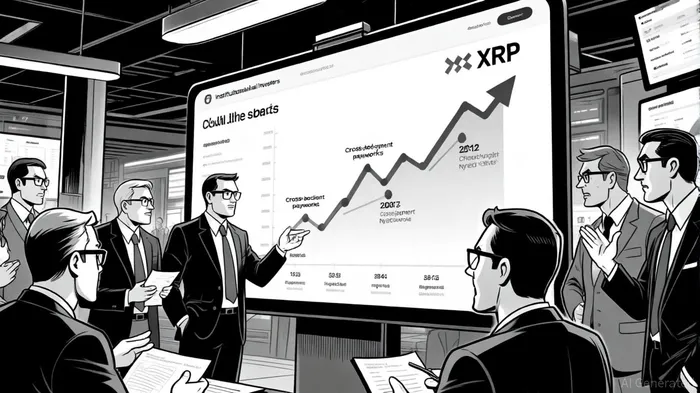
Regulatory Clarity: A Catalyst for Institutional Confidence
The resolution of the decade-long SEC vs. Ripple lawsuit in August 2025 marked a watershed moment. By agreeing to a $125 million settlement and withdrawing appeals, both parties effectively closed the legal chapter, with courts affirming that XRP is not a security in secondary transactions, according to a Markets FinancialContent report. This clarity has eliminated a critical barrier to institutional adoption, enabling exchanges like CoinbaseCOIN-- and Kraken to reinstate XRP trading and custodians like BitGo to expand holdings, as noted in TradingView coverage.
The regulatory tailwinds have also spurred a wave of ETF applications. Grayscale, Bitwise, and WisdomTreeWT-- have submitted proposals for spot XRP ETFs, with the SEC targeting October 25, 2025, for decisions, a development first highlighted in a Coinpedia report. However, the U.S. government shutdown beginning October 1 has delayed approvals, as the SEC operates with limited staff during this period, as Coinpedia reported. Despite this, the mere anticipation of ETFs has already driven $31.26 million in inflows into XRP-related products and a 35% price surge in late 2025, according to the same Coinpedia coverage.
Institutional Adoption: Strategic Positioning and Utility-Driven Growth
Institutional investors are increasingly viewing XRP as a strategic asset for cross-border payments and liquidity management. Ripple's On-Demand Liquidity (ODL) service, which processes $1.3 trillion in transactions annually, has attracted partnerships with firms like MoneyGram and SBI Remit, solidifying XRP's role as a bridge currency, as Coinpedia reported. Additionally, Ripple's alignment with ISO 20022 standards and the launch of RLUSD, a dollar-pegged stablecoin, have enhanced its credibility in traditional finance, according to Markets FinancialContent.
The launch of the first U.S.-listed spot XRP ETF, REX-Osprey XRPR, in September 2025, further underscores institutional confidence. Analysts project that additional ETF approvals could inject $5–$11 billion into the XRP market, potentially driving the token to $12 within weeks, as reported by Coinpedia. Public companies, including Trident and Webus, have also allocated millions to XRP holdings, treating it as a treasury asset, per the Markets FinancialContent coverage.
Strategic Patience and Cycle Positioning: Navigating Volatility
While regulatory clarity has reduced legal risks, XRP remains subject to price volatility. Institutional strategies emphasize strategic patience, with investors focusing on long-term utility rather than short-term fluctuations. For instance, whale accumulation patterns indicate 1.2 billion XRP ($3.8 billion) locked in accumulation zones, suggesting coordinated efforts to suppress sell pressure, as discussed in an Elevenews analysis.
Technical analysis highlights key price levels for positioning. A sustained close above $3.04 would validate a triangle breakout pattern, attracting further institutional inflows, according to a Kenson Investments note. Conversely, a breakdown below $2.95 could trigger a retest of $2.49, necessitating stop-loss orders to mitigate downside risks, as the Kenson Investments piece explains. Position sizing and risk modeling are critical, as XRP's price remains sensitive to macroeconomic shifts and ETF approval timelines, per the Kenson Investments analysis.
Challenges and Risks: Beyond the U.S.
Despite progress, XRP faces hurdles in other jurisdictions. Regulatory gray zones in the EU and Asia, coupled with competition from newer blockchain technologies, pose challenges to global adoption, a point made in TradingView coverage. Additionally, institutional investors must navigate the risk of unregistered XRP sales, as Ripple's injunction prohibits such transactions under U.S. securities laws, noted in the Kenson Investments analysis.
Future Outlook: A Regulated Bridge to Digital Finance
XRP's trajectory in 2025 reflects a broader shift toward regulated digital infrastructure. With the XRP Ledger (XRPL) maturing into a platform for institutional DeFi-featuring tools like Credentials and Deep Freeze-XRP is poised to support tokenized assets, stablecoin issuance, and low-cost credit markets, as Coinpedia reported. The anticipated approval of XRP ETFs by BlackRock and Vanguard could mirror Bitcoin's institutional adoption, unlocking billions in capital, according to the Elevenews analysis.
Conclusion
XRP's 2025 renaissance is a testament to the power of regulatory clarity and strategic institutional positioning. As the asset transitions from speculative novelty to regulated infrastructure, investors must balance patience with proactive risk management. The convergence of legal certainty, cross-border utility, and ETF-driven liquidity positions XRP as a cornerstone of the digital finance ecosystem-provided institutions remain anchored to long-term value creation over short-term volatility.





Comentarios
Aún no hay comentarios