
XRP's Regulatory Breakthrough and Trump's Geopolitical Gambit: A New Era for Institutional Crypto Adoption
In September 2025, XRPXRP-- stands at a pivotal inflection point, driven by a confluence of regulatory clarity, institutional adoption, and geopolitical realignment under President Donald Trump's pro-crypto agenda. The U.S. Securities and Exchange Commission's (SEC) August 2025 settlement with Ripple Labs-classifying XRP as a utility token-has dismantled the last major legal barrier to institutional participation, while Trump's executive actions, including the creation of a U.S. Strategic Crypto Reserve, have redefined the token's role in global finance. This analysis unpacks the interplay between regulatory shifts, investor sentiment, and geopolitical risk, offering a framework for assessing XRP's trajectory in a rapidly evolving market.
Regulatory Clarity: A Catalyst for Institutional Onboarding
The SEC's August 2025 settlement marked a watershed moment. By affirming XRP's status as a utility token in secondary markets, the agency effectively greenlit its integration into institutional portfolios. This decision, coupled with updated listing rules for crypto exchange-traded products (ETPs), accelerated the approval of the first U.S. spot XRP ETF-the REX-Osprey XRP ETF (XRPR)-on September 18, 2025, according to a Currency Analytics article. According to The Currency Analytics, these regulatory advancements have already spurred a 40% increase in institutional-grade DeFi applications on the XRP Ledger (XRPL), leveraging features like batch transactions and token escrow.
Trump's administration further amplified this momentum by including XRP in the U.S. Strategic Crypto Reserve-a portfolio of BitcoinBTC--, EthereumETH--, SolanaSOL--, and Cardano-positioned as a hedge against dollar volatility and a tool for global financial influence, as outlined in a Coin Edition analysis. This move signals a strategic pivot toward digital assets as a cornerstone of U.S. economic policy, with XRP's cross-border payment capabilities aligning with Trump's emphasis on reducing reliance on traditional banking infrastructure, as noted in a Mitosis analysis.
Geopolitical Risk: Trump's Crypto-First Foreign Policy
The geopolitical implications of Trump's crypto agenda are profound. By designating XRP and other digital assets as strategic reserves, the U.S. is positioning itself to challenge China's dominance in cross-border payment systems and CBDCs. According to a Coin Edition analysis, Trump's preference for stablecoin-based solutions over CBDCs has already prompted a 25% surge in demand for Ripple's Real USD stablecoin (RUSD) among emerging markets seeking alternatives to SWIFT.
However, this strategy introduces risks. A U.S. government shutdown in October 2025-threatening to delay XRP ETF approvals and Ripple's bid for a national bank charter-could disrupt institutional onboarding, as discussed in the MitosisMITO-- analysis. Additionally, Trump's controversial trade policies, including tariffs on Chinese imports, have created volatility in crypto markets, with Bitcoin's price swinging ±15% in Q3 2025 amid tariff uncertainty. Investors must weigh these risks against the administration's broader push to integrate crypto into the U.S. financial system, including the repeal of SAB 121, which now allows banks to custody and settle crypto assets-another point highlighted in the Mitosis analysis.
Investor Sentiment: From Speculation to Utility
Investor sentiment toward XRP has shifted from speculative frenzy to institutional pragmatism. Whale accumulation data from CryptoSlate shows a 60% increase in large XRP holdings since August 2025, driven by hedge funds and payment processors capitalizing on the token's utility in liquidity solutions, as reported in the Mitosis analysis. Meanwhile, retail sentiment remains polarized: while Trump's Truth Social post in March 2025-suggesting XRP's inclusion in the national reserve-spiked the token's price by 20%, critics argue the administration's close ties to Ripple Labs (including high-level meetings and campaign contributions) raise ethical concerns about regulatory capture, a recurring theme in the Mitosis analysis.
The approval of the REX-Osprey XRP ETF has further solidified XRP's legitimacy. As stated by Gate.com, spot ETF inflows have driven a 30% increase in XRP's market capitalization since September 2025, with institutional investors citing the token's low energy consumption and high throughput as key advantages over Ethereum and Solana.
Technical Upgrades: XRP's Path to Mainstream Utility
Beyond regulatory tailwinds, technical advancements on the XRP Ledger (XRPL) are enhancing its appeal. The launch of an EVM-compatible sidechain in September 2025 has enabled seamless integration with Ethereum-based DeFi protocols, while token escrow functionality has attracted institutional investors seeking programmable liquidity solutions, according to The Currency Analytics. According to an AllInCrypto analysis, these upgrades position XRP as a "hybrid asset" bridging the gap between traditional finance and decentralized systems.
Conclusion: Navigating the New Normal
XRP's 2025 renaissance reflects a broader paradigm shift in how digital assets are perceived-less as speculative gambles and more as functional infrastructure. Trump's regulatory reforms and geopolitical bets have created a tailwind for XRP, but investors must remain vigilant about short-term risks, including government shutdowns and policy reversals. For those with a long-term horizon, the token's technical upgrades and institutional adoption metrics suggest a durable transition toward mainstream utility.
As the U.S. cements its role as a crypto superpower, XRP's position in the Strategic Reserve and its growing ecosystem of institutional use cases make it a compelling case study in the intersection of policy, technology, and global finance.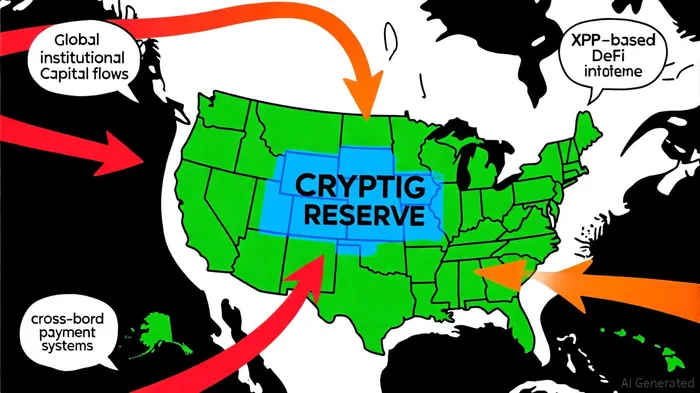






Comentarios
Aún no hay comentarios