
XRP's Path to Legitimacy: Institutional Adoption and Regulatory Clarity in 2025
The year 2025 marked a pivotal turning point for XRPXRP--, as the resolution of the long-standing SEC v. Ripple lawsuit and the subsequent regulatory clarity catalyzed a surge in institutional adoption. For investors, this period represents a rare confluence of legal certainty, market infrastructure development, and strategic timing that could redefine XRP's role in global finance.
Regulatory Clarity: A Legal Foundation for Growth
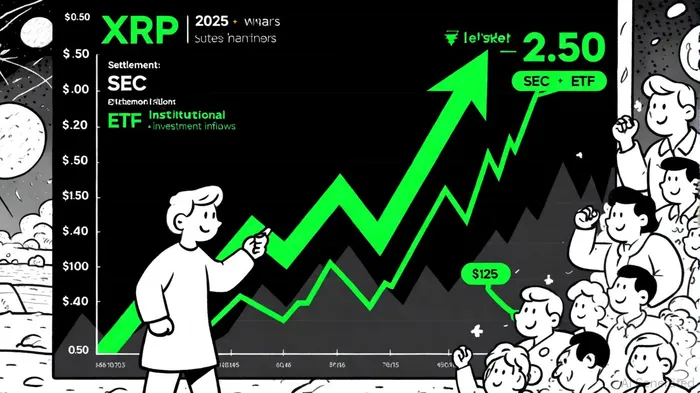
The SEC's decision to drop all appeals against Ripple in August 2025 was reported by TheCryptoBasic, effectively ending a four-year legal battle, with Ripple agreeing to a $125 million fine, according to Coinfomania. This settlement, while financially significant, was a strategic win for the XRP ecosystem. By affirming that XRP is not a security in secondary-market transactions, the SEC provided a critical legal precedent, as The Currency Analytics noted. This clarity removed a major barrier for institutional investors, who had previously hesitated to engage with XRP due to regulatory ambiguity.
The resolution also accelerated the approval of the first U.S.-listed spot XRP ETF, REX-Osprey XRPR, which launched on September 18, 2025, as reported in a Markets article. The ETF's first-day trading volume signaled robust institutional interest, with analysts projecting $5–$11 billion in inflows if additional ETFs are approved, according to a MarketsGoneWild projection. This development mirrors the trajectory of BitcoinBTC-- and EthereumETH-- ETFs, which gained mainstream acceptance after years of regulatory hurdles.
Institutional Adoption: From Skepticism to Strategic Integration
Post-SEC clarity, XRP's institutional adoption has surged. Major financial institutions, including BlackRock and Fidelity, have announced plans to allocate capital to XRP, according to a CoinPulseHQ report. Ripple's partnerships with Santander and BNY Mellon further underscore XRP's utility in cross-border payments, where it offers cost and speed advantages over traditional systems, as noted in a Coinpedia overview. For example, XRP-based transactions now settle in seconds with fees up to 70% lower than SWIFT transfers, per Coinfomania.
The XRP Army, a grassroots community of supporters, played a pivotal role in sustaining momentum during the legal battle, as CoinGabbar reported. Their advocacy helped maintain market confidence, which, combined with Ripple's product development (e.g., On-Demand Liquidity), positioned XRP as a viable bridge currency for global remittances and institutional settlements.
Strategic Investment Timing: ETFs and Market Dynamics
The October 2025 ETF decision window is a critical catalyst. Seven XRP ETF applications, including those from Grayscale, Bitwise, and ProShares, are pending SEC approval. While the U.S. government shutdown briefly paused operations, the SEC expedited reviews for XRP, ADAADA--, and SOL ETFs by October 12. Final decisions, originally scheduled for October 18–25, remain a focal point for investors.
If approved, these ETFs could trigger a liquidity boom. Historical data from Bitcoin ETF launches suggests that institutional inflows could drive XRP's price to new highs, particularly if the asset gains inclusion in major indices. However, risks persist: the SEC may delay or reject applications, and macroeconomic factors (e.g., interest rate shifts) could temper demand.
The Road Ahead: Legitimacy and Long-Term Potential
XRP's journey in 2025 highlights the importance of regulatory alignment in crypto adoption. The SEC's shift toward a more accommodating framework—evidenced by its acknowledgment of XRP's non-security status—signals a broader acceptance of digital assets as financial infrastructure. For investors, this creates a window to capitalize on undervalued assets before mainstream adoption accelerates.
Yet, timing is crucial. The period between October 18 and October 25 will test market sentiment, with outcomes likely influencing XRP's trajectory for years. Those who position themselves now—leveraging regulatory clarity and institutional momentum—stand to benefit from a market that is rapidly evolving from speculative niche to institutional staple.





Comentarios
Aún no hay comentarios