
XRP's Path to Institutional Adoption and Regulatory Clarity: Washington-Driven Catalysts for XRP's Next Leg Higher
The XRPXRP-- ecosystem has entered a pivotal phase in 2025, driven by a confluence of regulatory clarity and institutional momentum. Washington’s evolving stance on cryptocurrency—shaped by the resolution of the SEC vs. Ripple case, the TrumpTRUMP-- administration’s crypto roadmap, and landmark legislation like the Genius Act—has created a fertile environment for XRP’s next leg higher. These developments are not merely legal or political milestones but foundational catalysts for institutional adoption, liquidity expansion, and long-term value creation.
Regulatory Clarity: The SEC Case as a Turning Point
The August 2025 resolution of the SEC vs. Ripple lawsuit marked a watershed moment. By accepting a fine and closing the case, Ripple secured a landmark victory that redefined XRP’s legal status. The July 2023 district court ruling, which deemed XRP non-secular on public exchanges but securities in institutional sales, was a partial win. However, the appellate process—stalled by the SEC’s appeal—created lingering uncertainty. The 2025 settlement eliminated this ambiguity, allowing XRP to be traded freely on exchanges and reducing compliance risks for institutions [1].
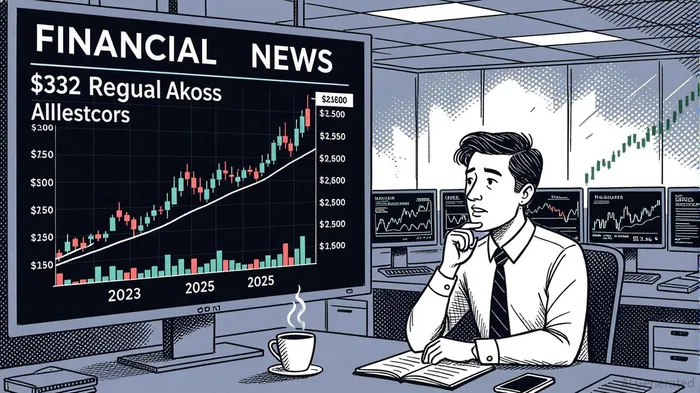
This clarity has already translated into price action. XRP surged above $3.30 in August 2025, a 200% increase from its January 2025 level, as investors priced in renewed optimism [3]. Analysts at MitTrade note that the resolution “unlocked fresh capital inflows and positioned XRP as a viable asset for institutional portfolios” [3].
Legislative Momentum: The Genius Act and Trump’s Crypto Agenda
Beyond the SEC case, 2024-2025 saw Washington prioritize crypto-friendly legislation. The Genius Act, enacted in late 2024, established a regulatory framework for stablecoins and blockchain technology, directly benefiting XRP’s utility. By mandating reserve requirements and audit standards for stablecoins, the Act created a pathway for XRP Ledger (XRPL) to integrate stablecoins like USDCUSDC--, enhancing liquidity and cross-border payment efficiency [2]. Ripple’s launch of Ripple USD, a Genius Act-compliant stablecoin, further solidified its role in this ecosystem [2].
The Trump administration’s executive order on interagency coordination between the SEC and CFTC added another layer of clarity. By harmonizing oversight and reducing jurisdictional conflicts, the order lowered legal risks for institutions adopting XRP-based solutions [1]. The Office of the Comptroller of the Currency (OCC) also played a role, permitting national banks to custody crypto assets and engage in stablecoin activities—a move that directly supports RippleNet’s expansion [1].
Institutional Adoption: RippleNet’s Global Expansion
Regulatory tailwinds have been matched by tangible institutional adoption. Ripple’s RippleNet now connects over 300 financial institutions globally, with a focus on cross-border payments in regions like the Middle East and Latin America [3]. The Genius Act’s emphasis on blockchain for real estate tokenization and cross-border payments has accelerated partnerships, particularly in markets seeking faster, cheaper alternatives to SWIFT [3].
Macro trends further amplify this momentum. A potential 2024–2025 bull market, driven by macroeconomic shifts and growing institutional interest in digital assets, positions XRP to outperform. Ripple’s ODL (On-Demand Liquidity) solutions, which leverage XRP for real-time cross-border transactions, are increasingly adopted by banks seeking to cut costs and settlement times [3].
Future Outlook: Washington’s 2026 Roadmap
Looking ahead, the Trump administration’s 2026 agenda—aimed at cementing the U.S. as a crypto leader—promises further catalysts. Proposed rules to streamline digital asset regulations by early 2026 could spur broader institutional adoption, while global ripple effects (pun intended) from U.S. policy shifts may drive international demand for XRP-based solutions [4].
Conclusion
XRP’s ascent in 2025 is not a speculative bubble but a response to structural changes in Washington. The SEC case resolution, the Genius Act, and Trump-era policies have collectively removed regulatory headwinds, while Ripple’s institutional partnerships have demonstrated XRP’s utility. For investors, the next leg higher hinges on continued policy momentum and the scaling of RippleNet’s global infrastructure. As the U.S. crypto regulatory framework solidifies, XRP is uniquely positioned to capitalize on both institutional demand and cross-border payment innovation.
**Source:[1] SEC vs. Ripple: A Turning Point for US Crypto Regulation?,
https://gordonlaw.com/learn/sec-turning-point-crypto-regulation/[2] Ripple (XRP) and Stablecoins: 4 Things Investors Need to...,
https://www.mitrade.com/insights/news/live-news/article-8-1054738-20250820[3] What Will XRP Be in 2025? Expert Insights & Analysis,
https://www.bitget.com/wiki/what-will-xrp-be-in-2025[4] Davos 2025: Is the cryptocurrency era about to begin?,
https://www.weforum.org/stories/2025/01/cryptocurrency-regulations-era-experts-digital-finance/






Comentarios
Aún no hay comentarios