
Why XRP Is Outperforming BTC and ETH in 2026
In early 2026, XRPXRP-- has emerged as the most dynamic cryptocurrency, outperforming both BitcoinBTC-- (BTC) and EthereumETH-- (ETH) by a significant margin. While BTCBTC-- and ETHETH-- have seen modest gains of 6% and 10%, respectively, XRP's price surged 25–28% in the first week of the year, reaching $2.30. This outperformance is not a fluke but a result of structural shifts in institutional capital flows, reduced exchange liquidity, and XRP's unique positioning in cross-border payments.
Institutional ETF Flows: A Structural Tailwind
The most compelling driver of XRP's outperformance is the explosive growth in institutional ETF inflows. Since their launch in late 2025, U.S.-listed spot XRP ETFs have attracted over $1.37 billion in cumulative inflows, with no single day of net outflows recorded. This contrasts sharply with Bitcoin and Ethereum ETFs, which experienced outflows of $1.09 billion and $564 million, respectively, during the same period.
Institutional investors are increasingly viewing XRP as a "less crowded trade" compared to BTC and ETH, particularly as regulatory clarity emerges in the U.S. Ripple's resolution of its legal case with regulators and its strategic partnerships-such as those with Mastercard and Gemini to facilitate stablecoin payments-have bolstered confidence in XRP's utility. Major asset managers like BlackRockBLK-- and Fidelity have launched XRP ETFs, further legitimizing the asset.
Reduced Exchange Liquidity: A Double-Edged Sword
XRP's exchange liquidity has declined by 45% since 2025, with tokens increasingly moving to long-term storage rather than remaining on exchanges. This reduction in available float has tightened order books, making XRP more susceptible to sharp price movements driven by marginal inflows. Analysts note that if ETF inflows continue at current rates, they could remove over 2.9 billion XRP from circulation by year-end, creating upward pressure on the price.
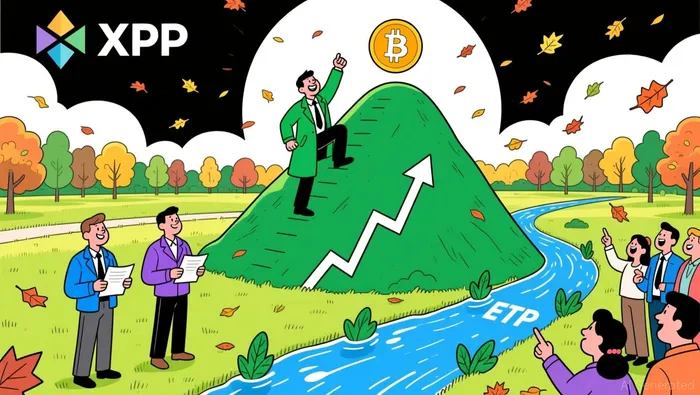
This liquidity dynamic contrasts with BTC and ETH, which still maintain robust exchange balances despite mixed ETF performance. For example, Bitcoin's price stagnation near $90,000 and Ethereum's consolidation around $3,200 suggest that their markets remain more liquid but less responsive to institutional demand. XRP's thin liquidity, while risky, has amplified its price action, making it a high-beta asset in a market increasingly dominated by institutional flows.
XRP's Unique Value Proposition: Cross-Border Payments and Infrastructure
XRP's outperformance is also rooted in its utility as a cross-border payment solution. Ripple's infrastructure, including its XRP Ledger (XRPL), has evolved into a robust platform for decentralized finance (DeFi) and tokenization. The XRPL's decentralized exchange liquidity now exceeds $172.9 billion, reflecting growing institutional adoption.
Ripple's strategic acquisitions in custody, stablecoin, and prime brokerage have further solidified XRP's role in regulated financial systems. Unlike BTC and ETH, which are primarily seen as stores of value or speculative assets, XRP's utility in real-time gross settlement systems and its partnerships with global financial institutions position it as a bridge between traditional finance and blockchain innovation.
Conclusion: A New Paradigm for Institutional Crypto Investing
XRP's 2026 outperformance is a product of its unique confluence of factors: aggressive ETF inflows, reduced exchange liquidity, and a clear utility in cross-border payments. As institutional investors seek assets with both regulatory clarity and tangible use cases, XRP has emerged as a preferred vehicle for capital deployment. While risks remain-particularly around liquidity volatility-the structural tailwinds suggest XRP's dominance in 2026 is here to stay.





Comentarios
Aún no hay comentarios