
XRP News Today: Regulators Poised to Shape Tokenization as IMF Cautions on Systemic Shocks
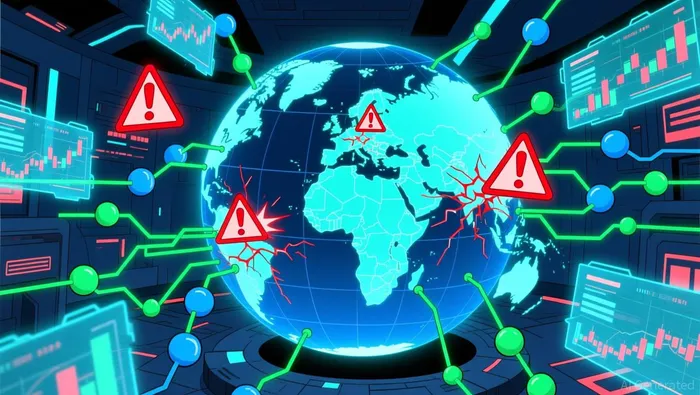
The International Monetary Fund (IMF) has issued a stark warning that tokenized financial markets, while offering efficiency gains, risk exacerbating flash crashes and systemic instability due to their inherent volatility and interconnected smart contract systems. In a recent video published on its X handle, the IMF acknowledged the transformative potential of tokenization, which streamlines asset ownership and trading by reducing reliance on intermediaries. However, it emphasized that the same technological efficiencies could amplify risks, particularly in stressed market conditions where automated trading and complex smart contracts might cascade into broader collapses.
The IMF's analysis highlighted that tokenized markets enable near-instant settlement and lower costs through programmable automation, but these advantages come with heightened exposure to sudden liquidity shocks. The fund cited examples of existing tokenized experiments showing "significant cost savings," yet warned that the lack of regulatory guardrails could lead to fragmented platforms incapable of interoperability. Such fragmentation, the IMF argued, might undermine the promise of faster, cheaper transactions by creating isolated liquidity pools.
Governments, the IMF suggested, are likely to intervene as tokenization evolves, drawing parallels to historical monetary reforms like the 1944 Bretton Woods agreement. The fund noted that governments have rarely remained passive during financial system overhauls and are expected to play a more active role in shaping tokenized markets' future. This perspective aligns with recent developments in the crypto space, where institutional players are increasingly bridging traditional finance with blockchain infrastructure. For instance, the IMF's March 2023 report identified XRPXRP-- as a potential solution for cross-border payments, citing its ability to reduce transaction costs and processing times compared to traditional bank networks.
The XRP Ledger's inclusion in the IMF's analysis underscores tokenization's growing relevance in global financial systems. The report proposed a digital marketplace model where tokenized assets like XRP could facilitate seamless cross-border settlements, bypassing the inefficiencies of credit-based arrangements. However, the IMF stopped short of endorsing any specific technology, instead framing XRP as one of three viable settlement frameworks alongside open-source platforms like StellarXLM-- and Bitcoin's Lightning Network.
Meanwhile, institutional adoption of tokenized assets is accelerating, as evidenced by the recent launch of ChainlinkLINK-- (LINK) ETFs in the U.S. Bitwise and Grayscale have filed proposals for spot ETFs tracking the oracleADA-- network's native token, with the latter converting its existing trust into an ETF set for a December 2025 debut according to BSC News. These developments reflect a broader trend of regulated exposure to blockchain infrastructure, with analysts predicting over 100 new crypto ETFs in the next six months. The potential for staking yields and automated transparency through tools like Chainlink's Proof of Reserve further enhances institutional confidence in tokenized markets https://bsc.news/post/when-chainlink-link-spot-etfs.
The market's cautious reception of new ETFs, however, highlights lingering uncertainties. Grayscale's Dogecoin (DOGE) ETF opened with $1.41 million in day-one volume—far below $10–12 million projections—raising questions about retail and institutional appetite for meme-based assets. Conversely, XRP saw an 8% price surge after the launch of Franklin Templeton's XRP ETFXRPI-- and Grayscale's GXRP, signaling stronger demand for tokens with established use cases in global payments.
As tokenized markets mature, the IMF's warnings underscore the need for balanced innovation and oversight. While XRP's role in cross-border settlements and Chainlink's infrastructure offerings demonstrate the technology's potential, the risks of flash crashes and systemic shocks demand proactive governance. Governments and regulators, as the IMF noted, will likely play a pivotal role in shaping the next phase of this evolution, ensuring that tokenization's efficiencies do not come at the cost of financial stability.






Comentarios
Aún no hay comentarios