
XRP's mXRP Staking Surge: A New Paradigm in Institutional DeFi Adoption?
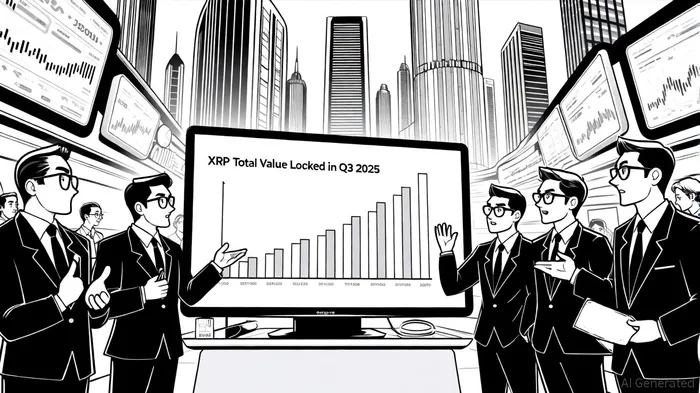
The XRPXRP-- Ledger (XRPL) is undergoing a seismic shift as institutional adoption accelerates, driven by regulatory clarity, technological innovation, and a surge in liquid staking activity. With the resolution of the SEC lawsuit in August 2025[2], XRP has transitioned from a speculative asset to a cornerstone of institutional-grade decentralized finance (DeFi). This transformation is epitomized by the rise of mXRP, a liquid staking derivative that has catalyzed a $20 million Total Value Locked (TVL) milestone in Q3 2025[1], signaling a broader reorientation of the XRPL ecosystem toward real-world utility and institutional-grade infrastructure.
Regulatory Clarity as a Catalyst
The August 2025 SEC ruling[2] marked a watershed moment, legitimizing XRP as a utility token and unlocking institutional participation. Ripple's CTO, David Schwartz, emphasized that this clarity has shifted the focus from speculative trading to building “real-world DeFi applications like payments and tokenized assets”[3]. This regulatory validation has been critical in attracting institutional capital, with over $1.1 billion in institutional purchases recorded in 2025 alone[3]. The launch of XRP ETFs and futures on the CME, alongside Canada's first XRP ETF by Purpose Investments[2], further underscores the asset's institutional readiness.
Technological Innovation and mXRP's Role
The XRPL's EthereumETH-- Virtual Machine (EVM) sidechain[2] has been a game-changer, enabling Ethereum-based decentralized applications (dApps) and DeFi protocols to operate on the XRP Ledger. This integration, coupled with the launch of RLUSD and tokenized U.S. Treasuries[4], has created a fertile ground for institutional players seeking yield and compliance. The mXRP liquid staking product, developed by Midas and Axelar[1], has been pivotal in converting dormant XRP into yield-bearing assets. Offering 6–8% APY[3], mXRP allows investors to participate in market-making and liquidity provisioning while retaining exposure to XRP's price action. Cross-chain integration further enhances its appeal, enabling seamless interaction with DeFi ecosystems beyond the XRPL.
Institutional Metrics and Market Dynamics
The surge in institutional adoption is reflected in robust on-chain metrics. Daily active addresses on the XRPL have surpassed 295,000[2], a sharp increase from pre-2025 averages, while over 2,700 wallets now hold at least 1 million XRP[2], indicating long-term commitment from high-net-worth and institutional actors. Ripple's On-Demand Liquidity (ODL) service[4] has processed $1.3 trillion in cross-border transactions in Q2 2025, reinforcing XRP's role as a settlement layer for institutional finance. Compliance-focused tools like Credentials and Deep Freeze[1] are also critical, addressing institutional concerns around governance and asset control.
Implications for Long-Term Value Capture
The convergence of regulatory legitimacy, technological innovation, and institutional demand positions XRP to capture value in multiple ways. First, mXRP's TVL growth[1] demonstrates the ledger's ability to monetize idle XRP supply, creating a flywheel effect as more users seek yield. Second, the integration of tokenized assets and stablecoins[4] aligns the XRPL with the $10 trillion real-world asset (RWA) tokenization market, offering institutions a scalable infrastructure for asset management. Finally, the XRPL's native lending protocol[1] and compliance tools are likely to attract traditional financial players seeking blockchain-based solutions for custody, settlement, and liquidity.
Conclusion
XRP's mXRP staking surge is notNOT-- merely a technical innovation but a strategic pivot toward institutional DeFi dominance. By addressing regulatory, technological, and compliance barriers, the XRPL has positioned itself as a critical infrastructure layer for institutional finance. As mXRP's TVL continues to grow and tokenized assets gain traction, XRP's long-term value proposition is increasingly tied to its ability to serve as a bridge between traditional finance and decentralized ecosystems. For investors, this represents a unique opportunity to participate in a maturing asset class with clear utility and institutional backing.






Comentarios
Aún no hay comentarios