
XRP's Long-Term Price Potential: Regulatory Clarity and Institutional Adoption Drive a New Era
Regulatory Clarity: A Foundation for Stability
The Ripple-SEC case has been a five-year saga, but recent updates suggest a near-term resolution. A settlement requiring Ripple to pay a $125 million penalty for institutional XRP sales-while avoiding a securities classification for secondary trading-has provided critical clarity, according to a CoinCentral update. Legal experts now anticipate the SEC will drop its appeal, effectively ending the case and removing a major overhang for XRP holders, as noted in the MEXC analysis. This outcome not only validates XRP's utility as a non-security asset but also signals a broader shift in regulatory thinking. As one analyst noted, "The court's recognition of XRP's non-security status in secondary markets could force the SEC to adopt a more nuanced framework for digital assets," a point the MEXC analysis also highlights.
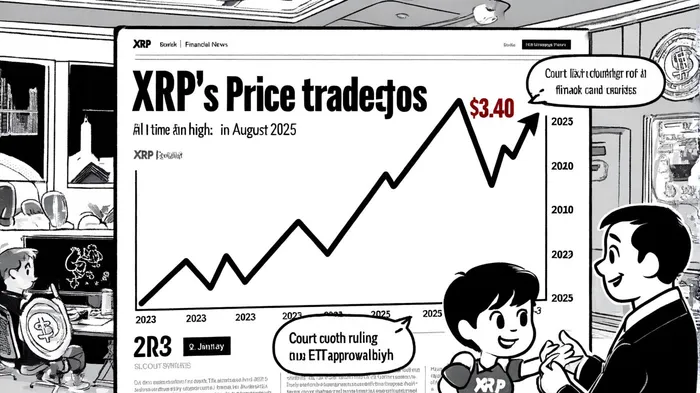
The implications are profound. By August 2025, XRP had surged to an all-time high above $3.40, reflecting investor confidence in the token's newfound legal stability, a trend the MEXC analysis documents. This price action underscores a key principle: regulatory clarity reduces volatility and attracts long-term capital.
Institutional Adoption: A Catalyst for Mass Market Entry
Regulatory progress has been matched by explosive institutional adoption. The approval of the ProShares Ultra XRP ETF in July 2025 marked a watershed moment, becoming the first SEC-sanctioned investment vehicle for XRP, a development discussed in the MEXC analysis. This milestone was followed by a flood of applications from major asset managers, including Grayscale, Franklin Templeton, and Bitwise, with over 11 XRP-related ETFs now in the pipeline, according to the MEXC analysis.
The SEC's decision to fast-track these applications-alongside similar moves for ADAADA-- and SOL-reflects growing trust in the liquidity and accessibility of secondary crypto markets, as detailed in a Coinfomania report. For XRP, this means institutional investors can now gain exposure with reduced friction, accelerating demand. As the Coinfomania report states, "The SEC's prioritization of XRP ETFs signals a strategic pivot toward legitimizing altcoins as viable assets for mainstream portfolios."
Long-Term Price Projections: A Confluence of Factors
To assess XRP's long-term potential, it's essential to consider both regulatory tailwinds and institutional momentum. The token's non-security status in secondary trading eliminates a key barrier to adoption, while ETFs provide a scalable on-ramp for traditional investors. Historical data from the 2023 court ruling and 2025 ETF approvals already demonstrate a direct correlation between regulatory milestones and price appreciation, as the MEXC analysis documents.
Looking ahead, the market's response to these developments suggests XRP could target $5–$7 by mid-2026. This projection hinges on three factors:
1. Continued ETF approvals expanding institutional demand.
2. Network usage growth, with XRP's role in cross-border payments and DeFi applications gaining traction.
3. Global regulatory alignment, as other jurisdictions adopt similar frameworks inspired by the U.S. precedent.
Critics may argue that macroeconomic risks-such as interest rate hikes or broader crypto market corrections-could dampen XRP's ascent. However, the token's unique position as a regulated, institutional-grade asset offers a buffer against such volatility.
Conclusion: A New Paradigm for Digital Assets
XRP's journey in 2025 exemplifies how regulatory clarity and institutional adoption can transform a speculative asset into a cornerstone of the financial system. The SEC's evolving stance, combined with the token's utility in real-world use cases, creates a compelling case for long-term investment. For investors, the message is clear: XRP is no longer a fringe asset but a legitimate player in the global capital markets.






Comentarios
Aún no hay comentarios