
XRP's Long-Term Disruptive Potential in Cross-Border Payments: A Generational Financial Revolution
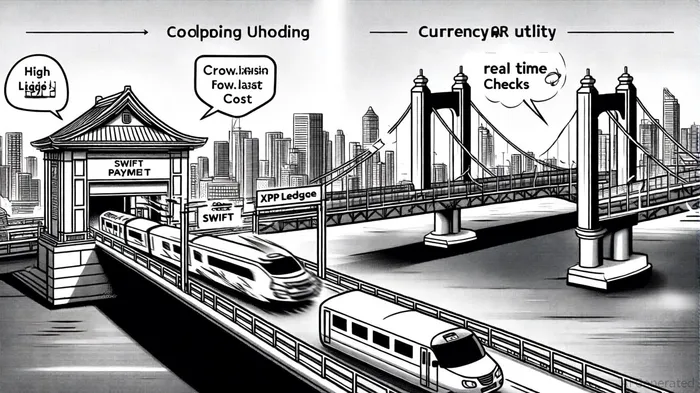
In the evolving landscape of global finance, cross-border payments remain a $150 trillion-a-year puzzle plagued by inefficiencies. Legacy systems like SWIFT, while dominant, are slow, costly, and opaque. Enter XRPXRP--, Ripple's native asset, which is redefining this space through a combination of institutional adoption, regulatory clarity, and generational financial impact. By 2025, XRP has emerged not just as a speculative asset but as a foundational infrastructure layer for a new era of cross-border value transfer.
Institutional Adoption: Compliance-First Infrastructure
XRP's institutional appeal lies in its compliance-native design. The XRP Ledger (XRPL) introduced the Credentials amendment in 2024, enabling real-time identity verification and AML checks without sacrificing privacy [1]. This innovation directly addresses institutional concerns about regulatory adherence, a critical barrier for blockchain adoption. Financial institutionsFISI--, particularly in Japan and Southeast Asia, have embraced XRP's On-Demand Liquidity (ODL) solution, which leverages XRP as a bridge currency to eliminate the need for pre-funded nostro/vostro accounts. For example, SBI Holdings and Tranglo have processed over $30 billion in cross-border transactions via ODL, achieving near-instant settlements at a cost of just $0.0002 per transaction [2].
The scalability of XRP is further underscored by its sub-5-second settlement times, a stark contrast to SWIFT's 1–5 business days. This efficiency has attracted regional banks and fintechs in high-volume remittance corridors, where speed and cost are paramount [3].
Regulatory Clarity: A Catalyst for Growth
Regulatory uncertainty has long hindered XRP's institutional adoption. However, Ripple's $50 million settlement with the SEC in August 2025 marked a turning point, resolving a three-year legal battle and signaling broader acceptance of XRP as a utility token [5]. This clarity has spurred a wave of institutional interest, with analysts projecting XRP's price to reach $5–$7 by 2026 and exceed $10 by 2028 as blockchain integration with traditional finance matures [4].
Generational Financial Impact: Beyond Cost Savings
XRP's disruptive potential extends beyond institutional metrics. Its adoption in cross-border payments is catalyzing systemic shifts in financial inclusion and economic development. By slashing transaction costs by up to 70% compared to SWIFT [2], XRP enables real-time remittances for migrant workers in Latin America and Southeast Asia, who often send money to families in underbanked regions. For instance, platforms like BOSS Money and Airwallex have reduced remittance fees by 40%, empowering small businesses and individuals to participate in global commerce [2].
The societal impact is equally profound. In emerging markets, XRP's low-cost infrastructure is democratizing access to financial services. Ripple's ODL solution has bypassed correspondent banking delays, allowing regional banks to offer 24/7 cross-border payments at a fraction of traditional costs [3]. This shift aligns with the UN's 3% remittance cost target, which was nearly achieved in 2025, with the average cost dropping to 4.5% [2].
Moreover, XRP's role in hedging against inflation and expanding payment options—evidenced by Worksport's treasury strategy—demonstrates its integration into broader financial ecosystems [6]. Such use cases suggest that XRP is not merely a cost-saving tool but a catalyst for macroeconomic resilience in volatile markets.
Future Outlook: A Hybrid Financial Ecosystem
While SWIFT will retain dominance in the short term due to its entrenched network effects, blockchain-based systems like XRP are poised to redefine the remittance industry over the next decade. Analysts predict a hybrid model where digital currencies coexist with traditional systems, offering unprecedented efficiency and inclusivity [2]. For investors, this transition represents a long-term opportunity: XRP's utility in cross-border payments is underpinned by its compliance infrastructure, institutional partnerships, and societal impact.
Conclusion
XRP's journey from a speculative asset to a compliance-first infrastructure layer underscores its generational financial impact. By addressing the pain points of legacy systems—cost, speed, and regulatory compliance—XRP is not just disrupting cross-border payments; it is enabling a more inclusive and efficient global economy. For investors, the confluence of institutional adoption, regulatory clarity, and systemic economic shifts positions XRP as a cornerstone of the next financial era.






Comentarios
Aún no hay comentarios